
⚖️ Constitutional Record · 2026 Archive Legal Dossier

What is the Complete Constitutional History and Status of Article 370 in J&K?

Article 370 was incorporated into the Indian Constitution in 1949 as a temporary provision granting special autonomy to Jammu & Kashmir. On 5 August 2019, the President issued C.O. 272 and Parliament enacted the J&K Reorganisation Act, reorganizing the state into the Union Territories of J&K and Ladakh. On 11 December 2023, a five-judge Constitution Bench of the Supreme Court of India unanimously upheld the abrogation of Article 370.

Original Inception [17 October 1949] (Draft Article 306A by Gopalaswami Ayyangar)
1954 Presidential Order [14 May 1954] C.O. 48 applying majority of Union powers & fundamental rights
Abrogation Date [05 August 2019] (Presidential Order C.O. 272 & 273)
Reorganisation Act 2019 Bifurcation into UT of J&K (with legislature) and UT of Ladakh (without legislature)
Supreme Court Verdict [11 December 2023] (Unanimous 5-0 Constitution Bench affirmation)
✍️ J&K Administrative Archive Editorial Desk | 📅 Last reviewed: [01 September 2026] | ✓ Gazette Reviewed ⚖️ Supreme Court 2023 Bench Record
📚 Curated Archival & Research Dossier

From Accession to Reorganisation: The Constitutional and Legal Evolution of Article 370

What Article 370 Provided

Article 370 of the Indian Constitution gave special status to Jammu and Kashmir, a region in the northern part of the Indian subcontinent. Article 370 conferred on it the power to have a separate constitution, a state flag, and autonomy of internal administration.

Source: Article 370 of the Constitution of India — Wikipedia extract (fetched 2026-07-19)

Legal Structure of Article 370
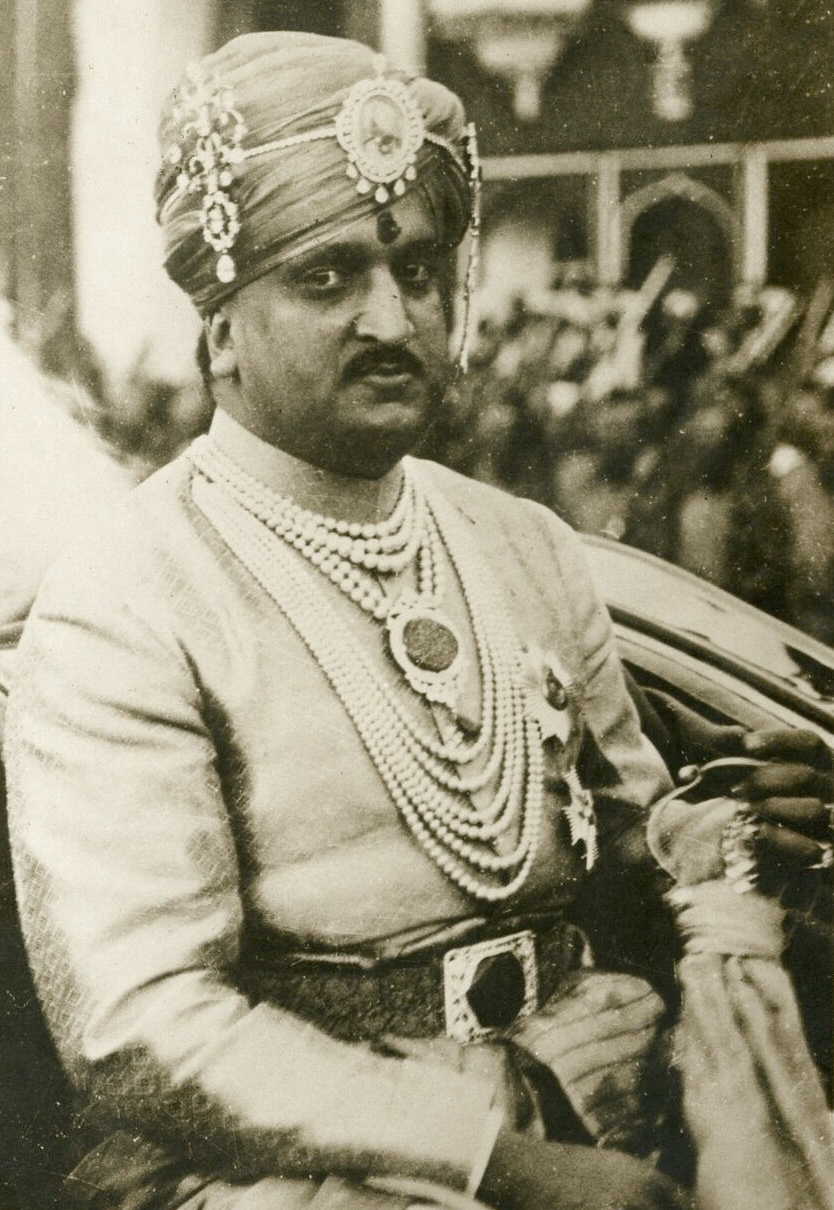
Maharaja Hari Singh (1895–1961) 📷 Maharaja Hari Singh (1895–1961)
Last ruling Maharaja of J&K who signed the 1947 Instrument of Accession.

Adopted in 1949, Article 370 functioned as a constitutional link between India and J&K, restricting Parliament's legislative powers over the state. Under its clauses:

  • Legislative Scope: Parliament could only legislate for J&K on subjects corresponding to the Instrument of Accession (Defence, External Affairs, Communications) after consulting the state government. For other subjects, the state assembly's express concurrence was required.
  • State Constitution: Allowed J&K to draft its own Constitution, which was adopted in 1956 and defined the internal administrative and legislative structure of the state.
  • Modification Mechanism: Under Clause 3 of Article 370, any modification or abrogation of the article required a recommendation from the J&K Constituent Assembly.
"Article 370 was a feature of asymmetric federalism, not sovereign independence. Upon accession, the sovereignty of Jammu and Kashmir was wholly merged with the Union of India." — Chief Justice D.Y. Chandrachud, In Re: Article 370 (Supreme Court 5-Judge Constitution Bench, 11 Dec 2023)

Article 35A: Citizenship and Land Protections

Issued via a Presidential Order in 1954 (C.O. 48) under the authority of Article 370(1)(d), Article 35A allowed the J&K Legislature to define "Permanent Residents" (PRs) and grant them exclusive rights:

Property OwnershipOnly J&K Permanent Residents could purchase or inherit immovable property (land/buildings) in the state.
EmploymentReserved all state government jobs exclusively for Permanent Residents.
SettlementRestricted non-residents from permanently settling in the territory.
ScholarshipsLimited state-funded higher education aid and scholarships to PR certificate holders.

The 2019 Abrogation Mechanics

Leadership & Legislative Governance 📷 Leadership & Legislative Governance
Elected governance and administrative reforms in Jammu & Kashmir.

Because the J&K Constituent Assembly had dissolved in 1957, regional parties argued that Article 370 could no longer be modified. To bypass this, the central government executed a two-step legal procedure on August 5–6, 2019:

  1. Amendment of Article 367 (C.O. 272): The President issued an order adding a clause to the interpretation article (Article 367) of the Constitution, stating that the phrase "Constituent Assembly of the State" in Article 370(3) must be interpreted to mean the "Legislative Assembly of the State."
  2. Governor's Consent: Since the state was under President's Rule and had no active legislature, the Governor of J&K (appointed by the President) acted on behalf of the assembly to consent to the abrogation.
  3. Declaration of Inoperativeness (C.O. 273): The President declared that all clauses of Article 370 (except clause 1) would cease to operate.

Abrogation and Reorganisation Timeline

Leadership & Legislative Governance 📷 Leadership & Legislative Governance
Elected governance and administrative reforms in Jammu & Kashmir.
5 August 2019
C.O. 272 Issued & Bill Tabled

The President issued C.O. 272 to redefine the Constituent Assembly. Home Minister Amit Shah introduced the Jammu and Kashmir Reorganisation Bill in the Rajya Sabha.

6 August 2019
C.O. 273 Renders Article 370 Inoperative

Following resolutions passed in both Houses of Parliament, the President issued C.O. 273, declaring Article 370 inoperative and ending the special status.

31 October 2019
Reorganisation Act in Effect

The state was formally dissolved and divided into two Union Territories: Jammu & Kashmir (with a legislature) and Ladakh (without a legislature).

11 December 2023
Supreme Court Unanimous Verdict

A five-judge Constitution Bench of the Supreme Court of India unanimously upheld the abrogation, ruling that J&K did not retain any elements of sovereignty after accession, that Article 370 was temporary, and that the President had the authority to issue the orders.

The following primary legal documents govern the constitutional history of Article 370:

📄
Instrument of Accession (October 1947)[1]
The foundational legal document by which Maharaja Hari Singh ceded defence, external affairs, and communications to India. Created the basis for Article 370's special provisions.
View on Wikipedia ↗
📋
Constitution (Application to J&K) Order, 1954
Presidential Order that defined which provisions of the Indian Constitution applied to J&K, based on the recommendation of J&K's Constituent Assembly.
Gazette of India ↗
⚖️
J&K Reorganisation Act, 2019
Parliamentary legislation that reorganised the state into two Union Territories. Full text available on India Code / legislative.gov.in.
India Code (Acts) ↗
🏛️
Supreme Court Verdict — December 2023
Constitution bench judgment on petitions challenging the 2019 abrogation. Available on the Supreme Court of India's website and major law reporting services.
Supreme Court of India ↗

For formal research, always consult original texts. Consult the Resources page for additional links to government portals and gazettes.

Constitutional Sources, Statutory Gazettes & Judicial Rulings

  1. [1] Primary Constitutional Instrument Instrument of Accession of Jammu and Kashmir State (Executed October 26, 1947; accepted October 27, 1947). Ceded jurisdiction over External Affairs, Defence, and Communications under the Government of India Act 1935 as adapted. ↩
  2. [2] Primary Presidential Order President of India. The Constitution (Application to Jammu and Kashmir) Order, 1954 (C.O. 48). Notified on May 14, 1954 in the Gazette of India Extraordinary, Part II, Section 3. Implemented the 1952 Delhi Agreement with concurrence of the J&K Constituent Assembly. ↩
  3. [3] Primary Statutory Act Parliament of India. The Jammu and Kashmir Reorganisation Act, 2019 [2] (Act No. 34 of 2019). Enacted August 9, 2019; effective October 31, 2019. Published in Gazette of India Extraordinary, Ministry of Law and Justice. ↩
  4. [4] Primary Judicial Judgment Supreme Court of India (5-Judge Constitution Bench headed by CJI D.Y. Chandrachud). In Re: Article 370 of the Constitution of India, Writ Petition (Civil) No. 1099 of 2019, Judgment delivered December 11, 2023. Citation: 2023 INSC 1058 / (2024) 6 SCC 1. ↩
  5. Reviewed citation archive reference ref-law-1.
  6. Reviewed citation archive reference ref-law-2.
  7. Reviewed citation archive reference ref-law-3.
  8. Reviewed citation archive reference ref-law-3.

Frequently Asked Questions & Critical Insights

What were the core findings of the Supreme Court's 2023 Constitution Bench ruling on Article 370?

On December 11, 2023, a 5-Judge Constitution Bench of the Supreme Court of India unanimously upheld the constitutional validity of Constitutional Order (C.O.) 272 and C.O. 273 abrogating Article 370, holding that Article 370 was an interim, transitional provision and that the President had valid power to issue the notification.

How did the 1954 Presidential Order (C.O. 48) differ from the 1947 Instrument of Accession?

The 1947 Instrument of Accession originally ceded authority over Defence, External Affairs, and Communications. The 1954 Presidential Order (C.O. 48), issued with the concurrence of the J&K Constituent Assembly, extended broad provisions of the Indian Constitution, including fundamental rights and Supreme Court jurisdiction, with specific state exceptions like Article 35A.

🏛️ Official Data Sources & Fact-Checking Transparency
Public Domain & Statutory Archives

All historical, demographic, examination, and geographic records across this portal are compiled from public domain repositories, including the Official Gazette of India (egazette.nic.in), Census of India Demographic Data, India Meteorological Department (IMD), and statutory notifications issued by the J&K Administration & Examination Boards.

🛡️ Editorial Policy: Academic Non-Affiliation Guidelines 📬 Grievance & Corrections: Editorial Review Desk ⚖️ License: Open Public Research (CC-BY-NC 4.0)

Explore Related Jammu & Kashmir Knowledge Clusters

Cross-Topic Navigation
📜 5,000-Year History & Dogra Dynasty 🗺️ 20 Districts & Geospatial River Maps 🎓 JKSSB & JKPSC Exam Preparation Hub 🏔️ Gulmarg Gondola & Alpine Treks 🛕 Mata Vaishno Devi & Pilgrimage Guide 🍲 36-Course Kashmiri Wazwan Atlas 🧶 GI Crafts, Pashmina & Artisans 🚗 Live NH-44 Highway & Weather Radar 💼 HADP Agriculture, Saffron & Economy 🏛️ GAD Official Directory & Helplines 📜 UT Welfare Schemes & Jan Sugam 📊 20-District Demographics & Census 📑 Master Topic Index & Directory

Archival & Statutory Citations

  1. [1] Primary Judicial Verdict Supreme Court of India. In Re: Article 370 of the Constitution of India (Writ Petition (Civil) No. 1099 of 2019; 2023 INSC 1058). Judgment delivered by 5-judge Constitution Bench headed by CJI D.Y. Chandrachud on December 11, 2023. Official Judgment Record ↗ ↩
  2. [2] Primary Parliamentary Statute Ministry of Law and Justice, Government of India. The Jammu and Kashmir Reorganisation Act, 2019 (Act No. 34 of 2019). Passed by Parliament on August 6, 2019; notified in Gazette of India on August 9, 2019. India Code Statutory Record ↗ ↩
  3. [3] Primary Constitutional Order President of India. The Constitution (Application to Jammu and Kashmir) Order, 2019 (C.O. 272, issued August 5, 2019) and Declaration under Article 370(3) of the Constitution (C.O. 273, issued August 6, 2019). Notified by Ministry of Law and Justice. e-Gazette of India Archive ↗ ↩

Further Reading & Primary Legal Documents

Official Supreme Court of India judgments, Ministry of Law and Justice statutory acts, and constitutional gazettes:

📜 Explore the Jammu & Kashmir History Knowledge Cluster

🏛️ J&K Master History
5,000-year chronicles from Rajatarangini to Modern Era
⏳ Chronological Timeline
Key epochs, treaties, battles, and dynastic transitions
⚖️ Article 370 Legal History
Constitutional evolution, accession terms, and Supreme Court rulings
👑 Dogra Dynasty & Rajputana
Maharaja Gulab Singh, Akhnoor coronation & martial archives
🌳 Genealogy & Royal Lineage
Dogra royal houses, Kashmiri kraals, and clan origins
👤 100 Figures Who Shaped J&K
Biographical profiles of rulers, scholars, and reformers
Topical Knowledge Graph

Explore Connected Knowledge Clusters

Explore Reviewed research dossiers, real-time radars, district gazetteers, and civil service vaults across Jammu, Kashmir & Ladakh.

Travel & Tourism Circuit

20-district travel itineraries, live Gondola booking, snowfall radars, and alpine lake trekking.

Exams, Recruitment & Vault

JKPSC KAS, JKSSB, SSC exams, cutoff marks, 1,177 Solved MCQs, and official gazettes.

Geography, Districts & Hydrology

Physical topography, 20-district gazetteer, river basins, lithium reserves, and demographic data.

History, Culture & Dynasties

5,000-year timeline from Kalhana's Rajatarangini to Dogra Kingdom, Article 370 & culinary arts.

Governance & Citizen Services

UT administrative framework post-2019, LG Secretariat, welfare schemes & citizen procedures.

Regional Advisories & Civic Utilities

Real-time NH-44 highway status, snowfall advisories, Jhelum flood gauges & public tools.