
Milestones 1820–2023
Click any linked event to read the full article on that topic.
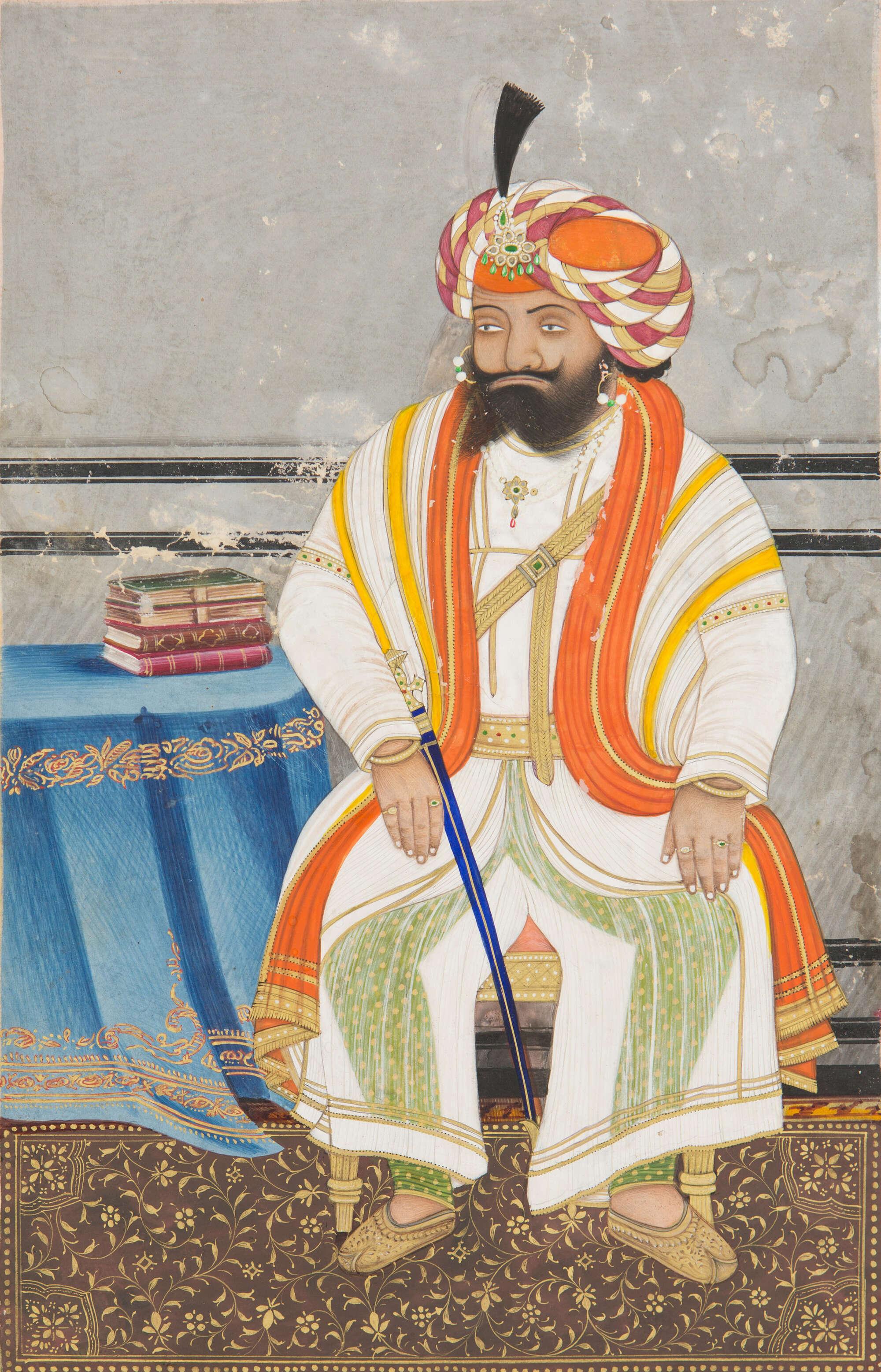
The Sikh Empire under Maharaja Ranjit Singh awarded Jammu as a hereditary fief to Mian Kishore Singh. Upon his death in 1822, Gulab Singh was confirmed as Raja of Jammu.
📜 Read History →The Nilamata Purana documents the sacred Devika River in Udhampur as a divine manifestation of Goddess Parvati featuring eight holy Shiva lingas along its banks.
📜 Read History →Flourishing of early-medieval stone architecture across Udhampur: 5 Nagara temples at Krimchi (Bhuti principality capital), Kala Dera I & II and Dera Babour at Manwal, and multi-faith Shaiva/Vaishnava/Jain sculptures at Majalta.
📜 Read History →Maharaja Ranjit Singh personally bestowed the Raj Tilak on Gulab Singh at Jeo Pota Ghat in Akhnoor, marking his rise as the key ruler of Jammu and the geopolitical linchpin along the Chenab timber trade routes.
📜 Read History →The ancient hill principality of Bhuti, with its capital at Krimchi, was officially annexed into the expanding Jammu kingdom under Raja Gulab Singh.
📜 Read History →Following the death of Hari Singh Nalwa at Jamrud, Gulab Singh crushed armed uprisings in Hazara and Poonch with surgical precision, executing key rebel leaders including Shams Khan Sudhan.
📜 Read History →Under the Treaty of Amritsar, Gulab Singh acquired Kashmir from the British for 75 Lakh Nanakshahi rupees, becoming the independent Maharaja of Jammu & Kashmir and securing trans-Himalayan trade (Pashmina & Tea).
📜 Read History →The longest reign of any Dogra monarch. Pratap Singh constructed the Jhelum Valley Cart Road (1889/1897) and Banihal Cart Road (1922), abolished forced labor (Begar), conducted land settlements (1887/1912), founded SPS Museum (1898), SP College (1905), Prince of Wales College (1907), and built the world's largest silk factory in Srinagar.
📜 Read History →Hari Singh succeeded his uncle Pratap Singh as Maharaja of J&K, enacting progressive educational and anti-caste social reforms.
👤 Read Biography →Maharaja Hari Singh formally constituted the Udhampur Town Area Committee, inaugurating modern civic municipality administration in Udhampur (upgraded to Municipal Council in 2005).
📜 Read History →Agitation against Dogra rule began, led by Sheikh Mohammad Abdullah, marking the emergence of organized political movements in the Kashmir Valley.
📊 Read Analysis →Eminent jurist Mehr Chand Mahajan was appointed Prime Minister of Jammu & Kashmir by Maharaja Hari Singh. He advised the monarch during the tribal invasion, managed defense communications with New Delhi, and facilitated the Instrument of Accession before later serving as the 3rd Chief Justice of India.
🏛️ Read Politics →Following a Pakistan-supported tribal invasion, Maharaja Hari Singh signed the Instrument of Accession to India. Indian troops were deployed to defend the state, and Sheikh Abdullah was appointed Head of Emergency Administration on October 30.
📜 Read History →Maharaja Hari Singh issued a proclamation appointing Sheikh Mohammad Abdullah as the Prime Minister of an interim government, making him the state's first popular, elected Prime Minister (serving until 1953) and enacting far-reaching agrarian reforms.
🏛️ Read Politics →Signed between PM Jawaharlal Nehru and Sheikh Abdullah, extending Indian citizenship, fundamental rights, and Supreme Court jurisdiction while preserving J&K's internal autonomy and state flag.
⚖️ Read Article 370 →The J&K Constituent Assembly officially abolished the hereditary monarchy. Yuvraj Karan Singh was elected as the first Sadar-i-Riyasat (Head of State).
📜 Read History →Presidential Order passed under Article 370 implementing the provisions of the Delhi Agreement upon recommendation of the J&K Constituent Assembly.
⚖️ Read Article 370 →The separate Constitution of Jammu & Kashmir came into effect after being adopted on 17 November 1956, declaring J&K an integral part of India. The Constituent Assembly dissolved itself.
📜 Read History →The title Prime Minister of Jammu and Kashmir (Wazir-i-Azam) was formally abolished when the state's constitution was amended (6th Amendment Act, 1965) to replace the head of government with a Chief Minister (Wazir-i-Ala) and Sadar-i-Riyasat with Governor. Ghulam Mohammed Sadiq took oath as J&K's first Chief Minister.
🏛️ Read Politics →Sheikh Abdullah dropped demands for plebiscite, affirmed J&K's accession to India, and assumed office as Chief Minister of J&K.
📊 Read Analysis →The 1965 war saw fighting along the Kashmir border. The 1971 war, though focused on East Pakistan (Bangladesh), also involved the western front. The 1972 Simla Agreement established the Line of Control.
🏛️ Read Politics →Disputed elections in 1987 and cross-border militancy led to a prolonged insurgency in the Kashmir Valley, with significant security and humanitarian consequences lasting through the 1990s and 2000s.
🏛️ Read Politics →The Government of India issued Presidential Orders superseding the 1954 Order, making all provisions of the Indian Constitution applicable to J&K. Article 370 was effectively rendered inoperative (except clause 1).
⚖️ Read Article 370 →The Jammu and Kashmir Reorganisation Act, 2019 came into effect. The state of J&K was bifurcated into two Union Territories: Jammu & Kashmir (with a legislative assembly) and Ladakh (without a legislative assembly).
📋 Read Administration →A five-judge Constitution Bench of the Supreme Court of India unanimously upheld the constitutionality of the 2019 abrogation of Article 370. All 23 petitions challenging the move were dismissed. The Court also directed elections to be held by September 2024.
⚖️ Read Article 370 →The first assembly elections in ten years were held across three phases, resulting in a legislative majority for the National Conference (NC) and Congress alliance. Omar Abdullah was sworn in as Chief Minister on October 16, 2024.
🏛️ Read Politics & Governance →The elected administration and central executive work in tandem under the UT framework, driving major infrastructure projects, HADP agricultural initiatives, and enhanced public service delivery across both divisions.
📋 Read Administration →Across the Line of Control in Pakistan-administered Kashmir, Iftikhar Gilani of the Pakistan Muslim League (N) was sworn in as the 17th Prime Minister of Azad Jammu & Kashmir, succeeding Faisal Mumtaz Rathore.
🏛️ Read Politics →