Macroeconomic Snapshot & Growth Indicators Reviewed 2026 Portal Intelligence

What Drives the Economy and Gross State Domestic Product of Jammu & Kashmir?

The economy of Jammu & Kashmir is powered by agriculture and horticulture (contributing over 16% to GSDP and sustaining 70% of livelihoods), GI-tagged handicrafts (Pashmina, Carpets, Papier-mache), power generation, and tourism. Recent economic drivers include the Rs 5,013 crore Holistic Agriculture Development Programme (HADP), the 5.9 million tonne lithium reserve in Reasi, and the opening of the Chenab Rail Bridge.

Primary Economic Sectors Horticulture (Apples, Walnuts), Saffron, Handicrafts & Tourism
Flagship Growth Mission Holistic Agriculture Development Programme (HADP, 29 projects)
Strategic Mineral Assets 5.9 Million Tonnes Inferred Lithium (Salal-Haimana, Reasi) & Padder Sapphires
Major Cash Crops Kashmiri Apple (70% of India's output) & GI-Tagged Pampore Saffron
Key Financial Anchor Jammu & Kashmir Bank Ltd (J&K Bank) with 950+ branches
✍️ By J&K Administrative Archive Editorial Desk | 📅 Last reviewed: 01 September 2026
📚 Curated Archival & Research Dossier
📰 ECONOMIC DISPATCH • AGRARIAN & INDUSTRIAL GROWTH

From Orchards to Infrastructure: The Changing Architecture of Jammu & Kashmir’s Economy

Driven by GI-certified high-value agriculture, over 70% of India's total apple output, exquisite artisan exports, and massive new infrastructure corridors like the USBRL rail project, J&K's economy is undergoing a structural modern resurgence.

“Over 3.5 lakh artisan families sustain a global heritage craft economy worth over ₹2,000 crore annually.”

Jammu & Kashmir Economy, Trade & Sectoral Output

Economic Overview

Horticulture & Agricultural Wealth 📷 Horticulture & Agricultural Wealth
High-density apple orchards, saffron, walnuts, and HADP agrarian schemes.

Loading economic data…

Agriculture, services, and expanding capital markets drive the economy of J&K, with major contributors being horticulture, handicrafts, banking, and tourism. According to the NITI Aayog National Multidimensional Poverty Index (MPI), J&K's poverty headcount ratio dropped sharply from 12.56% to 4.80%, lifting over 10.45 lakh residents out of multidimensional poverty.

3.5M
Apple Sector Workers
Apple cultivation is the largest single industry
4.80%
Multidimensional Poverty (MPI)
Down from 12.56% (NITI Aayog MPI Report)
₹3 Lakh Cr+
J&K Bank Business Volume
Historic financial landmark in 2026

Horticulture & Agriculture

GI Pampore Saffron Harvest 📷 GI Pampore Saffron Harvest
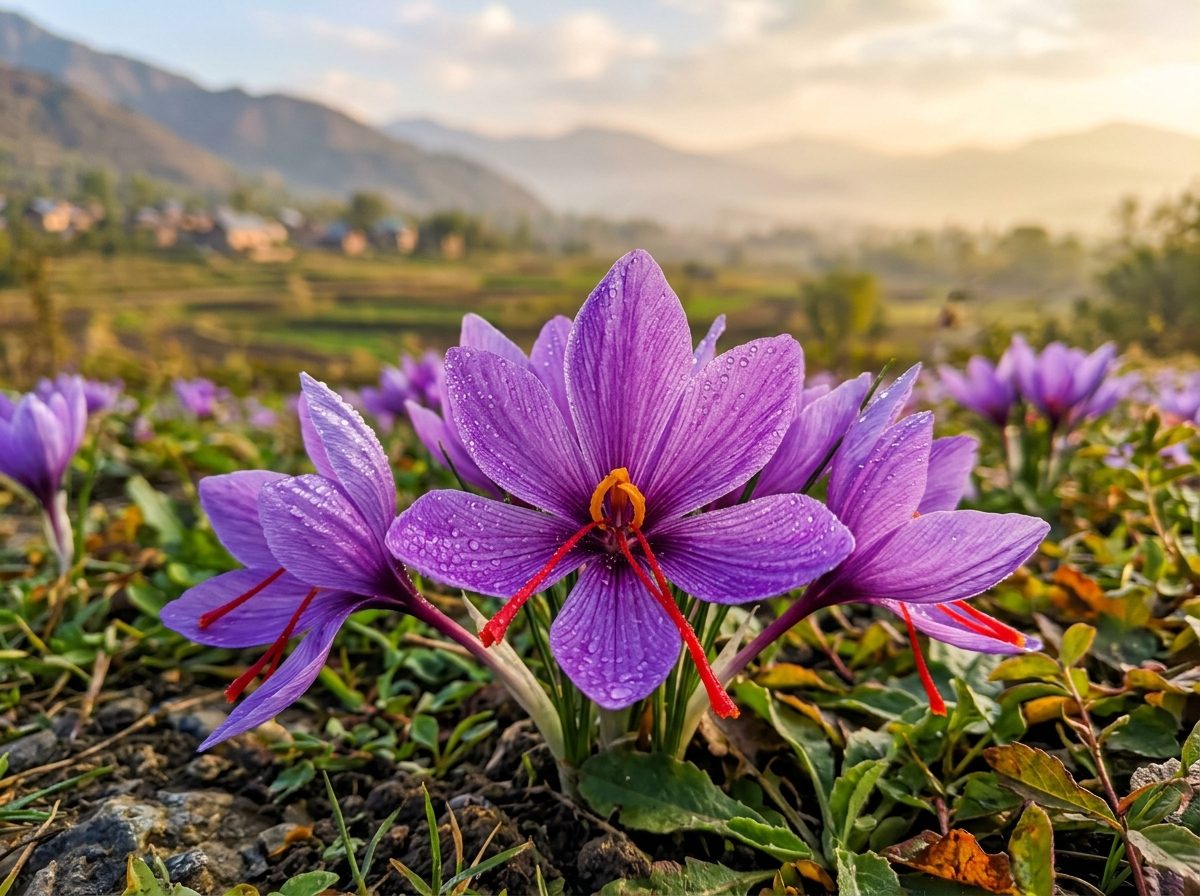
Pampore *(pronounced pam-por)* saffron produces world-class Grade-1 Mongra stigmas renowned for medicinal and culinary excellence.

Apple cultivation and saffron harvesting are the twin pillars of J&K's agricultural economy, employing millions of residents and generating substantial export revenue.
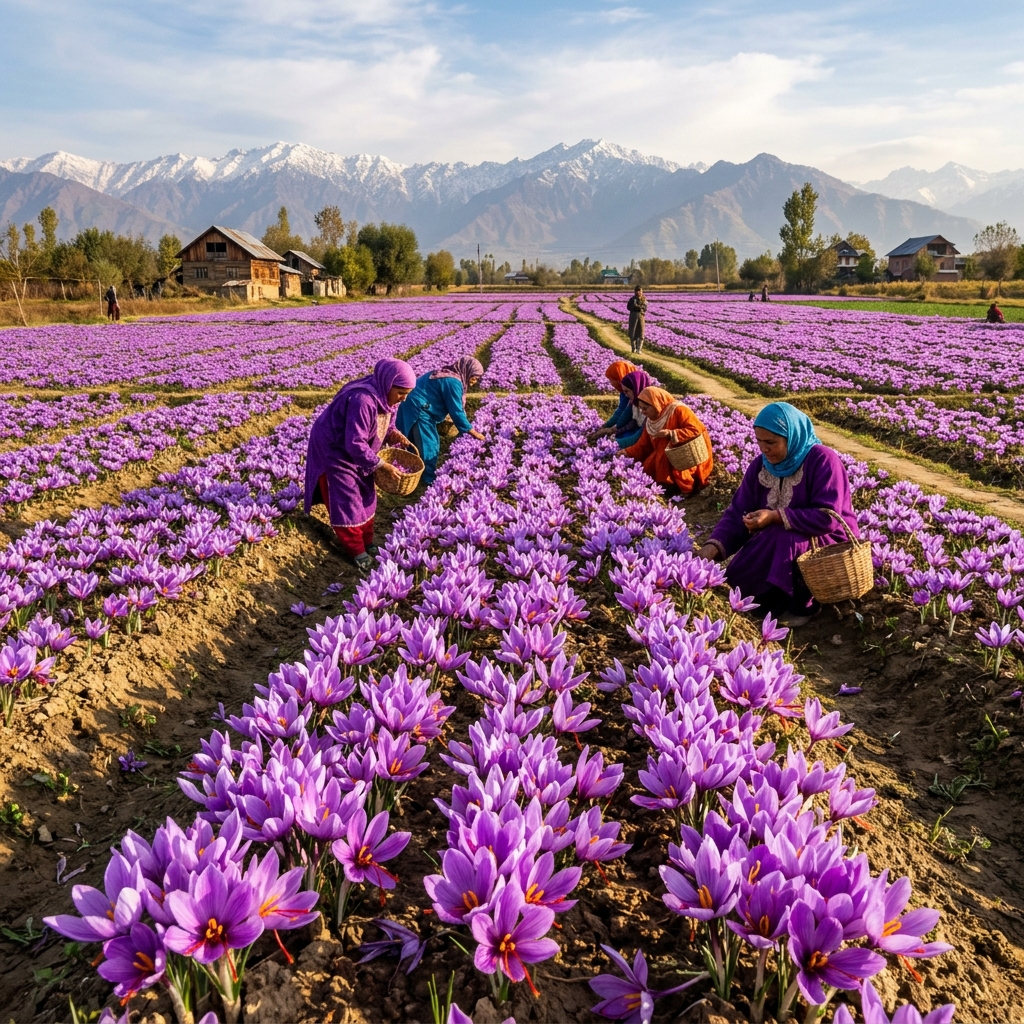
Saffron fields harvest in Pampore
Saffron Crocus Fields: Plucking crocus blossoms in Pampore during the autumn harvest season.

Apple

Region
Kashmir Valley (Sopore, Shopian)
Significance
Largest horticulture crop; 3.5M employed; 10% GSDP

Saffron

Region
Pampore (Pulwama district)
Significance
World's finest saffron; GI-tagged; threatened by climate change

Walnuts

Region
Kashmir Valley
Significance
Important export; raw and processed walnut products

Pear, Cherry, Almond

Region
Kashmir Valley
Significance
Significant horticultural crops

Rice, Maize, Wheat

Region
Both divisions
Significance
Food security crops; traditional cultivation

Basmati Rice

Region
Jammu division
Significance
Export-quality aromatic rice
🌾 All 10 Districts Agricultural Showcase

Agricultural Landscape of All 10 Districts of Jammu Division
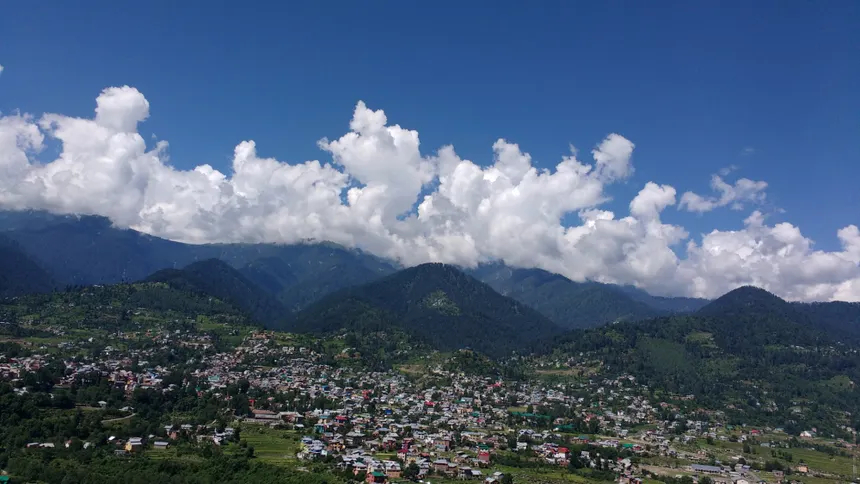
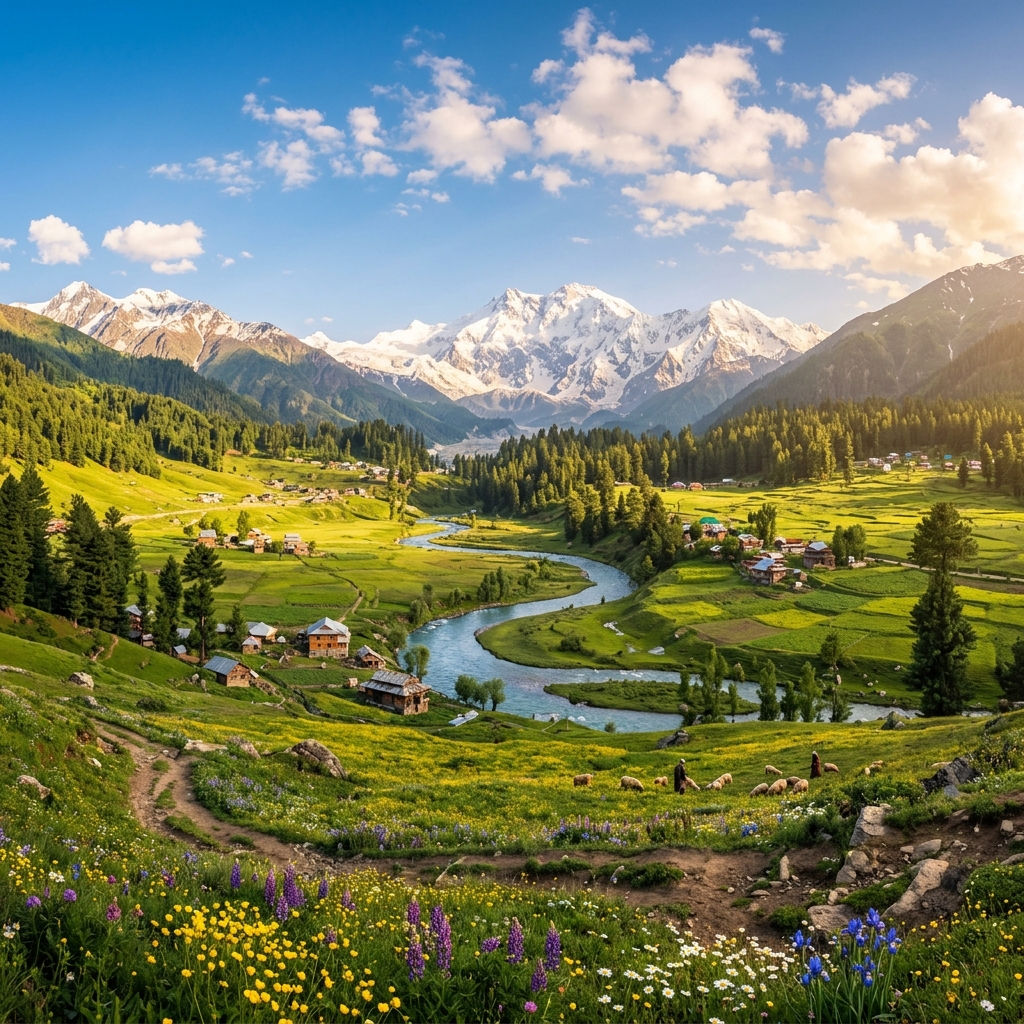
Bhaderwah Valley Bowl 📷 Bhaderwah Valley Bowl
Known as Mini Switzerland of Jammu for its verdant meadows and trout streams.

From the GI-tagged Basmati plains of RS Pura to high-altitude Saffron plateaus of Kishtwar and Lavender valleys of Bhaderwah—a comprehensive profile of crops across Jammu's 10 districts.
GI-Tagged Saffron Crocus Cultivation Kishtwar & Jammu
GI Kishtwar Saffron: Autumn crocus harvest on the Mandal plateau.
GI-Tagged Bhaderwah Red Rajma Crops
GI Bhaderwah Red Rajma: High-altitude specialty kidney bean crop.
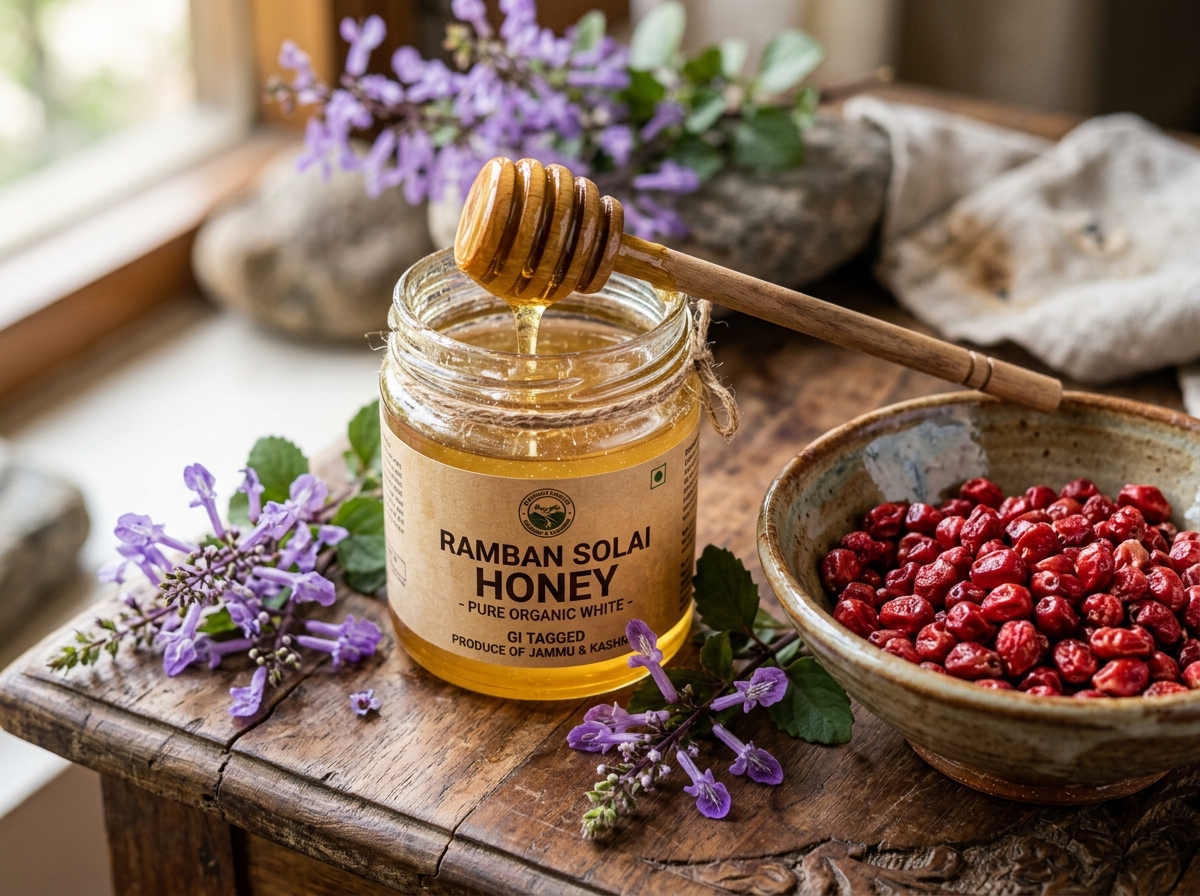
GI Solai Honey & Wild Anardana Ramban
GI Solai Honey & Anardana: Organic wild blossom honey & pomegranate.
Bhaderwah Lavender Purple Revolution Crops
Bhaderwah Lavender Farming: CSIR-Aroma Mission Purple Revolution.

1. Jammu

Primary Crops & Speciality
Paddy, Basmati Rice, Wheat, Litchi, Mango
GI-Tagged / Key Produce
RS Pura Aromatic Basmati Rice (GI)
Terrain & Irrigation
Fertile alluvial plains; Ranbir Canal & Tawi river network

2. Kathua

Primary Crops & Speciality
Paddy, Wheat, Yellow Mustard, Kinnow Citrus, Mango
GI-Tagged / Key Produce
GI Basohli Pashmina (Gaddi Goat Fleece)
Terrain & Irrigation
Ravi & Ujh River canal system; Kandi & plain belts

3. Samba

Primary Crops & Speciality
Basmati Rice, Maize, Mustard, Guava, Pulses
GI-Tagged / Key Produce
Subtropical Guava & Aromatic Basmati
Terrain & Irrigation
Alluvial plains & Kandi rainfed terraces

4. Udhampur

Primary Crops & Speciality
Maize, Wheat, Kasrod Ferns, Kud Barfi, Kaladi
GI-Tagged / Key Produce
GI Udhampur Kaladi Cheese & Kud Khoya
Terrain & Irrigation
Shivalik mountain terraces & Devika river valley

5. Reasi

Primary Crops & Speciality
Maize, Paddy, Wheat, Walnuts, Wild Anardana
GI-Tagged / Key Produce
GI Reasi Kaladi Cheese & Wild Anardana
Terrain & Irrigation
Chenab & Anji river basins; Shivalik terraced slopes

6. Ramban

Primary Crops & Speciality
Wild Solai Honey, Anardana, Maize, Kasrod Ferns
GI-Tagged / Key Produce
GI Ramban Solai Honey & GI Ramban Anardana
Terrain & Irrigation
High Pir Panjal cliff edges & Chenab mountain gorges

7. Doda (Bhaderwah)

Primary Crops & Speciality
Red Rajma, Lavender, Kagzi Walnuts, Apples
GI-Tagged / Key Produce
GI Bhaderwah Red Rajma & CSIR Lavender
Terrain & Irrigation
Cold alpine valleys & Neeru river mountain basins

8. Kishtwar

Primary Crops & Speciality
Saffron, Kagzi Walnuts, Buckwheat, Guchhi Mushrooms
GI-Tagged / Key Produce
GI Kishtwar Saffron (Mandal) & Wild Guchhi
Terrain & Irrigation
High-altitude Mandal plateau & Warwan/Paddar valleys

9. Poonch

Primary Crops & Speciality
Maize (Staple), Kagzi Walnuts, Wheat, Pattu Wool
GI-Tagged / Key Produce
Pir Panjal Kagzi Walnuts & Morel Guchhi
Terrain & Irrigation
Terraced mountain slopes & Suran river valley

10. Rajouri

Primary Crops & Speciality
Maize, Wheat, Mustard, Lemongrass, Kaladi Cheese
GI-Tagged / Key Produce
Desi Ghee, Kaladi & CSIR Lemongrass
Terrain & Irrigation
Rolling Shivalik hills & Manawar Tawi basin
🍎 All 10 Kashmir Valley Districts Crop Matrix

Agricultural Landscape of All 10 Districts of Kashmir Valley
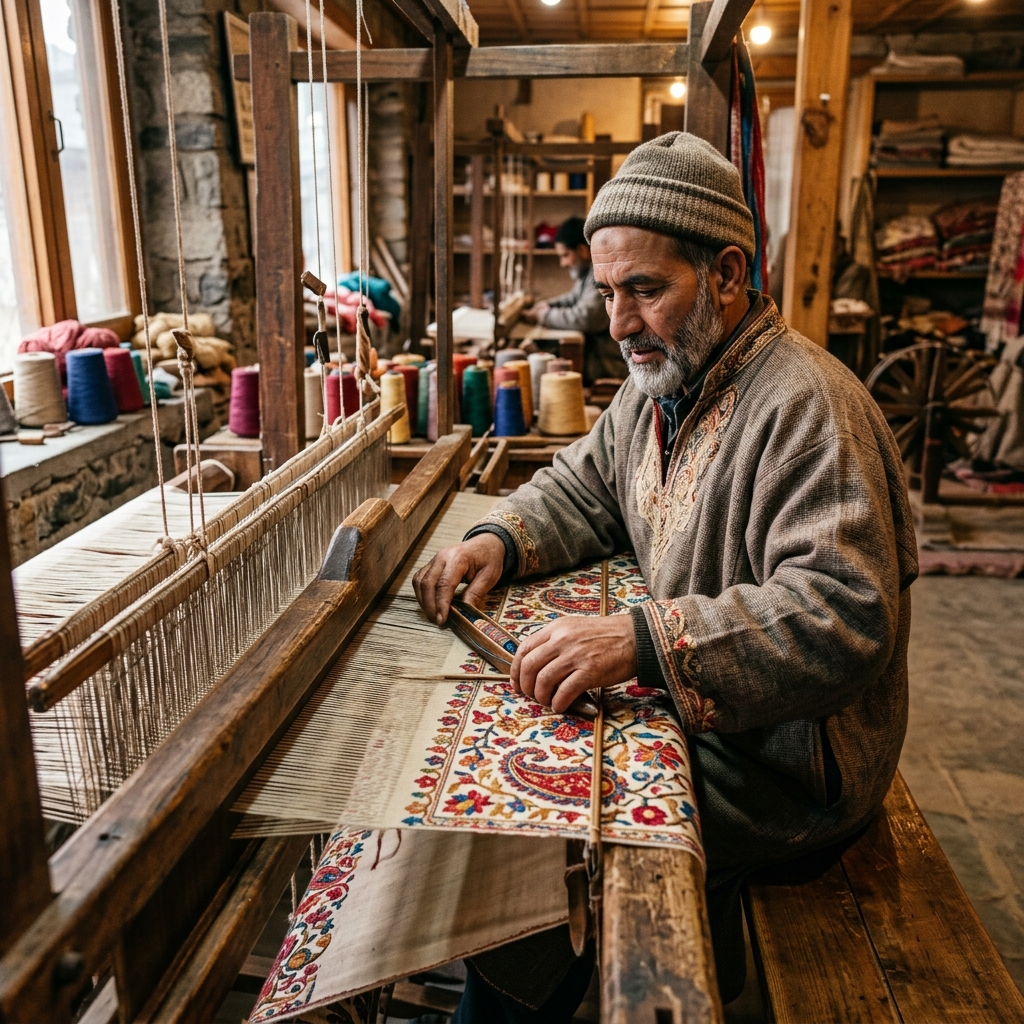
Pure GI Kashmir Pashmina Shawl 📷 Pure GI Kashmir Pashmina Shawl
Ultra-fine 12–15 micron fleece hand-woven and hand-embroidered with needle Sozni.

Home to world-famous GI-tagged Saffron, high-density Apple orchards, Lotus Stem (*Nadru*), and Kani Pashmina—a comprehensive profile of crops across Kashmir Valley's 10 districts.
GI-Tagged Kashmiri Saffron Crop Pampore Pulwama
GI Pampore Saffron: World's finest Crocus sativus harvest in Pulwama.
Dal Lake Floating Vegetables and Nadru Lotus Stems Srinagar
Srinagar Nadru & Floating Radh: Lotus stem & Dal Lake floating vegetable gardens.
Kashmir Floriculture & Commercial Horticulture
Valley Floriculture: Spring tulip & commercial flower farming.
Kashmir High-Density Apple & Lavender Crops
Aroma & Apple Orchards: High-density apple & lavender plantations.

1. Pulwama

Primary Crops & Speciality
Saffron (Pampore), Apples, Cherries, Dairy Milk
GI-Tagged / Key Produce
GI Kashmiri Saffron (*Crocus sativus*)
Terrain & Irrigation
Elevated Karewa lacustrine plateaus & Jhelum basin

2. Shopian

Primary Crops & Speciality
Apples (Kullu/Maharaji), Walnuts, Cherries, Pears
GI-Tagged / Key Produce
Apple Bowl of Kashmir (70% High-Density)
Terrain & Irrigation
Sub-alpine Pir Panjal foothills & Rambiara stream

3. Baramulla

Primary Crops & Speciality
Apples (Sopore Mandi), Walnuts, Paddy, Pears
GI-Tagged / Key Produce
Asia's 2nd Largest Apple Mandi (Sopore)
Terrain & Irrigation
Wular lake basin, Jhelum river delta & Karewas

4. Srinagar

Primary Crops & Speciality
Lotus Stem (*Nadru*), Floating Vegetables, Cherries
GI-Tagged / Key Produce
Dal Lake Floating Gardens (*Radh*) & Nadru
Terrain & Irrigation
Dal & Nigeen lake wetlands & Jhelum floodplains

5. Anantnag

Primary Crops & Speciality
Paddy (Kashmir Rice Bowl), Trout Fish, Apples, Vegetables
GI-Tagged / Key Produce
Kashmir Rice Bowl & Rainbow Trout Farming
Terrain & Irrigation
Lidder & Bringi river valleys; spring water canals

6. Kulgam

Primary Crops & Speciality
Apples, Paddy, Cherries, Pears, Grapes
GI-Tagged / Key Produce
Veshav River Basin Paddy & Apple Orchards
Terrain & Irrigation
Aharbal waterfalls basin & fertile Veshav plain

7. Budgam

Primary Crops & Speciality
Apples, Almonds, Exotic Vegetables, Kashmiri Red Chilli
GI-Tagged / Key Produce
Kashmiri Organic Almonds & Red Chillies
Terrain & Irrigation
Extensive Karewa plateaus & Doodhganga stream

8. Ganderbal

Primary Crops & Speciality
Cherries (Kangan), Apples, Paddy, Organic Vegetables
GI-Tagged / Key Produce
Kangan Commercial Cherry Belt & Trout
Terrain & Irrigation
Sindh River valley & Sonamarg alpine foothill

9. Bandipora

Primary Crops & Speciality
Water Chestnuts (*Singhara*), Organic Paddy, Apples
GI-Tagged / Key Produce
Wular Lake Water Chestnuts (*Singhara*)
Terrain & Irrigation
Wular Lake shoreline wetlands & Gurez valley

10. Kupwara

Primary Crops & Speciality
Paper-Shell Walnuts (*Kagzi*), Apples, Maize, Herbs
GI-Tagged / Key Produce
Kagzi Paper-Shell Walnuts & Wild Guchhi
Terrain & Irrigation
High-altitude Lolab Valley & Kishanganga basin
🌾 J&K Agriculture, HADP Subsidies & Rural Value Chains Master Hub Comprehensive directory of HADP ₹5,013 Cr projects (80% subsidies), High-Density Apple Orchards, GI Pampore Saffron, IDDS Dairy, ISDS Sheep, and Cold-Water Trout.
Open Agriculture Master Hub ➔

Tourism

Tourism — centered on Srinagar, Gulmarg, Pahalgam, and the Amarnath and Vaishno Devi shrines — is a major revenue source. Security conditions, infrastructure development, and seasonality significantly influence tourist arrivals.

Key Tourist Destinations
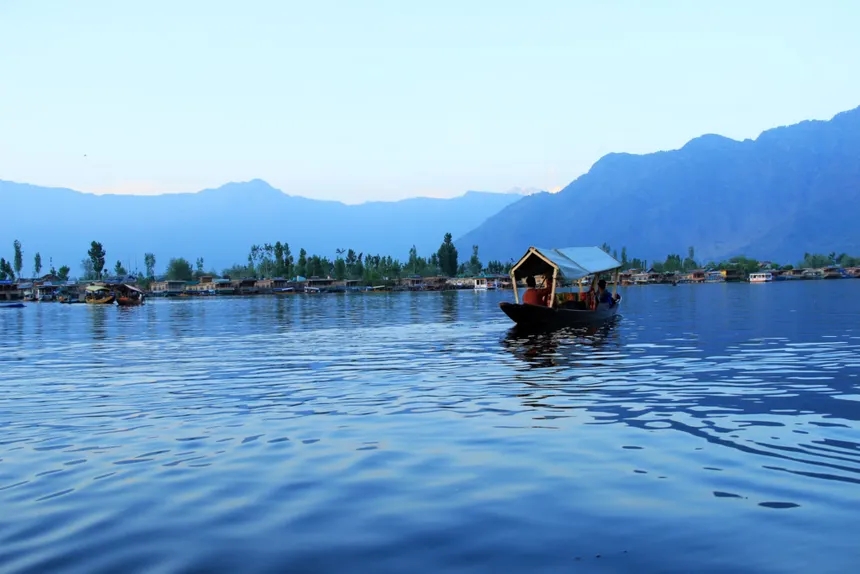
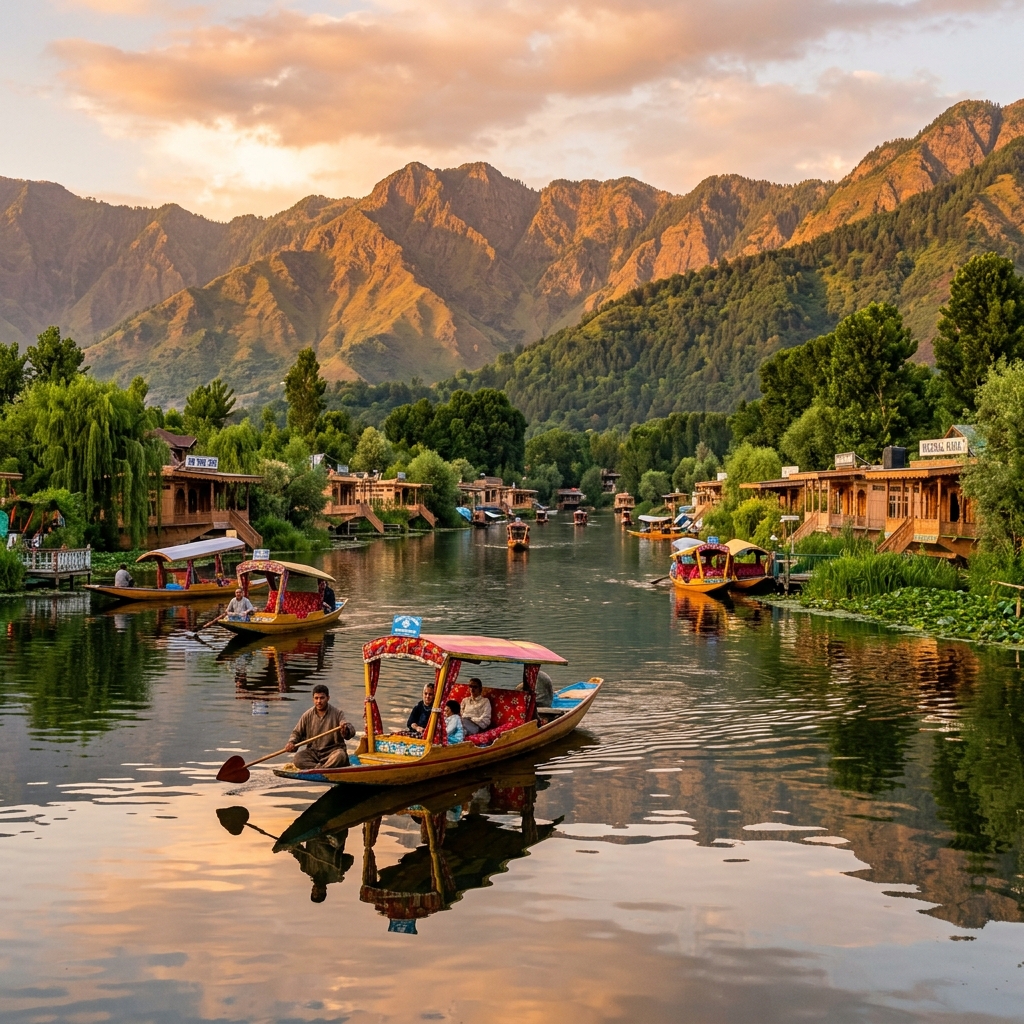
Dal Lake & Traditional Shikaras 📷 Dal Lake & Traditional Shikaras
Iconic freshwater lake surrounded by Zabarwan mountains, houseboats, and floating gardens.

Dal Lake, Srinagar

Iconic urban lake famous for houseboats, shikara rides, and floating gardens. Ecological concerns about encroachment and eutrophication are significant.

Gulmarg

A premier ski destination in winter; one of Asia's highest gondola cable cars. Alpine meadow tourism in summer.

Pahalgam

Valley resort town; base camp for Amarnath Yatra pilgrimage; meadow and river tourism.

Vaishno Devi

One of India's most visited pilgrimage sites (~8 million visitors per year); located in Reasi district of Jammu division.

The Ecological & Social Toll of Mass Tourism
Trade, Handlooms & Economic Growth 📷 Trade, Handlooms & Economic Growth
Handicrafts, tourism, food processing, and growing startup ecosystems.

While tourism is a vital driver of J&K's GDP, the rapid expansion of unregulated mass tourism has created severe environmental and social pressures on the region's fragile ecosystems:

Water Pollution & Eutrophication

Dal and Wular lakes face severe eutrophication from untreated sewage discharged by houseboats, hotels, and floating residential setups. Runoff of phosphorus and nitrogen has caused rapid weed blooms, reducing dissolved oxygen and threatening native fish populations.

Alpine Meadow & Soil Degradation

Gulmarg and Pahalgam have experienced unplanned concrete construction, leading to deforestation, soil compaction, and the loss of green pastures. The heavy movement of tourists and horses has accelerated trail erosion and damaged fragile alpine flora.

High-Altitude Waste Management Crisis

During seasonal pilgrimage seasons (like the Amarnath Yatra and Vaishno Devi trek), millions of visitors produce thousands of tons of plastic and organic waste. The lack of waste management infrastructure in high-altitude terrain leads to waste being dumped directly into streams, polluting the Lidder and Tawi rivers.

Resource Strain & Local Inflation

The diversion of water and electricity to hotel zones during peak summer months creates artificial shortages for local residents. Additionally, commercial land-buying has driven up real estate prices, making housing less affordable for local families.

Handicrafts & Cottage Industries

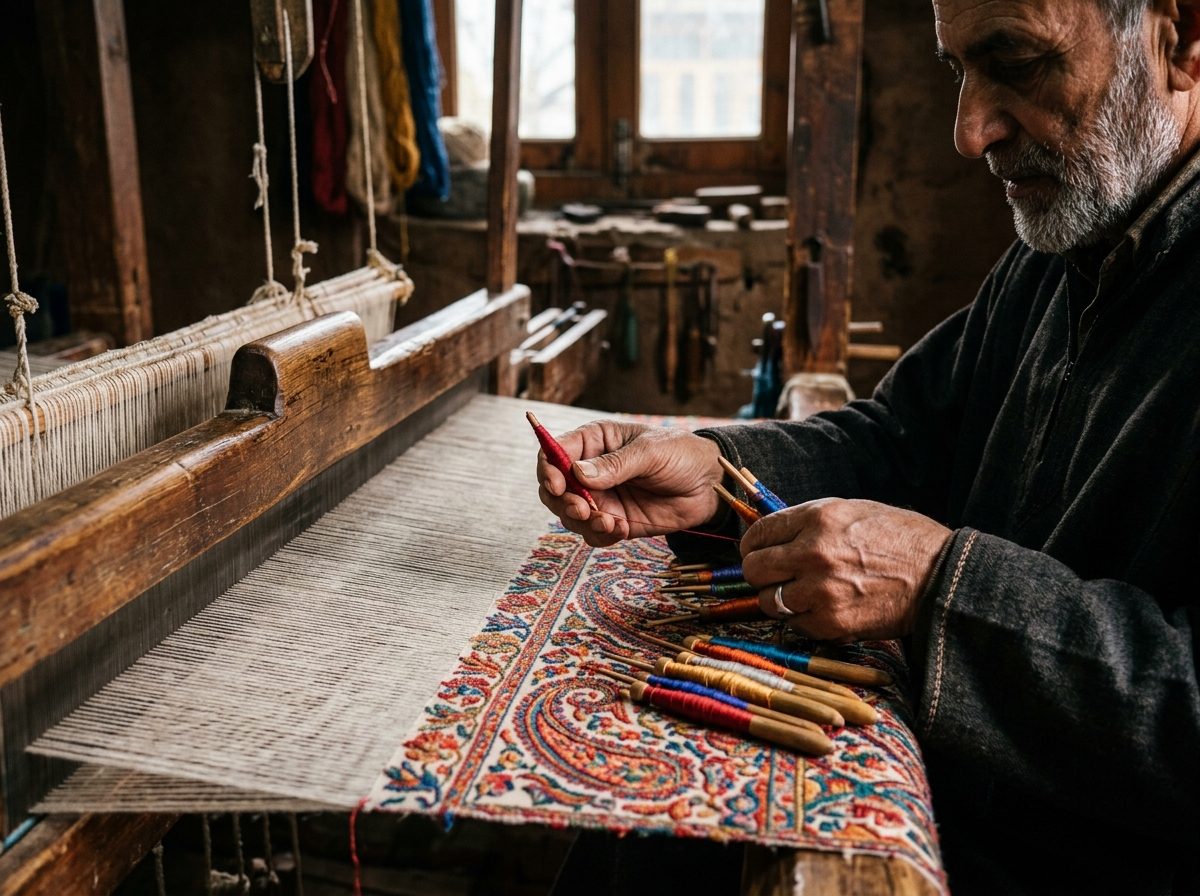
Kani Shawl Loom Weaving 📷 Kani Shawl Loom Weaving
Centuries-old artisan traditions employing lakhs across weaving, carving, and papier-mâché.

The handicrafts sector is central to J&K's cultural economy and export earnings. Key products include:

  • Pashmina / Cashmere: Highest-value textile export; traditional hand-spun and hand-woven.
  • Hand-knotted carpets: International export market; labour-intensive luxury goods.
  • Woodcraft: Walnut wood carving, Khatamband (geometric ceiling panels).
  • Embroidery: Sozni (fine needle work on shawls), Aari (chain stitch on fabric).
  • Paper maché: Decorative objects; traditional Persian-origin craft.
🏭 J&K Industry, MSMEs, Handicrafts & Investment Master Hub Explore ₹28,400 Cr industrial policy, Bari Brahmana & Lassipora growth centres, GI craft directories, and Single Window Clearance.
Open Industry Hub ➔

Mineral Resources

Kishtwar Paddar Sapphire & Lithium Reserves 📷 Kishtwar Paddar Sapphire & Lithium Reserves
Rich mineral wealth including legendary peacock-blue Paddar sapphires and Reasi lithium deposits.

J&K holds substantial mineral deposits:

Sapphire (Kashmir Blue)Paddar area, Kishtwar — world's finest quality blue sapphires
BoraxLadakh (now separate UT)
GraphiteVarious locations
LimestoneJammu region — cement industry
GypsumJammu region

For up-to-date GDP contributions, employment statistics, and sector reports, consult the UT government economic surveys and national statistical sources.

📊 NITI Aayog MPI & Capital Markets

Poverty Dynamics & Financial / Stock Market Expansion

Pangong Tso & Ladakh High Lakes 📷 Pangong Tso & Ladakh High Lakes
Deep turquoise alpine lake at 14,270 ft in the cold desert plateau.

An reliable analysis of multidimensional poverty reduction across J&K and Ladakh, J&K Bank's ₹3 Lakh Crore milestone, and the rapid surge in retail stock market Demat account adoption.

NITI Aayog Multidimensional Poverty Index (MPI)

According to NITI Aayog's National MPI report, Jammu & Kashmir achieved one of the steepest poverty reductions in India, dropping from 12.56% (2015-16) down to 4.80% (2019-21), lifting over 10.45 Lakh residents out of multidimensional poverty.

District Poverty Disparities:
  • Lowest Poverty: Jammu (0.49%) & Srinagar (1.34%) due to high urbanization and literacy.
  • Targeted Priority Districts: Ramban (14.86%), Reasi (11.40%), and Kishtwar (10.59%), actively supported by PMAY housing & Jal Jeevan rural tap water schemes.
  • Ladakh MPI: High performance across 12 SDG indicators with near-universal rural electrification and clean water access.

Stock Market, J&K Bank & Capital Growth

Pangong Tso & Ladakh High Lakes 📷 Pangong Tso & Ladakh High Lakes
Deep turquoise alpine lake at 14,270 ft in the cold desert plateau.

The financial ecosystem of J&K and Ladakh has shifted from traditional gold/real-estate savings to active capital market investments:

🏦 J&K Bank (NSE/BSE: J&KBANK): Reached a historic ₹3 Trillion (₹3,00,000+ Cr) business milestone in 2026, commanding a 65%+ market share in horticulture, MSME, and handicraft credit.
📱 8.06+ Lakh Active Demat Accounts: Over 50% YoY surge in retail stock market participation across Srinagar, Jammu, Leh, and Kargil via digital brokers (Zerodha, Groww, Angel One).
🏭 ₹28,400 Crore Industrial Scheme: Attracting institutional capital for cold chains, IT towers, solar parks in Leh/Kargil, and luxury hotel ventures.
🏭 INDUSTRIAL POLICY & INVESTMENT CLUSTERS

New Central Sector Scheme for Industrial Development (NCSS ₹28,400 Cr)

Trade, Handlooms & Economic Growth 📷 Trade, Handlooms & Economic Growth
Handicrafts, tourism, food processing, and growing startup ecosystems.

Notified by the Department for Promotion of Industry and Internal Trade (DPIIT), Ministry of Commerce and Industry, Government of India, the New Central Sector Scheme for Industrial Development of Jammu & Kashmir (NCSS) provides a ₹28,400 Crore financial outlay (operative from 2021 up to 2037). It establishes attractive capital subsidies and interest subvention across manufacturing and service enterprises:

Capital Investment Incentive (CII)

Zone A (Urban / Industrial Estates)
30% of eligible investment in plant & machinery
Zone B (Hilly / Remote Areas)
50% of eligible investment in plant & machinery
Maximum Financial Ceiling
Up to ₹5.00 Crore (Zone A) / ₹7.50 Crore (Zone B)

Capital Interest Subvention (CIS)

Zone A (Urban / Industrial Estates)
6% annual interest subvention
Zone B (Hilly / Remote Areas)
6% annual interest subvention
Maximum Financial Ceiling
For up to 7 consecutive years (Max ₹500 Lakh)

GST Linked Incentive (GSTLI)

Zone A (Urban / Industrial Estates)
300% of eligible value of investment
Zone B (Hilly / Remote Areas)
300% of eligible value of investment
Maximum Financial Ceiling
Payable over 10 years up to 1/10th per year

Working Capital Interest Subvention

Zone A (Urban / Industrial Estates)
5% annual interest subvention
Zone B (Hilly / Remote Areas)
5% annual interest subvention
Maximum Financial Ceiling
For 5 consecutive years (Max ₹1.00 Crore)

Major Industrial Estates & Specialization Clusters

Bari Brahmana

District
Jammu / Samba border
Major Industries
Pharmaceuticals, structural steel, FMCG goods, electrical equipment, packaging.
Economic Role
Largest manufacturing complex in J&K; primary contributor to export revenues and private-sector employment.

Gangyal

District
Jammu
Major Industries
Engineering goods, auto components, food processing, wire products, plastics.
Economic Role
Legacy MSME cluster supporting local auxiliary suppliers and urban industrial employment.

Lassipora (IGC)

District
Pulwama
Major Industries
Controlled Atmosphere (CA) cold storages, apple grading/packing, juice concentrate, food processing.
Economic Role
Premier post-harvest agro-hub of Kashmir; prevents distress fruit selling and extends apple shelf-life across India.

Khrew & Wuyan

District
Pulwama
Major Industries
Commercial cement plants, limestone grinding, building material processing.
Economic Role
Supplies heavy building materials for strategic regional tunnels, railways, and highway infrastructure projects.

Ghatti & Govindsar

District
Kathua
Major Industries
Industrial Biotechnology Park, textile manufacturing, chemical units, heavy fabrication.
Economic Role
NH-44 gateway industrial corridor connecting J&K to Punjab and northern manufacturing supply chains.

Rangreth & Ompora

District
Budgam
Major Industries
Electronic Complex, IT / ITES software parks, precision surgical instruments, optical assembly.
Economic Role
Technology and high-skill knowledge hub providing white-collar IT employment in the Kashmir Valley.

Battal Ballian

District
Udhampur
Major Industries
Steel rolling mills, cement clinker grinding, corrugated box packaging, edible oils.
Economic Role
Shivalik foothill industrial node catering to northern railway construction and highway logistics.

Samba (IGC Phase I & II)

District
Samba
Major Industries
Textiles, pharmaceuticals, pesticide formulations, packaging, metallurgical components.
Economic Role
Major industrial cluster generating substantial industrial output and direct employment along the Jammu-Kathua belt.
ℹ️ Source: J&K Department of Industries & Commerce (jkindustriescommerce.nic.in) and DPIIT NCSS Guidelines. Verify latest statutory notifications on official portals.
🚀 YOUTH EMPOWERMENT & LIVELIHOOD

Mission Youth & Self-Employment Ecosystem

Geographical Landscape of J&K 📷 Geographical Landscape of J&K
Spanning Pir Panjal, Great Himalayas, and Zanskar mountain ranges across 20 districts.

Operated under the Office of the Lieutenant Governor, Mission Youth J&K and JKEDI provide structured self-employment programmes, capital subsidies, and skill development to empower youth across all 20 districts:

MUMKIN

Target Group
Unemployed youth aged 18–35 residing in J&K.
Purpose
Commercial transport sector livelihood (mini-buses, load carriers, cabs).
Financial / Support Mechanism
10% upfront subsidy from Govt + 10% special discount from vehicle maker; remaining 80% financed through partner banks.
Official Source

TEJASWINI

Target Group
Female entrepreneurs aged 18–35 with minimum 8th class qualification.
Purpose
Setting up gainful micro-enterprises in manufacturing, services, or trading.
Financial / Support Mechanism
Financial assistance up to ₹5.00 Lakh. Mission Youth provides 10% project cost as subsidy plus 100% interest subvention for repayment tenure.
Official Source

Spurring Entrepreneurship

Target Group
Innovative youth (18–35) with viable business proposals.
Purpose
Establishing innovative startups, agro-enterprises, green businesses, and IT units.
Financial / Support Mechanism
Credit linkage up to ₹15.00 Lakh with soft terms, technical mentorship, and incubation handholding.
Official Source

PARVAAZ

Target Group
Meritorious students with family income < ₹8.00 Lakh/yr.
Purpose
Free professional competitive coaching for UPSC Civil Services, JKPSC KAS, NEET, and JEE.
Financial / Support Mechanism
100% financial grant for coaching fees at empaneled premier coaching institutions across J&K and Delhi.
Official Source

JKEDI Start-up Ecosystem

Target Group
Educated unemployed youth & tech entrepreneurs.
Purpose
Entrepreneurship Development Programmes (EDP), incubation, and seed funding.
Financial / Support Mechanism
Training-linked seed capital assistance and startup mentorship under J&K Startup Policy.
Official Source
ℹ️ Note: Application rules, qualifying cut-offs, and batch schedules are governed by Mission Youth J&K notifications. Verify details on missionyouth.jk.gov.in.
📊 20-DISTRICT COMPARATIVE ECONOMIC PROFILES

Master 20-District Economic, Industrial & Mineral Matrix

Paddar Sapphire & Mineral Resources 📷 Paddar Sapphire & Mineral Resources
Rich geological deposits including world-famous blue sapphires and lithium.

Comprehensive comparative reference mapping the primary agricultural driver, major industrial growth centre, certified GI product / local specialty, and key natural resource across all 20 districts of J&K:

1. Srinagar

Division
Kashmir
Major Agriculture / Horticulture
Dal Lake Floating Vegetables, Cherries, Almonds
Major Industry / Economic Activity
Tourism, Handicrafts, Silk Filatures, IT Services (Zainakote)
GI Product / Local Specialty
Kashmir Pashmina, Kani Shawl, Papier-Mâché, Carpets
Major Resource
Dal/Nigeen Wetlands, Limestone

2. Baramulla

Division
Kashmir
Major Agriculture / Horticulture
Apples (Sopore Mandi), Walnuts, Paddy, Cherries
Major Industry / Economic Activity
Fruit Trade Hub, Doabgah Sopore Industrial Estate, Gulmarg Ski Tourism
GI Product / Local Specialty
Kashmiri Delicious Apples, Hand-Knotted Carpets
Major Resource
Gypsum, Limestone, Graphite, Jhelum River

3. Anantnag

Division
Kashmir
Major Agriculture / Horticulture
Paddy (Kashmir Rice Bowl), Apples, Walnuts, Trout
Major Industry / Economic Activity
Cricket Bat Manufacturing (Bijbehara/Sethar), Cold-Water Trout Farming (Kokernag)
GI Product / Local Specialty
GI Mushqbudji Rice, Kashmiri Willow Bats, Rainbow Trout
Major Resource
Kokernag/Verinag Springs, Limestone

4. Pulwama

Division
Kashmir
Major Agriculture / Horticulture
Saffron (Pampore), Apples, Dairy Milk (Anand of Kashmir)
Major Industry / Economic Activity
Lassipora Mega Food Park & CA Cold Storage, Khrew Cement Corridor
GI Product / Local Specialty
GI Pampore Saffron, Dairy Processing
Major Resource
Karewa Lacustrine Soils, High-Grade Limestone

5. Kupwara

Division
Kashmir
Major Agriculture / Horticulture
Paper-Shell Walnuts (Kaghzi), Maize, Apples, Herbs
Major Industry / Economic Activity
Walnut Processing & Grading, Marble Quarries (Kupwara), Forest Timber
GI Product / Local Specialty
Kaghzi Walnuts, Wild Morel Mushrooms (Guchhi)
Major Resource
Marble, Limestone, Lignite, Forest Reserves

6. Shopian

Division
Kashmir
Major Agriculture / Horticulture
High-Density Apples (70% coverage), Pears, Cherries
Major Industry / Economic Activity
Aglar & Trenz Fruit Cold Chains, Modern Grading & Packaging
GI Product / Local Specialty
Apple Bowl of Kashmir, Kashmiri Ambri Apple
Major Resource
Pir Panjal Glacial Streams, Timber

7. Ganderbal

Division
Kashmir
Major Agriculture / Horticulture
Commercial Cherries (Kangan), Apples, Paddy, Trout
Major Industry / Economic Activity
Willow Wicker Craft, Hydroelectric Power Generation (Upper Sindh/Ganderbal)
GI Product / Local Specialty
Kangan Commercial Cherries, Willow Wicker Work
Major Resource
Sindh River Hydropower, Granite, Sand

8. Budgam

Division
Kashmir
Major Agriculture / Horticulture
Almonds (Badam Giri), Kashmiri Red Chillies, Apples, Vegetables
Major Industry / Economic Activity
Rangreth Electronic & IT Complex, Brick Kilns, Srinagar Airport Cargo
GI Product / Local Specialty
GI Kani Shawl (Kanihama), Khatamband Ceiling Craft
Major Resource
Brick Clay / Karewa Loam, Karewa Soils

9. Kulgam

Division
Kashmir
Major Agriculture / Horticulture
Paddy (Veshav Basin), Apples, Grapes, Walnuts
Major Industry / Economic Activity
Traditional Handloom Blankets, Chawalgam Agro-Processing
GI Product / Local Specialty
Kulgam Handloom Woolen Blankets, Veshav Apples
Major Resource
Veshav River, Aharbal Hydropower Potential

10. Bandipora

Division
Kashmir
Major Agriculture / Horticulture
Water Chestnuts (Singhara), Paddy, Apples, Gurez Kala Jeera
Major Industry / Economic Activity
Kishanganga Hydroelectric Project (330 MW), Wular Fishery Logistics
GI Product / Local Specialty
Wular Lake Water Chestnuts (Singhara), Gurez Kala Jeera
Major Resource
Kishanganga Hydropower, Wular Freshwater Wetland

11. Jammu

Division
Jammu
Major Agriculture / Horticulture
Basmati Rice (RS Pura), Wheat, Yellow Mustard, Mango
Major Industry / Economic Activity
Bari Brahmana & Gangyal Industrial Estates, Logistics Hub, City Tourism
GI Product / Local Specialty
GI RS Pura Aromatic Basmati Rice, Dogra Gastronomy
Major Resource
Tawi River Basin, Alluvial Soils, Quartzite

12. Kathua

Division
Jammu
Major Agriculture / Horticulture
Paddy, Wheat, Mustard, Kinnow Citrus, Mango
Major Industry / Economic Activity
Ghatti Industrial Biotech Park, Govindsar Textiles, Ranjit Sagar Hydropower
GI Product / Local Specialty
GI Basohli Paintings, GI Basohli Pashmina Woolens
Major Resource
Ravi/Ujh Hydropower, Limestone, Bauxite

13. Samba

Division
Jammu
Major Agriculture / Horticulture
Basmati Rice, Subtropical Guava, Mustard, Pulses
Major Industry / Economic Activity
Samba Industrial Growth Centre Phase I & II, Pharmaceutical Packaging, Handlooms
GI Product / Local Specialty
Traditional Hand Block Printing (*Chhint* Handlooms)
Major Resource
Foundry Sand, Building Stone, Alluvium

14. Udhampur

Division
Jammu
Major Agriculture / Horticulture
Maize, Wheat, Kasrod Wild Ferns, Dairy Milk, Mulberry Silk
Major Industry / Economic Activity
Battal Ballian Industrial Area, Northern Command HQ, Tourism Transit
GI Product / Local Specialty
GI Udhampur Kaladi Cheese, Kud Patisa / Sweetmeats
Major Resource
Coal, Bauxite, Limestone, Tawi Stream

15. Reasi

Division
Jammu
Major Agriculture / Horticulture
Maize, Walnuts, Wild Anardana, Dairy, Citrus
Major Industry / Economic Activity
Mata Vaishno Devi Pilgrimage Economy (~8M visitors/yr), Salal Hydropower (690 MW)
GI Product / Local Specialty
GI Reasi Kaladi Cheese, Wild Pomegranate (Anardana)
Major Resource
Salal-Haimana Lithium Inferred Resources (G3), Bauxite, Chenab River

16. Ramban

Division
Jammu
Major Agriculture / Horticulture
Wild Sulai Honey, Wild Anardana, Maize, Kasrod Ferns
Major Industry / Economic Activity
Baglihar Hydroelectric Project (900 MW), NH-44 Transit Services & Highway Logistics
GI Product / Local Specialty
GI Ramban Sulai Honey, GI Ramban Anardana
Major Resource
Chenab Hydropower, Gypsum, Limestone

17. Doda

Division
Jammu
Major Agriculture / Horticulture
Red Rajma, Lavender (Purple Revolution), Kagzi Walnuts, Apples
Major Industry / Economic Activity
Lavender Essential Oil Distillation Units, Eco-Tourism (Bhaderwah Valley)
GI Product / Local Specialty
GI Bhadarwah Red Rajmash, CSIR Lavender Oil
Major Resource
Lead, Zinc, Quartz, Neeru River Basin

18. Kishtwar

Division
Jammu
Major Agriculture / Horticulture
Saffron (Mandal Plateau), Walnuts, Buckwheat, Wild Guchhi
Major Industry / Economic Activity
Major Hydropower Hub (Pakal Dul, Kiru, Kwar, Ratle), Blue Sapphire Mines (Paddar)
GI Product / Local Specialty
GI Kishtwar Saffron, Paddar Blue Sapphire
Major Resource
Kashmir Blue Sapphire, Chenab/Marusudar Hydropower

19. Poonch

Division
Jammu
Major Agriculture / Horticulture
Maize (Staple), Walnuts, Apples, Pattu Wool, Morel Guchhi
Major Industry / Economic Activity
Wool Weaving, Poonch Industrial Estate, Cross-Pir-Panjal Mughal Road Transit
GI Product / Local Specialty
Pir Panjal Kagzi Walnuts, Woolen Pattu
Major Resource
Suran River Valley, Limestone, Bauxite, Forest Woods

20. Rajouri

Division
Jammu
Major Agriculture / Horticulture
Maize, Wheat, Yellow Mustard, Lemongrass, Dairy
Major Industry / Economic Activity
Chikri Woodcraft Carving, Silk Rearing, Kalakote Thermal/Coal Mining Hub
GI Product / Local Specialty
GI Rajouri Chikri Woodcraft, Kaladi Cheese, Desi Ghee
Major Resource
Coal (Kalakote), Limestone, Bauxite, Forest Timber
ℹ️ Compiled from official District Economic Profiles, J&K Directorate of Economics & Statistics, and Geographical Indications Registry of India.
🏛️ Official IT Department & Industrial Development Corporation (SIDCO) Records

Information Technology, Software Services & Emerging Tech Hubs

While agriculture and tourism historically anchor Jammu & Kashmir’s revenue base, the services sector has expanded to contribute over 50% of the Gross State Domestic Product (GSDP). Within this structural transition, the Union Territory has developed dedicated technology clusters to foster software exports, business process management (BPM), and indigenous entrepreneurship.

Rangreth Electronic & IT Complex (Budgam)

Located on the outskirts of Srinagar in Budgam district, Rangreth serves as the premier operational technology node of the Kashmir Valley. Administered under J&K SIDCO and housing the Software Technology Parks of India (STPI) Srinagar Incubation Facility, the complex supports:

  • High-speed fiber-optic data connectivity and server colocation infrastructure.
  • Export-oriented software development firms specializing in web engineering, GIS mapping, and ERP systems.
  • Precision medical electronics, optical assembly units, and digital service providers.
  • Local white-collar employment for computer science and engineering graduates from regional universities (NIT Srinagar, University of Kashmir, IUST Awantipora).

Ompora Industrial & Technology Estate (Budgam)

Conceived as an expansive modern industrial and logistics park adjacent to the Srinagar International Airport corridor, Ompora is planned to relieve congestion from urban Srinagar:

  • Zoned land allocation for light manufacturing, packaging, and non-polluting technology services.
  • Planned multi-tenant IT Towers to support knowledge-based service outsourcing.
  • Strategic transit positioning near the National Highway bypass and railway freight corridors.
  • Data Gap Note: Current tenant occupancy and private capex drawdowns remain subject to ongoing phase-wise infrastructural commissioning.

Startup Incubation & Institutional Support Framework

Technology entrepreneurship in the Union Territory is structured through institutional partnerships rather than speculative venture ecosystems:

JKEDI (Entrepreneurship Development) State nodal agency providing seed capital assistance, capacity building, and regulatory clearances for grassroots micro-enterprises.
Academic Incubators Technology Business Incubators (TBIs) hosted at NIT Srinagar (IIEDC), IIT Jammu, and SMVDU Katra supporting student-led hardware and software prototypes.
Mission Youth Start-Up Scheme Financial credit linkages up to ₹15 Lakh with interest subsidies for youth ventures in agro-tech, clean energy, and logistics.
📊 Agro-Economic Value Chain & Market Dynamics

Agro-Horticultural Value Chains: From Orchard Floor to National Terminal Markets

Horticulture forms the financial backbone of rural Kashmir, contributing an estimated 8% to 10% of GSDP and sustaining approximately 35 lakh individuals directly and indirectly. Understanding this sector requires tracking the structured movement of commodities through six critical nodes:

The Kashmir Apple Value Chain

1. Orchard Production Transition from traditional seedling rootstocks (producing in 8–10 years) to High-Density Plantation (HDP) dwarf rootstocks yielding export-grade fruit by Year 3.
2. Post-Harvest Sorting On-farm manual sorting or automated mechanical grading based on color saturation, skin blemishes, and diameter (Delicious, Maharaji, American varieties).
3. Wholesale Mandis Assembly at regional fruit and vegetable markets (Asia's 2nd largest fruit mandi at Sopore, along with major hubs at Shopian, Parimpora, and Kulgam).
4. CA Cold Storage Controlled Atmosphere (CA) storage units at Lassipora and Aglar, which regulate O₂ and CO₂ to preserve crispness for up to 8 months, preventing distress sales.
5. Transit Logistics Reefer trucks transiting the NH-44 highway corridor and upcoming direct refrigerated container trains via the Udhampur-Srinagar-Baramulla Rail Link (USBRL).
6. Terminal Markets Auction sales at major consumption terminal mandis across India (Azadpur Delhi, Vashi Mumbai, Koyambedu Chennai, and direct retail supermarkets).

The GI Saffron Ecosystem & IIKSTC Dussoo

Kashmir Saffron (Crocus sativus), cultivated primarily across the lacustrine Karewa plateaus of Pampore, Kishtwar, and Budgam, received Geographical Indication (GI) registration in 2020. The supply chain has been formalized through the state-of-the-art India International Kashmir Saffron Trading Centre (IIKSTC) at Dussoo, Pampore:

  • Scientific Stigma Separation: Mechanical stigma-style detaching to protect delicate crocin (color), picrocrocin (bitterness), and safranal (aroma) chemical compounds.
  • Vacuum Drying: Replacing traditional sun-drying with regulated hot-air vacuum dehydration to preserve active pharmacological potency.
  • Laboratory Quality Grading: Spectrophotometric testing categorizing saffron into Grade 1 (Mongra), Grade 2 (Lacha), and Grade 3 (Guchhi).
  • Tamper-Proof GI Tagging: Encapsulation with security holograms and QR codes linking to certified lab test certificates to eliminate adulteration.
  • Pan-India e-Auction: National electronic auction platform allowing registered farmers to sell directly to pharmaceutical, culinary, and cosmetic buyers.
⚡ Central Electricity Authority & JKSPDC Generation Baselines

Hydropower Infrastructure, Transmission & Seasonal Energy Dynamics

Jammu & Kashmir possesses an identified hydroelectric potential of approximately 20,000 MW, predominantly situated along the swift, snow-fed gorges of the Chenab, Jhelum, and Indus river basins. Run-of-the-river (RoR) hydroelectric projects represent the cornerstone of the region’s public infrastructure assets:

Baglihar Phase I & II

River Basin
Chenab River
District
Ramban
Installed Capacity
900 MW (450 + 450 MW)
Operating Agency
JKSPDC (State Sector)

Salal Phase I & II

River Basin
Chenab River
District
Reasi
Installed Capacity
690 MW
Operating Agency
NHPC (Central Sector)

Uri Phase I & II

River Basin
Jhelum River
District
Baramulla
Installed Capacity
720 MW (480 + 240 MW)
Operating Agency
NHPC (Central Sector)

Dulhasti

River Basin
Chenab River
District
Kishtwar
Installed Capacity
390 MW
Operating Agency
NHPC (Central Sector)

Kishanganga

River Basin
Kishanganga River
District
Bandipora (Gurez/Dawar)
Installed Capacity
330 MW
Operating Agency
NHPC (Central Sector)

Pakal Dul (Active Infrastructure Project)

River Basin
Marusudar (Chenab tributary)
District
Kishtwar
Installed Capacity
1,000 MW
Operating Agency
CVPPL Joint Venture

Kiru & Kwar (Active Infrastructure Project)

River Basin
Chenab River
District
Kishtwar
Installed Capacity
1,164 MW (624 + 540 MW)
Operating Agency
CVPPL Joint Venture

Ratle (Active Infrastructure Project)

River Basin
Chenab River
District
Kishtwar
Installed Capacity
850 MW
Operating Agency
Ratle Hydroelectric Corp (RRVUNL JV)

The Seasonal Hydrological Paradox

Because all major installations operate on a Run-of-the-River design without large storage reservoirs, generation is dictated entirely by seasonal river discharge. In summer (May–August), glacial melting yields peak power output. In winter (December–February), freezing headwaters cause river flows to decline by 75–80%, reducing generation to ~20–25% of installed capacity precisely when peak winter heating demand surges across the Kashmir Valley.

Transmission Grid & Distribution Reforms

Grid connectivity has been stabilized through Northern Grid 400 kV double-circuit transmission lines crossing the Pir Panjal Range. Power distribution is managed by two unbundled corporations: Kashmir Power Distribution Corporation Ltd (KPDCL) and Jammu Power Distribution Corporation Ltd (JPDCL), with ongoing implementation of smart metering under the Revamped Distribution Sector Scheme (RDSS) to mitigate Aggregate Technical & Commercial (AT&C) losses.

📈 Comprehensive Macroeconomic Synthesis

Structural Economic Constraints & Strategic Development Horizons

Evidence-Backed Structural Constraints

  • Single-Corridor Transit Vulnerability: Heavy freight transit remains highly sensitive to weather-induced landslides along the Ramban-Banihal stretch of NH-44 during peak autumn fruit harvest.
  • Post-Harvest CA Cold Storage Deficit: Although storage capacity has crossed 2.5 lakh metric tonnes in Lassipora and surrounding clusters, it accounts for less than 15% of the total 20+ lakh MT annual apple harvest.
  • Winter Power Purchase Deficit: Winter hydro-generation drops necessitate expensive power purchases from the national energy exchange to maintain base-load supply.
  • High Transportation Costs: Mountain logistics add a 15–25% freight premium on inward raw materials and outward finished industrial goods compared to plains manufacturing hubs.

Evidence-Backed Strategic Opportunities

  • USBRL Direct All-Weather Rail Freight: Direct freight rail integration through the Chenab Bridge linking Baramulla to Delhi/Mumbai will reduce fruit transit time from 72+ hours to under 24 hours.
  • High-Density Horticulture (HADP): The ₹5,013 Crore Holistic Agriculture Development Programme provides structured 80% subsidies to transition traditional orchards into high-yield dwarf rootstocks.
  • GI-Driven Export Premium: Strict QR-code verification and origin authentication for Basohli Pashmina, Kani Shawls, Kashmir Silk, and Saffron directly capture higher international export margins.
  • Agro-Processing & Nutraceuticals: Value-addition clusters converting low-grade culled apples into apple pomace, pectin, organic vinegar, and CSIR-backed essential oils (Lavender, Lemongrass).
🏛️ Official Data Sources & Fact-Checking Transparency
Public Domain & Statutory Archives

All historical, demographic, examination, and geographic records across this portal are compiled from public domain repositories, including the Official Gazette of India (egazette.nic.in), Census of India Demographic Data, India Meteorological Department (IMD), and statutory notifications issued by the J&K Administration & Examination Boards.

🛡️ Editorial Policy: Academic Non-Affiliation Guidelines 📬 Grievance & Corrections: Editorial Review Desk ⚖️ License: Open Public Research (CC-BY-NC 4.0)

Explore Related Jammu & Kashmir Knowledge Clusters

Cross-Topic Navigation
📜 5,000-Year History & Dogra Dynasty 🗺️ 20 Districts & Geospatial River Maps 🎓 JKSSB & JKPSC Exam Preparation Hub 🏔️ Gulmarg Gondola & Alpine Treks 🛕 Mata Vaishno Devi & Pilgrimage Guide 🍲 36-Course Kashmiri Wazwan Atlas 🧶 GI Crafts, Pashmina & Artisans 🚗 Live NH-44 Highway & Weather Radar 🏛️ GAD Official Directory & Helplines 📜 UT Welfare Schemes & Jan Sugam 📊 20-District Demographics & Census 📑 Master Topic Index & Directory

Economic & Departmental Data Sources

  1. [1] Official Departmental Report Directorate of Horticulture Kashmir & Jammu. Annual Production & HADP High-Density Plantation Report (2024–2026). Government of Jammu & Kashmir. Validating 20L+ MT annual fresh apple production and ~70% national volume. Official Horticulture Portal ↗ ↩
  2. [2] Statutory GI Certificate Geographical Indications Registry, Intellectual Property India. Kashmir Saffron Certificate of Registration (GI Application No. 316, Class 30). Notified July 24, 2020. Defining Karewa cultivation boundaries and chemical purity standards. GI Registry Records ↗ ↩
  3. [3] Official Statutory Dataset Central Electricity Authority (CEA) & NHPC Limited. Hydro Electric Potential Assessment & Generation Status in J&K Basins. Ministry of Power, Government of India. Detailing Chenab run-of-the-river cascades (Dul Hasti, Baglihar, Pakal Dul, Ratle, Kiru). CEA Power Reports ↗ ↩
  4. [4] Official Policy Guideline Information Technology Department & SIDCO J&K. J&K Industrial Policy 2021–30 & Tech Incubation Infrastructure at Rangreth & Ompora. Government of Jammu & Kashmir. IT Department Records ↗ ↩
  5. Reviewed citation archive reference ref-econ-5.

Further Reading & Official Economic Policy Records

Official departmental datasets, industrial policies, geographical indication certificates, and infrastructure registries for J&K's contemporary economy:

📈 Explore the J&K Economy, Banking & Infrastructure Cluster

Horticulture & Agricultural Wealth 📷 Horticulture & Agricultural Wealth
High-density apple orchards, saffron, walnuts, and HADP agrarian schemes.
💼 Economy & Sectoral Output
Horticulture, GI exports, handicrafts & fiscal indicators
🏦 Banking, J&K Bank & MSME Loans
Credit schemes, self-employment subsidies & financial hubs
🏗️ Infrastructure & Strategic Rail
USBRL Chenab Bridge, tunnels, expressways & power projects
🏭 Industry & Industrial Estates
SIDCO/SICOP industrial parks, incentives & new industrial policy
💻 Technology Startups & IT Parks
Rangreth IT park, incubation centers & digital innovation
📋 Government Schemes & Subsidies
HADP, PMEGP, Mumkin, Tejaswini & social welfare benefits