
Post-2019 Administrative Framework & Dual-Pillar Executive Structure
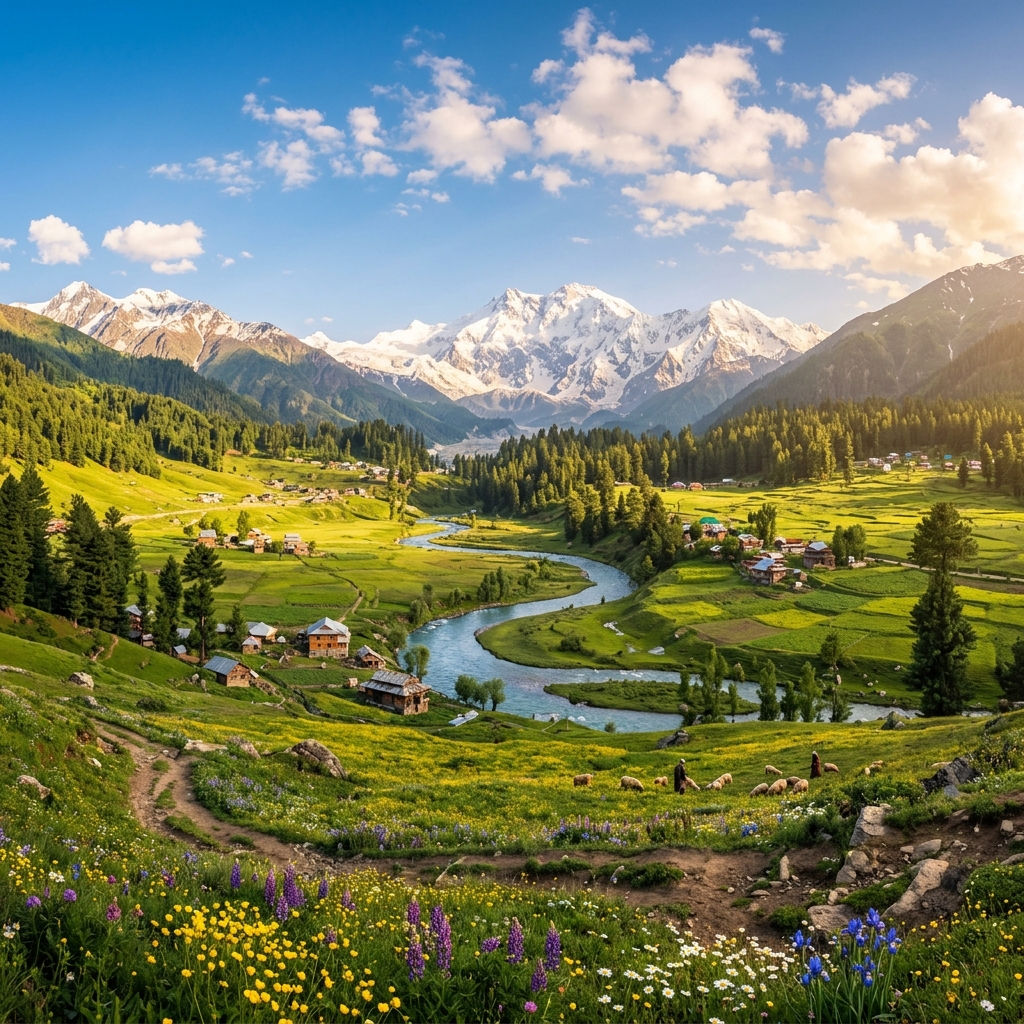
Under the Jammu and Kashmir Reorganisation Act, 2019 (read with Article 239A of the Constitution of India), the Union Territory of Jammu & Kashmir functions under a dual-pillar governance model coordinating executive authority between the centrally appointed Lieutenant Governor and the elected Chief Minister (Omar Abdullah, sworn in October 16, 2024) leading the Council of Ministers. (Historically, the head of government was styled Prime Minister until the 6th Constitutional Amendment abolished the title in 1965, creating the office of Chief Minister).
Public Order & Police
Land & Revenue Policy
All-India Services (IAS / IPS / IFS)
Socio-Economic Portfolios
Master 20-District Administration, Hierarchy & Local Bodies Directory
The Deputy Commissioner (DC) serves as the District Magistrate (DM), District Collector (Revenue), and Chief Executive Officer of the District Development Authority. Select any district name to cross-reference its comprehensive geographic gazetteer:
Srinagar (Kashmir)
Ganderbal (Kashmir)
Budgam (Kashmir)
Anantnag (Kashmir)
Pulwama (Kashmir)
Kulgam (Kashmir)
Shopian (Kashmir)
Baramulla (Kashmir)
Bandipora (Kashmir)
Kupwara (Kashmir)
Jammu (Jammu)
Samba (Jammu)
Kathua (Jammu)
Udhampur (Jammu)
Reasi (Jammu)
Rajouri (Jammu)
Poonch (Jammu)
Doda (Jammu)
Ramban (Jammu)
Kishtwar (Jammu)
Panchayati Raj Institutions (3-Tier PRIs) & Urban Governance
Jammu & Kashmir operates a comprehensive three-tier rural local self-governance model under the 73rd Constitutional Amendment Act and modernized Urban Local Bodies under the 74th Amendment:
1. District Development Councils (DDCs)
Apex Rural District Tier: 280 directly elected DDC members across all 20 districts (14 constituencies per district). DDC Chairpersons hold official status equivalent to Minister of State (MoS) and approve district capital expenditure plans.
2. Block Development Councils (BDCs)
Intermediate Block Tier: Comprises elected BDC Chairpersons and Block Development Officers (BDOs) across 285 development blocks, coordinating inter-panchayat schemes, MGNREGA execution, and rural sanitation.
3. Halqa Panchayats & Gram Sabhas
Grassroots Village Tier: Over 4,290 Halqa Panchayats empowered under 29 devolved subjects. Gram Sabhas formulate village development plans, finalize beneficiary lists for PMAY/SEHAT, and conduct social audits.
4. Urban Local Bodies (SMC & JMC)
Urban Governance: Led by Srinagar Municipal Corporation (74 wards) and Jammu Municipal Corporation (75 wards), alongside 19 Municipal Councils and 57 Municipal Committees managing building bylaws, solid waste, and smart city infrastructure.
Law Enforcement, Public Safety & Judicial Institutions
Public safety and judicial administration operate through synchronized central and UT statutory frameworks:
J&K Police & Security Architecture
- Command Hierarchy: Director General of Police (DGP) Headquarters ➔ Zonal ADGPs (Kashmir & Jammu) ➔ Range DIGs ➔ District SSPs/SPs ➔ SDPOs ➔ Station House Officers (SHOs).
- Specialized Units: Crime Branch, Anti-Corruption Bureau (ACB), State Investigation Agency (SIA), Security Wing, Armed Police, and Traffic Police.
- 🚨 Emergency Response Support System (ERSS): Unified Dial 112 for Police, Fire (101), and Medical (108).
- 💻 Cyber Crime Reporting: Dedicated Cyber Police Stations (Srinagar & Jammu) with National Cyber Financial Fraud Helpline 1930.
High Court, Subordinate Courts & Legal Aid

- High Court of J&K and Ladakh: Common High Court with permanent benches at Srinagar (Summer) and Jammu (Winter). Official Portal: jkhighcourt.nic.in.
- District Judiciary: Principal District & Sessions Courts in all 20 districts, Chief Judicial Magistrates (CJMs), Sub-Judges, and Munsiff Courts.
- Free Legal Aid (JKSLSA): J&K Legal Services Authority provides free legal aid to women, SC/ST, custody undertrials, and low-income citizens via District Legal Services Authorities (DLSAs) and Lok Adalats.
- Right to Information (RTI): Central RTI Act, 2005 applies across all public authorities with First Appellate Authorities (FAA) in every department.
Master Directory of Public & Citizen E-Services
Comprehensive service matrix covering key civil certificates, land records, municipal clearances, utility billing, and grievance portals delivered through e-UNNAT / JanSugam:
Domicile Certificate
Income Certificate
Category (RBA / SC / ST / EWS / OBC)
Land Records (Aapki Zameen)
Property Registration (NGDRS)
Smart Meter Electricity Services
Driving Licence & Vehicle RC
Ration Card & Food Allocation
Social Security Pension (ISSS)
Public Grievance Redressal
📌 Verification Notice: Application requirements, statutory processing periods, and portal endpoints are governed by the J&K Public Services Guarantee Act (PSGA). Verify the latest official notification on jkgad.nic.in or eunnat.jk.gov.in before applying.
J&K Reservation Policy Framework (UT Direct Recruitment)
Direct recruitments conducted by JKPSC, JKSSB, and state departments are governed by the Jammu & Kashmir Reservation Act, 2004 read with the J&K Reservation (Amendment) Rules, 2024 (S.O. 176):
Vertical Reservation Categories
- Open Merit (OM): Unreserved general pool merit.
- Scheduled Castes (SC): 8% statutory quota.
- Scheduled Tribes (ST): 10% statutory quota (includes Gujjar, Bakerwal, Pahari Ethnic Group, Paddari Tribe, Gadda Brahmin, Koli).
- Residents of Backward Areas (RBA): Quota for notified backward rural/isolated villages.
- Actual Line of Control / International Border (ALC/IB): Quota for residents residing along frontier border zones.
- Economically Weaker Sections (EWS): 10% income & asset-based quota for non-reserved candidates.
- Other Backward Classes (OBC): Statutory quota as per updated J&K OBC list.
Horizontal Interlocking Quotas
- Persons with Benchmark Disabilities (PwD): 4% horizontal reservation across eligible cadres (Locomotor, Visual, Hearing, Multiple Disabilities).
- Ex-Servicemen (ESM): 6% horizontal reservation for veterans of the Indian Armed Forces.
- Outstanding Sports Persons (SP): Horizontal quota for recognized national/international medalists.
📌 Verify latest notification/rules: Exact category vacancy allocations, roster point rotations, and post-specific exclusions are notified by the General Administration Department (GAD) in each recruitment cycle. Consult jkgad.nic.in for updated statutory orders.