
The J&K GI-Tagged Crafts & Artisan Bazaar
Centuries of master craftsmanship preserved across Jammu & Kashmir. Discover authentic GI-tagged Pashmina, weave-coded Kani Shawls, vivid Basohli Miniature Paintings, hand-carved Walnut Wood, and uncounterfeitable buyer verification tests.
J&K GI Crafts Buyer Verification: 5-Step Authenticity Tests, Fair Pricing & Anti-Fraud Guide
Expert field protocol to distinguish genuine handspun Kashmir Pashmina, Kani, and Walnut carvings from machine-made powerloom viscose fakes. Sourced from the Craft Development Institute (CDI) testing laboratory.
5-Step Verification for Pure Kashmir Pashmina
- The Burn Test (Micro-fringe): Snip a single stray fringe thread. Pure animal keratin burns with a smell of singed human hair and crumbles into powdery gray ash. Synthetic viscose melts into a hard plastic bead.
- GI Secure QR Hologram Label: Look for the non-detachable QR label issued by CDI Srinagar. Scanning the label verifies the artisan's registration number and laboratory micron test score.
- Weave Asymmetry (Handloom vs Powerloom): Real handloom pashmina shows subtle organic irregularities in thread tension. Machine weaves are unnaturally uniform.
- Static Test: Rubbing pure cashmere pashmina against dry hair creates zero static cling, unlike synthetic acrylic.
Market Realities & Price Benchmarks
- Pure Plain Pashmina: ₹7,500 – ₹14,000 minimum base price. Any shop offering "Pure 100% Pashmina" for ₹1,500–₹3,000 is selling powerloom polyester/viscose blends.
- Authentic Kani Shawl: Handwoven with Tujis (wooden eyeless bobbins) over 6 to 18 months. Real Kani costs between ₹45,000 and ₹3,50,000.
- Walnut Wood Preservation Law: Under the J&K Preservation of Specified Trees Act, felling live walnut trees is strictly banned. Authentic artisans carve exclusively from naturally dried root wood.
J&K GI Craft Authenticity & Fair Price Calculator
Select the regional craft and vendor price point to calculate genuine artisan price thresholds, counterfeit risks, and mandatory physical verification hallmarks.
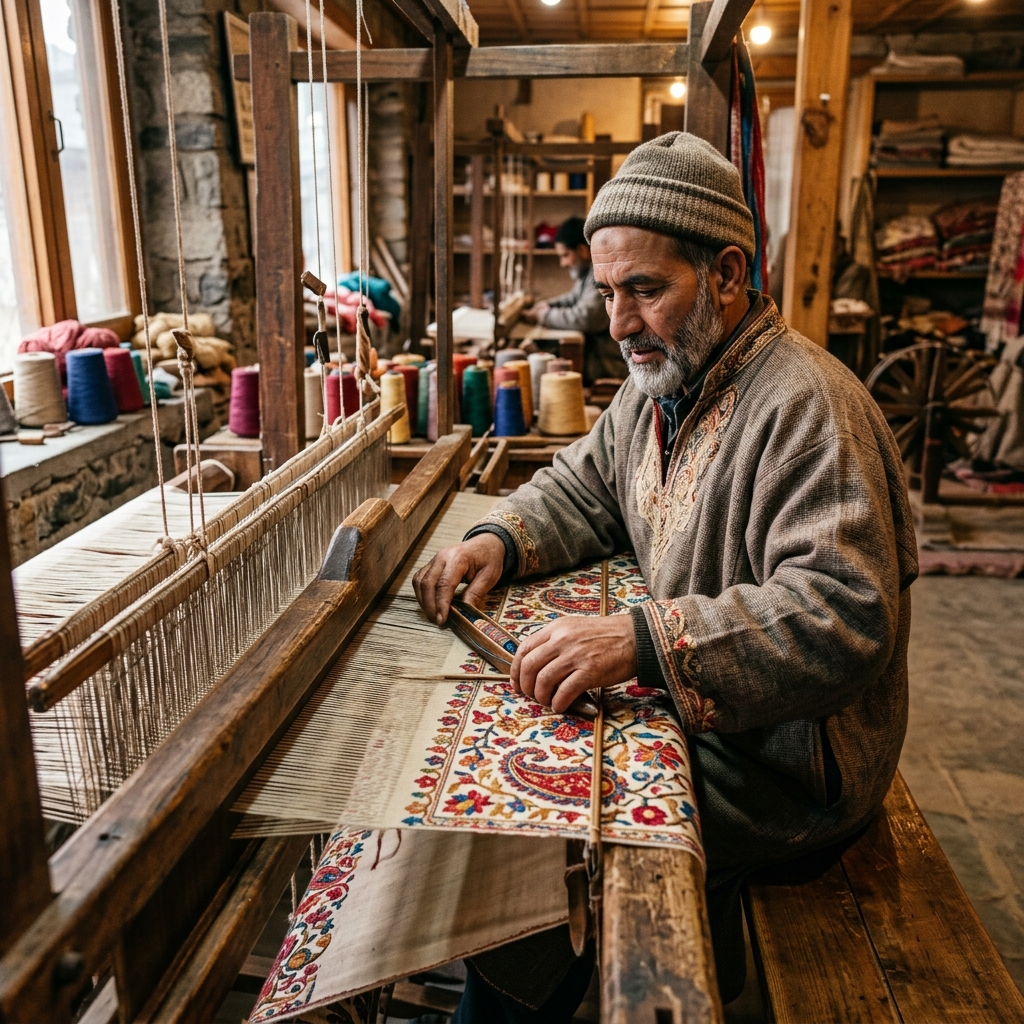
Kashmir Pashmina Shawl
Spun from the ultra-fine underdown fleece of the high-altitude Capra Hircus (Changthangi) goat. Six times finer than human hair. Hand-spun on traditional spinning wheels (Yinder) and woven on handlooms with needle Sozni embroidery.
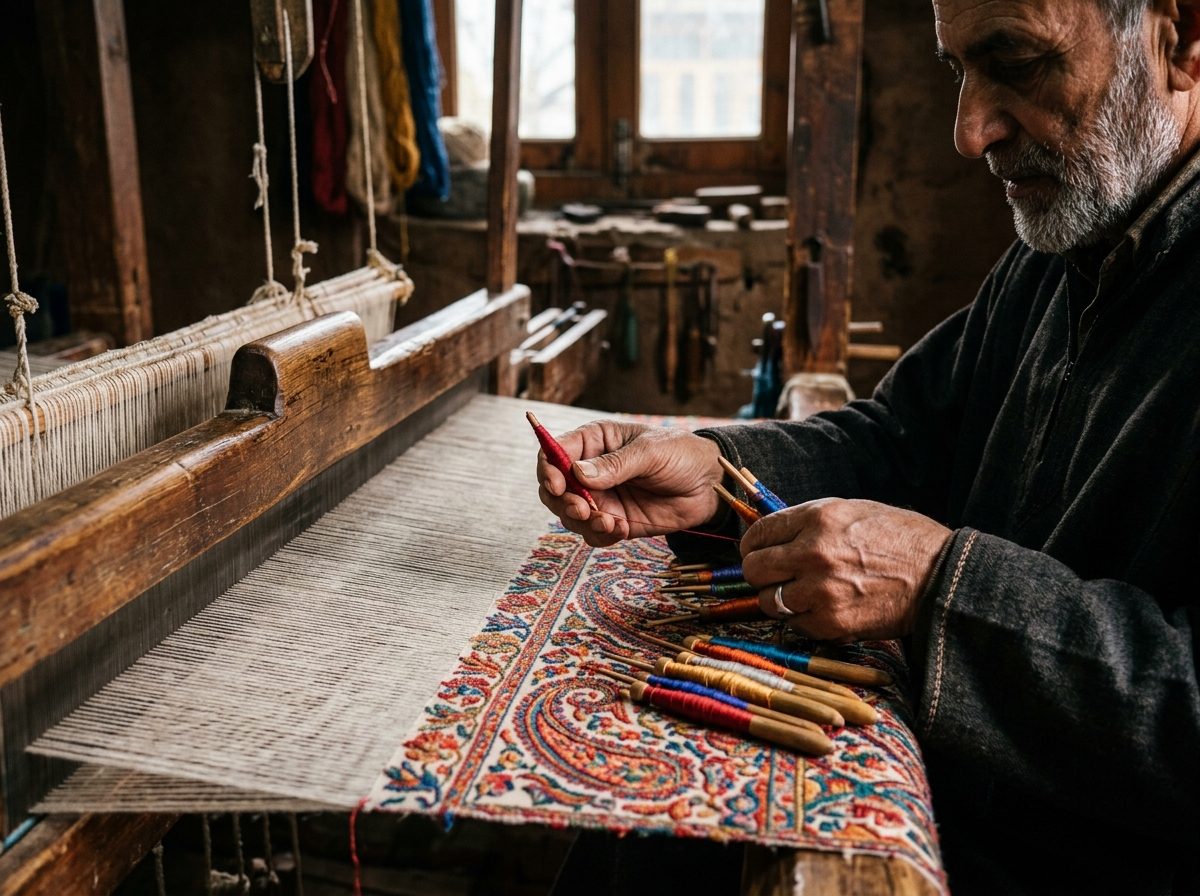
Kani Shawl (Woven Tapestry)
Woven in the village of Kanihama using tiny eyeless wooden bobbins called Tujis or Kanis. The master weaver sings coded design verses known as Taleem to intertwine up to 1,500 distinct bobbins on a single loom. A single masterpiece can take 12–18 months to complete!
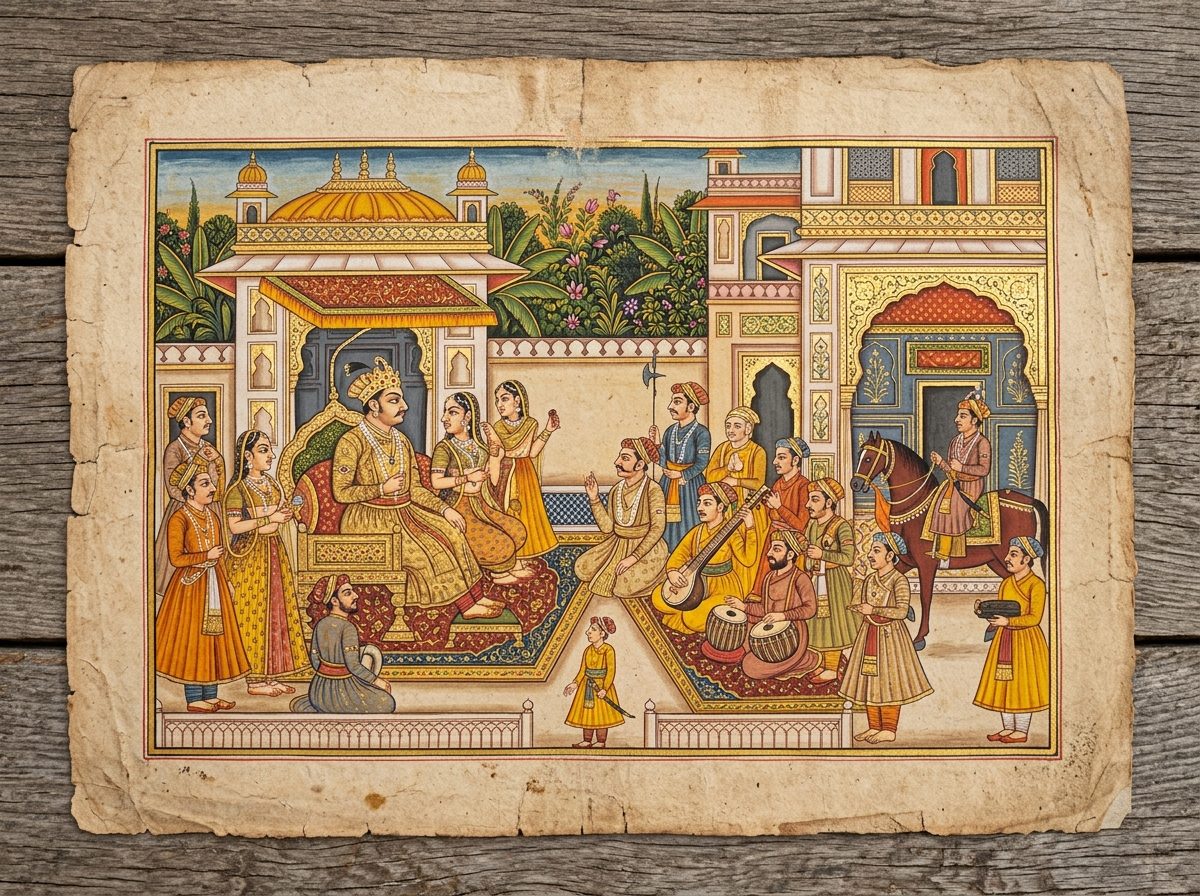
Basohli Miniature Painting
Originating in the royal hill state of Basohli (Kathua) in the 17th century under Raja Kirpal Pal. Characterized by deep expressive lotus eyes, vivid mustard-yellow backgrounds, and genuine iridescent green beetle-wings (Sternocera chrysis) inlaid as emerald jewelry on paper!
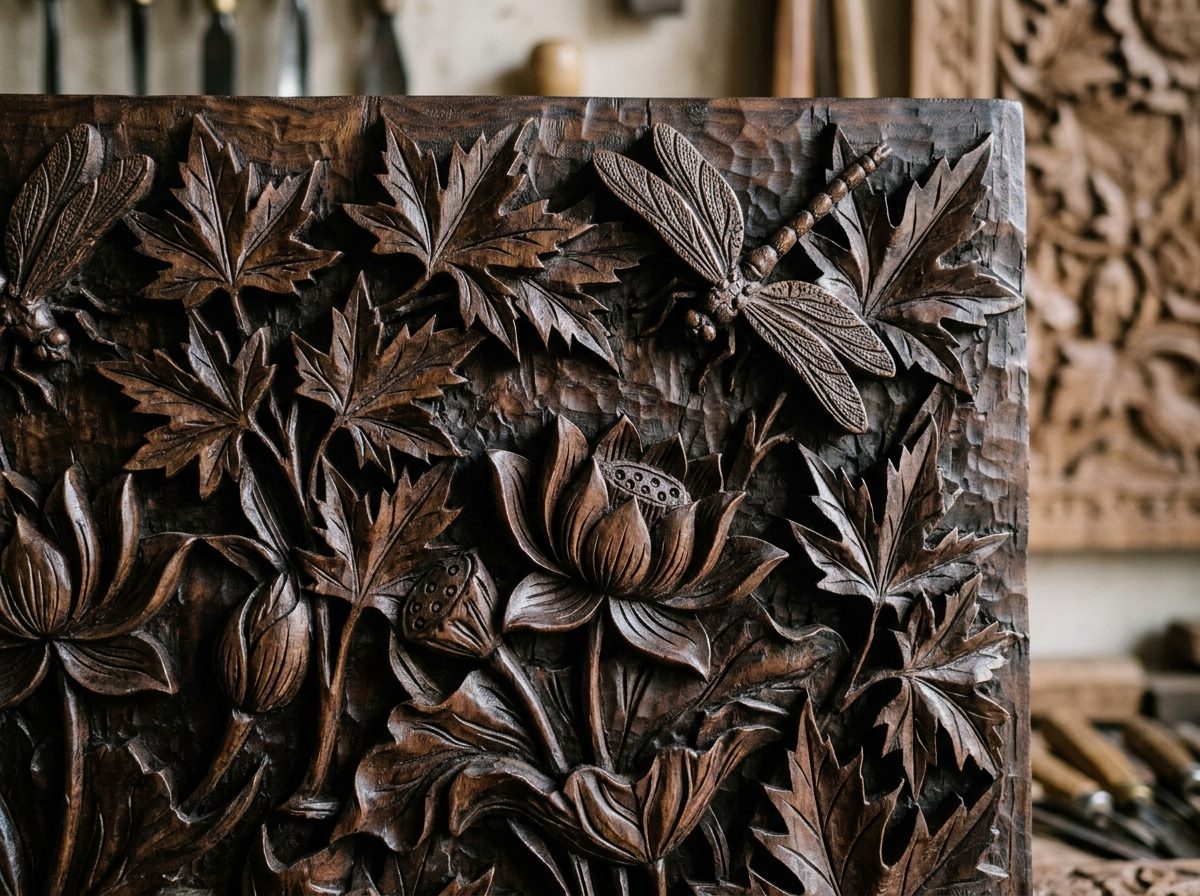
Kashmir Walnut Wood Carving

Carved from indigenous matured walnut trees (Doon). The hardest root portion provides dark, grain-rich timber that is naturally termite-resistant. Artisans chisel intricate relief motifs of Chinar leaves, dragon carvings, lotus florals, and grapevine lattices without mechanical polishing.
Complete Encyclopedia of J&K GI-Tagged Crafts & Clusters
Documented inventory of recognized handicrafts certified under the Geographical Indications of Goods Act, 1999.
Kashmir Sozni Embroidery
Intricate needlework executed exclusively with single-strand fine silk or pashmina yarn on shawls and stoles. Requires microscopic precision using the Dour (running stitch) technique with motifs identical on both sides (Dorukha).
Kashmir Paper Mâché
Two distinct craft phases: Sakhtsazi (molding paper pulp, rice paste, and clay over wooden molds) and Naqqashi (intricate miniature hand-painting using pure gold leaf, lapis lazuli, and mineral pigments).
Khatamband Architectural Ceilings
Centuries-old Persian-origin ceiling woodwork where multi-faceted wooden polygonal pieces of walnut or deodar are interlocked into geometric star lattices without using nails or iron fasteners.
Basohli Pashmina (Kathua)
Unique hand-spun, hand-woven Dogra pashmina crafted in the historic foothills of Basohli. Celebrated for natural unprocessed woolen warmth, earth-tone vegetable dyes, and distinct Dogri geometric borders.
Rajouri Chikri Wood Craft
Derived from the rare, fine-grained, pale-cream wood of the Chikri tree (Buxus wallichiana) growing in the mountain forests of Rajouri and Poonch. Used to carve ornate traditional combs (Kanghi), spoons, and jewelry boxes.
Bhaderwah Rajmash & Ramban Sulai Honey
Bhaderwah's red kidney beans are celebrated for their small size, soft buttery melting texture, and rich aroma. Ramban Sulai white honey is nectar-harvested from wild Plectranthus rugosus blossoms across Chenab Valley hills.
Directorate of Handicrafts Artisan Support Programs
- Artisan Credit Card (ACC) Scheme: Subsidized institutional credit up to ₹2 Lakhs with 7% interest subvention for 5 years.
- QR-Code Authenticity Labeling: QR-coded GI holographic security labels affixed to pashmina, kani, and carpet products verifying weaver identity and testing reports from the Craft Development Institute (CDI) Srinagar.
- Karkhandar Scheme: Monthly stipend of ₹2,000 to trainees and ₹2,000 honorarium to master trainers reviving languishing crafts (Gabba, Namda, Silver Filigree).
All historical, demographic, examination, and geographic records across this portal are compiled from public domain repositories, including the Official Gazette of India (egazette.nic.in), Census of India Demographic Data, India Meteorological Department (IMD), and statutory notifications issued by the J&K Administration & Examination Boards.