
J&K Environment, Forests, Wildlife, Climate & Water Resources Master Hub
Comprehensive directory of Dachigam Hangul & Kishtwar Snow Leopard protected ecosystems, 5 Ramsar Wetlands (Wular, Hokersar, Mansar, Hygam, Shallabugh), Himalayan Glaciers & Jhelum Hydrology, Jal Jeevan Mission, and 20-District Ecological Matrix.
Operational Status Legend & Environmental Verification Protocol
ECOLOGY DIRECTORY 2026J&K Environment, Forests & Wildlife Administration Hierarchy
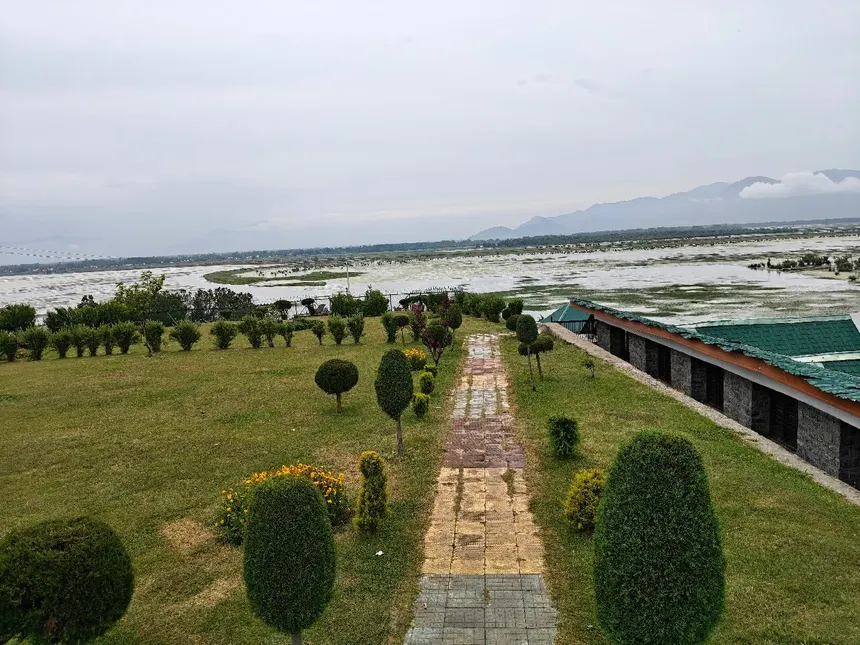
Statutory governance architecture managing forest territorial circles, wildlife sanctuaries, pollution control, wetland conservation, and Jal Shakti water infrastructure.
1. Forest & Wildlife Apex
- Apex Secretariat: Department of Forest, Ecology & Environment, Civil Secretariat J&K.
- PCCF & HoFF: Principal Chief Conservator of Forests & Head of Forest Force (Territorial & CAMPA).
- Chief Wildlife Warden: Heads Department of Wildlife Protection managing National Parks & Sanctuaries.
2. Specialized Directorates
- Social Forestry: Village woodlots, institutional plantations, and farm forestry.
- Soil & Water Conservation: Watershed treatment, check-dams, and landslide stabilization.
- J&K Pollution Control Committee (JKPCC): Industrial CTE/CTO consents, air & water monitoring.
- State Biodiversity Board: People's Biodiversity Registers (PBRs) in all Gram Panchayats.
3. Water & Lake Authorities
- Jal Shakti Department: Public Health Engineering (PHE) & Irrigation & Flood Control (I&FC).
- J&K Lake Conservation & Management Authority (LCMA): Conservation of Dal, Nigeen & Anchar lakes.
- Wular Conservation & Management Authority (WUCMA): Comprehensive wetland restoration of Wular Lake.
Master Himalayan Forest Ecosystem & Catchment Treatment Architecture
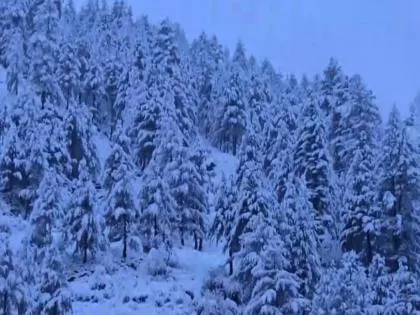
Himalayan altitudinal forest zones sustaining watershed stability: Forest ➔ Biodiversity ➔ Water Retention ➔ Soil Conservation ➔ Climate Regulation ➔ Livelihoods ➔ Eco-Tourism.
1. Himalayan Coniferous & Sub-Alpine Forests
- Deodar (*Cedrus deodara*): Apex structural softwood growing between 1,650m and 2,600m in Chenab Valley (Doda, Kishtwar, Ramban) and Pir Panjal.
- Kail / Blue Pine (*Pinus wallichiana*): Dominates sunny valley slopes (1,800m–3,000m) across Kashmir and Pir Panjal.
- Silver Fir (*Abies pindrow*) & Spruce (*Picea smithiana*): Dense high-altitude protective canopies (2,400m–3,300m) critical for snowmelt buffer.
- Bhojpatra / Himalayan Birch (*Betula utilis*): Sub-alpine timberline tree (3,300m–3,800m) with exfoliating paper bark.
2. Non-Timber Forest Produce & Biodiversity
- Wild Morel Mushroom (*Morchella esculenta* / Guchhi): High-value edible fungi foraged from Kishtwar, Kupwara, and Doda conifer floors.
- Medicinal & Aromatic Flora: Kuth (*Saussurea costus*), Patrees (*Aconitum heterophyllum*), Belladonna, and Dhoop (*Jurinea macrocephala*).
- CAMPA & Catchment Treatment: Compulsory Afforestation Fund Management & Planning Authority rehabilitates degraded Chenab and Jhelum catchments.
Master Protected Areas: National Parks, Wildlife Sanctuaries & ESZ Directory
Documented inventory of statutory protected areas under the Wildlife Protection Act (1972) and Eco-Sensitive Zone (ESZ) notifications.
Dachigam National Park
Kishtwar High Altitude National Park
Kazinag National Park
City Forest (Salim Ali) National Park
Gulmarg Wildlife Sanctuary
Overa-Aru Wildlife Sanctuary
Hirpora Wildlife Sanctuary
Surinsar-Mansar Wildlife Sanctuary
Ramnagar & Nandini Wildlife Sanctuaries
Jasrota Wildlife Sanctuary
Wetlands, Ramsar Sites & Major Lacustrine Ecosystems Directory
International Ramsar wetlands and freshwater lakes serving as critical flood buffers, carbon sinks, and Central Asian Flyway waterfowl habitats.
Wular Lake
Hokersar Wetland
Surinsar-Mansar Lakes
Hygam Wetland Conservation Reserve
Shallabugh Wetland Conservation Reserve
Dal Lake & Nigeen Lake
Manasbal Lake
River Basins, Glacier Hydrology & Watershed Dynamics
Hydrological continuum: Snow & Glaciers ➔ Headwater Streams ➔ River Basins ➔ Agriculture & Irrigation ➔ Drinking Water ➔ Hydropower ➔ Wetland Ecosystems.
Major River Basins
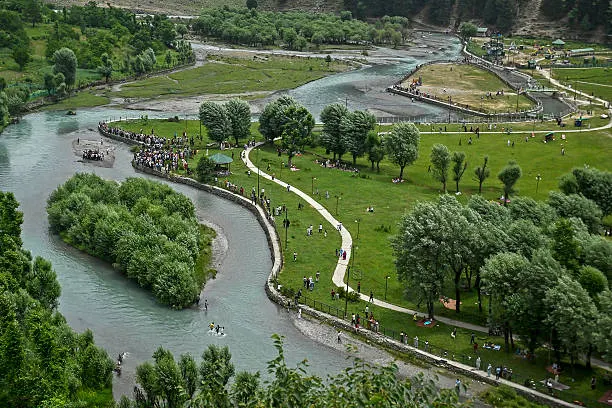
- River Jhelum (Vyath / Hydaspes): Originates at Verinag Spring (Anantnag), flows 165 km across Kashmir Valley through Wular Lake, exits into Baramulla gorge at Khadanyar. Drained by Lidder, Sindh, Romshi, and Rambiara.
- River Chenab (Chandra-Bhaga / Asikni): Enters J&K at Paddar (Kishtwar), flows through deep gorges in Doda, Ramban, and Reasi plains before crossing into Pakistan. Drives apex hydropower (Dulhasti, Baglihar, Salal).
- River Tawi (Surya Putri): Originates at Kali Kundi Glacier (Bhadarwah), flows through Chenani and Udhampur, encircling Jammu city before joining the Chenab.
- River Ravi & Ujh: Forms the southeastern boundary of Kathua with Punjab; dammed at Ranjit Sagar & Ujh Multipurpose Project.
Glaciers & Snowmelt Dynamics
- Kolahoi Glacier (Goddess of Light): Hanging glacier at 4,700m elevation in Overa-Aru; primary perennial water source for both Lidder and Sindh river systems. Experiences significant recession under climate warming.
- Thajiwas & Machoi Glaciers: Accessible glaciers in Sonamarg and Zojila pass regulating spring stream runoff into the Indus watershed.
- Cryosphere Monitoring: Department of Ecology, Environment & Remote Sensing monitors glacier mass balance and Glacial Lake Outburst Flood (GLOF) risks.
Jal Jeevan Mission, Drinking Water Security & Jhelum Flood Resilience
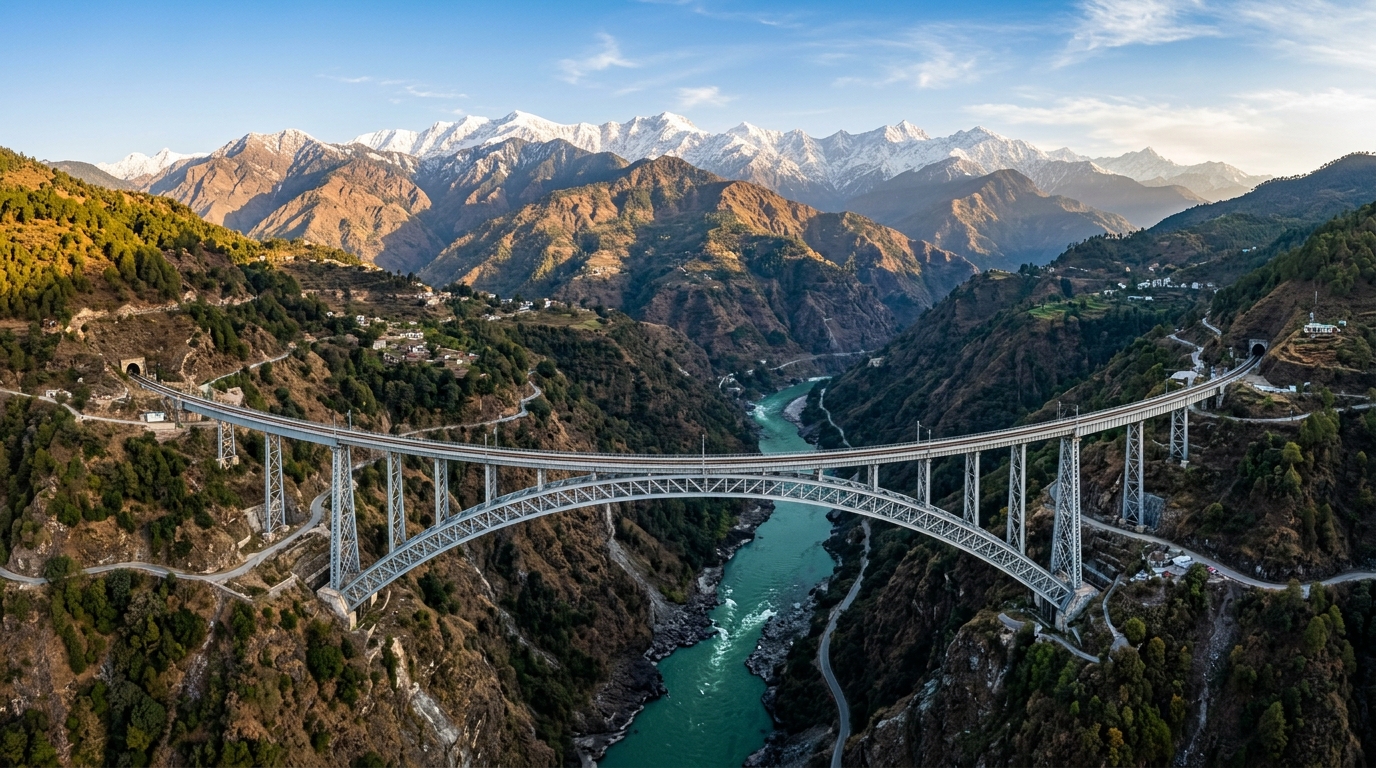
Statewide water governance: 100% rural tap water connectivity (JJM), natural spring (*Naag*) revival, and the Comprehensive Jhelum Flood Spill Infrastructure.
Jal Jeevan Mission (JJM) & Water Testing
Jal Shakti Department delivers functional household tap connections (FHTC) across all 20 districts. Supported by 20 District NABL-accredited water testing laboratories and Field Test Kits (FTKs) deployed across Gram Panchayats.
Toll-Free Water Grievance: 1800-180-7045 (PHE J&K)Jhelum River Flood Spill Channel & Early Warning
Padshahi Bagh to Wular Flood Spill Channel diverts excess floodwaters away from Srinagar city. Real-time gauge monitoring updates monitoring at Sangam (Flood Alert: 18 ft, Danger: 21 ft), Ram Munshi Bagh (Alert: 16 ft, Danger: 18 ft), and Asham (Alert: 13 ft, Danger: 14 ft).
Explore Real-Time River Gauges ➔Climate Change Risk, Sectoral Vulnerability & Adaptation Strategy Matrix
Multi-sectoral adaptation matrix: Climate Hazard ➔ Sector Risk ➔ Vulnerable Asset ➔ Adaptation Action ➔ Early Warning & Response.
Glacier Recession & Snowline Retreat
Cloudbursts & Intense Rain Spells
Unseasonal Spring / Autumn Snowfall
Summer Heatwaves & Forest Fires
Human-Wildlife Conflict Standard Operating Procedure (SOP) & Rescue Grid
Standard emergency framework: Sighting ➔ Safe Distance ➔ Report to Control Room ➔ Wildlife Team Dispatch ➔ Humane Tranquilization & Relocation.
Mandatory Citizen Safety Guidelines (DOs)
- Maintain Minimum 100m Distance: Immediately retreat indoors if a Leopard or Black Bear is sighted near orchards or residential areas.
- Keep Children & Livestock Secured: Ensure livestock sheds are locked and children are accompanied during dawn and dusk hours.
- Move in Groups with Noise: In forest-fringe orchards, carry sticks, bells, or torches to alert wild animals of human presence.
- Report Immediately: Call Wildlife Control Room or Dial 112 (ERSS).
Prohibited Actions (DON'Ts)
- DO NOT Form Crowds or Encircle Animals: Encircling an animal provokes panic attacks and aggressive defense charges.
- DO NOT Attempt Self-Capture or Throw Stones: Provoking a wild carnivore leads to severe retaliatory injuries.
- DO NOT Flash Mobile Cameras or Take Selfies: Bright lights and close proximity agitate cornered animals.
- DO NOT Leave Open Food or Carcasses: Uncovered waste near habitations attracts bears and leopards.
Master 20-District Environment, Forests, Wildlife & Water Resources Matrix Table
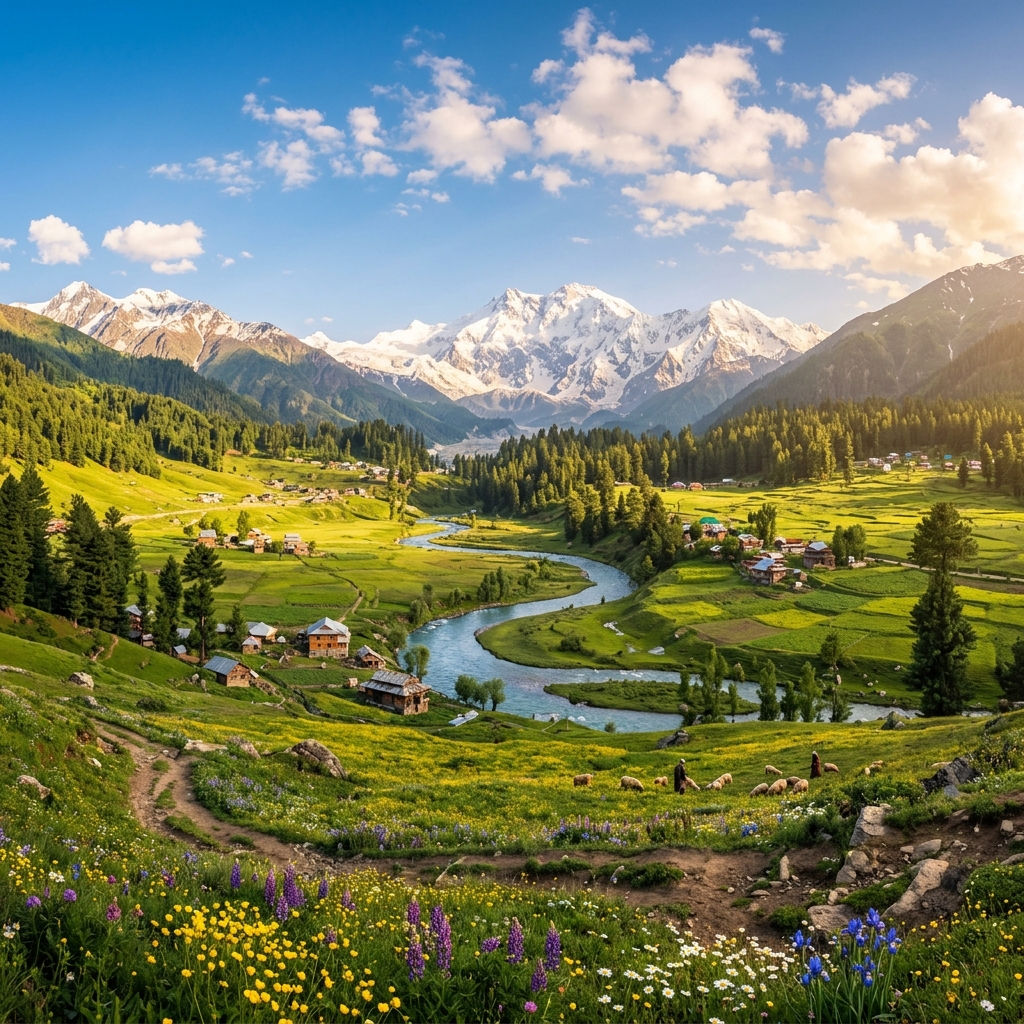
Comprehensive geographical and ecological directory across all 20 districts with direct deep-links to geography.html#dist-*.
Srinagar (Kashmir)
Ganderbal (Kashmir)
Budgam (Kashmir)
Anantnag (Kashmir)
Pulwama (Kashmir)
Kulgam (Kashmir)
Shopian (Kashmir)
Baramulla (Kashmir)
Bandipora (Kashmir)
Kupwara (Kashmir)
Jammu (Jammu)
Samba (Jammu)
Kathua (Jammu)
Udhampur (Jammu)
Reasi (Jammu)
Rajouri (Jammu)
Poonch (Jammu)
Doda (Jammu)
Ramban (Jammu)
Kishtwar (Jammu)
Environmental Citizen Services, Permissions & Emergency Escalation
Reviewed citizen application pathways for tree permissions, water testing, industrial pollution compliance, and wildlife distress rescue.
Wildlife Distress & Conflict Rescue
Drinking Water Sample Testing
Industrial Pollution Grievance
Forest Fire Emergency Reporting
Environmental Education, Forestry Careers & Sustainable Development Pathways
Educational streams: B.Sc Forestry (SKUAST-K/J), M.Sc Environmental Sciences (Univ of Kashmir/Jammu), IFS recruitment, and household sustainability.
1. Forestry & Wildlife Science
Degree: B.Sc / M.Sc Forestry at SKUAST-K (Benhama) & SKUAST-J.
Careers: Indian Forest Service (IFS via UPSC), JK Forest Service (JKPSC ACF/Range Officer), Wildlife Biologist.
2. Environmental Sciences & GIS
Degree: M.Sc Environmental Sciences / Remote Sensing & GIS.
Careers: JKPCC Environmental Engineer, GIS Analyst, Disaster Management Specialist, ESG Consultant.
3. Citizen Sustainability Checklist
Household: 100% waste segregation at source, zero single-use plastics, rooftop rainwater harvesting, rooftop solar power.
All historical, demographic, examination, and geographic records across this portal are compiled from public domain repositories, including the Official Gazette of India (egazette.nic.in), Census of India Demographic Data, India Meteorological Department (IMD), and statutory notifications issued by the J&K Administration & Examination Boards.
Explore Related Jammu & Kashmir Knowledge Clusters
Cross-Topic NavigationContextual J&K Knowledge Networks & Deep Links
🏔️ Explore the J&K Geography & Environment Knowledge Cluster
Pir Panjal, Zaskar, river basins, mountain passes & altitude 📊 Demographics & Census Data
Population distribution, literacy rates, and district metrics 🌦️ Weather & Climate Zones
20-district forecasts, snowfall monitoring, and seasonal alerts 🌾 Agriculture & HADP Subsidies
Saffron, high-density apple orchards, and irrigation systems 🚨 Disaster & River Flood Gauges
Jhelum, Chenab & Tawi flood wave levels and emergency control 🌲 Ecology & Wildlife Conservation
Protected national parks, wetlands, and biodiversity hotspots