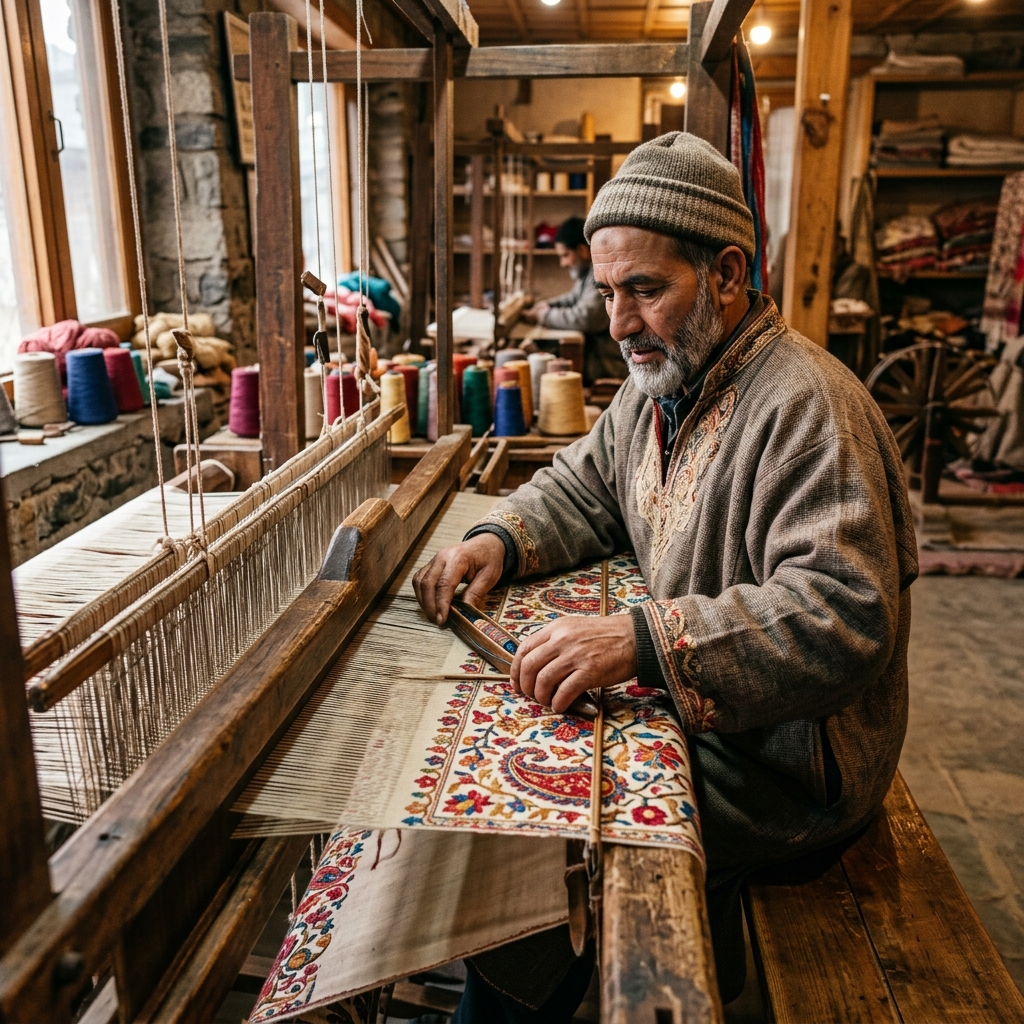
Dogri Folk Music & Kud Harvest Dance (Jammu Region)
Kud Dance (कुद नृत्य)
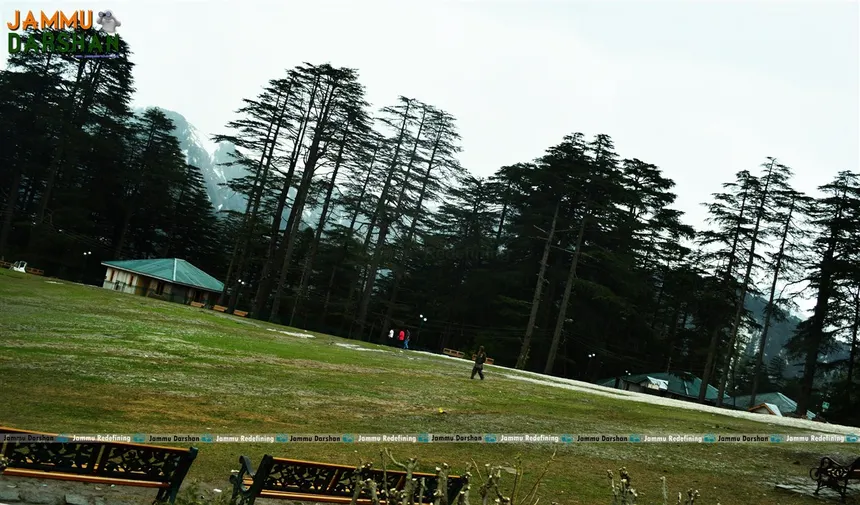
Kud is a celebrated harvest folk dance performed in the hills of Udhampur, Reasi, and Doda to honor local Gram Deotas (village deities). Dancers wear traditional tight white waistcoats (cholas) and perform spontaneous acrobatics accompanied by the S-curved Narsingha brass horn and Dholak.
Karkan & Baran Heroic Songs
- 📜 Karkan (कारकां): Epic ballads celebrating saintly heroes like Baba Jitto (who sacrificed his life for farmer rights) and Data Ranpat.
- ⚔️ Baran (बारां): Martial war songs celebrating historic Dogra warriors and military campaigns.
Kashmiri Rouf Dance & Sufiyana Kalam (Kashmir Valley)
Rouf Dance (रऊफ / روؤف)
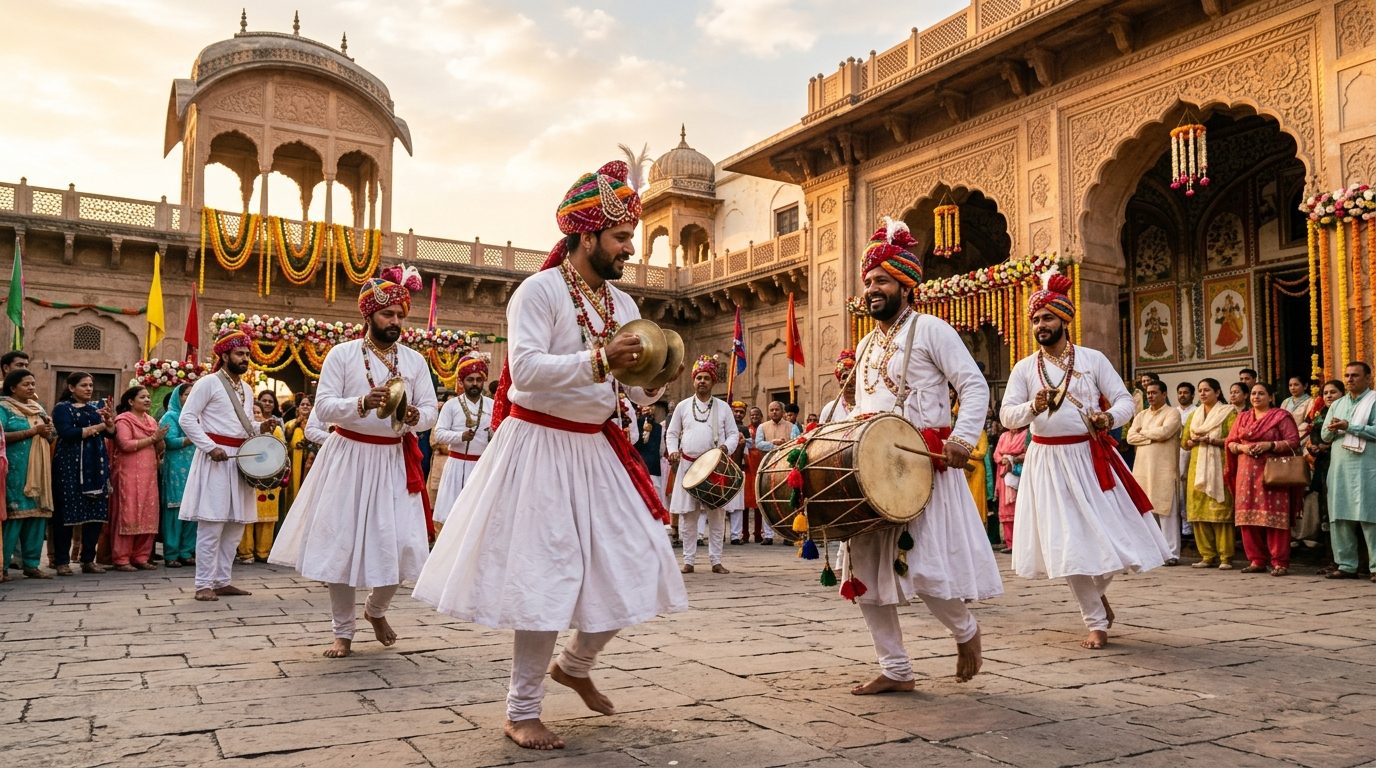
Rouf is Kashmir's most iconic women's folk dance performed during Eid, Spring harvest, and weddings. Dancers form two facing rows with interlocked arms, singing rhythmic call-and-response folk verses while swaying in synchronized steps.
Sufiyana Kalam (54 Maqams)
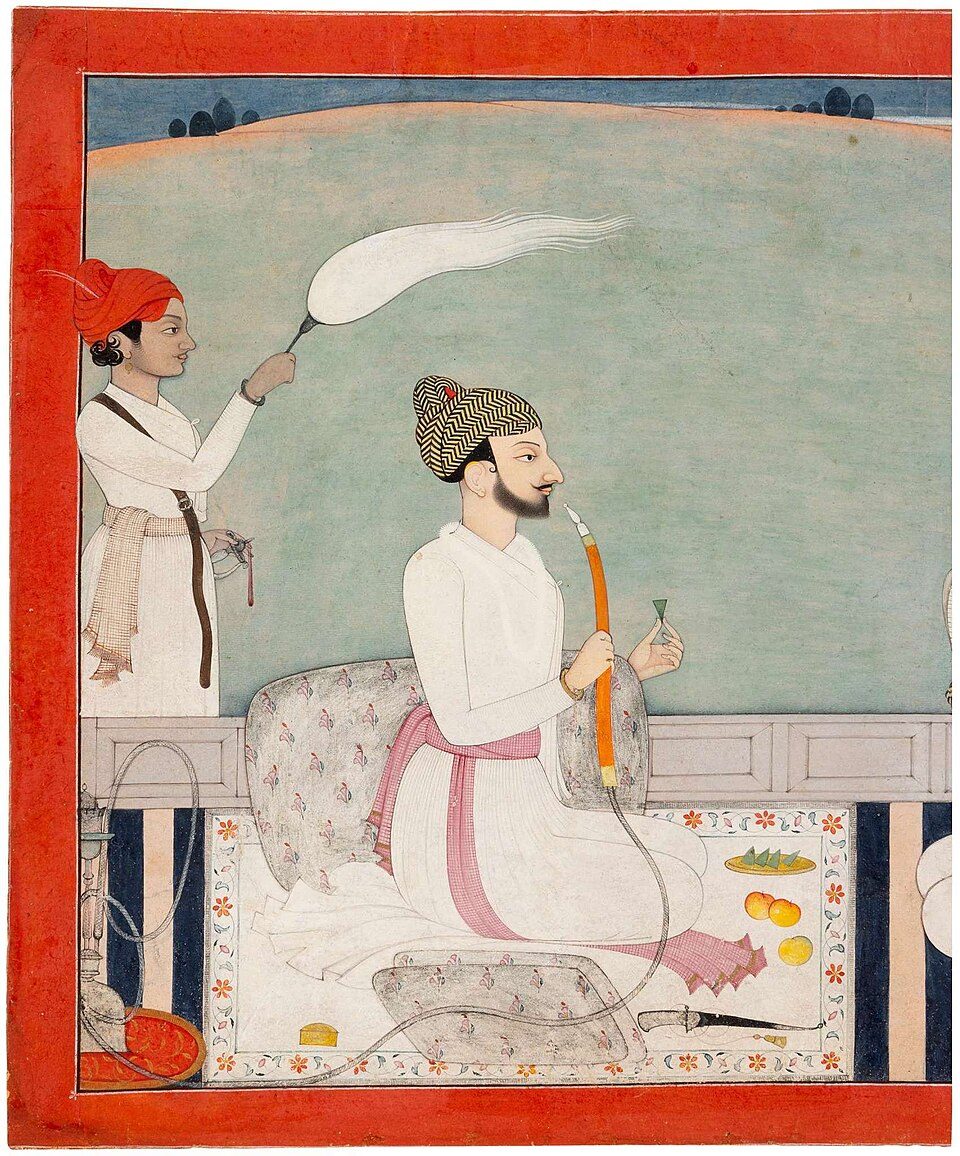
Classical Kashmiri Sufi music based on 54 classical Maqams (raga equivalents). Sung by choral groups accompanied by the Santoor (100-stringed dulcimer), Sitar, and Wusool drum.
Traditional Musical Instruments of J&K
Santoor (संतूर)
Rabab (रबाब)
Tumbaknari (तुम्बाकनारी)
Narsingha (नरसिंगा)
King (किंग)
Iconic Musical Maestros & Master Craftsmen
Legendary Performing Artists
- 🎵 Pandit Bhajan Sopori: Legendary Santoor maestro and pioneer of Sufiyana music.
- 🎵 Raj Begum: Crowned 'Melody Queen of Kashmir' for her soul-stirring folk gazals.
- 🎵 Narsingh Dev Jamwal: Dogri folk ballad master and cultural historian.
- 🎵 Abdul Rashid Hafiz: Master exponent of Kashmiri Sufiyana Kalam.
Master Instrument Makers
Ghulam Mohammad Zaz: The last master craftsman of Srinagar's Zaina Kadal, handcrafting heritage Santoors, Rababs, and Sarangs for over 70 years using aged mulberry wood.
"Kashmir" in Global Music & Ancient Kashmiri Lyricism
The evocative name, mystical vistas, and musical modes of Kashmir have resonated deeply across both international rock history and centuries of indigenous Sufi and Bhakti lyrical traditions:
1. Led Zeppelin's "Kashmir" (1975)
Written by Jimmy Page, Robert Plant, and John Bonham for Physical Graffiti. Driven by iconic D-A-D-G-A-D modal guitar tuning and polyrhythmic Eastern brass/string ascents evoking an endless Himalayan caravan.
2. KSHMR (Niles Hollowell-Dhar)
World-renowned Indian-American electronic music producer and DJ, whose stage name KSHMR pays direct homage to his Kashmiri Pandit heritage. Celebrated for pioneering cinematic orchestral EDM infused with classical Indian ragas and folk melodies.
3. Sacred Lyrics: Lal Ded & Habba Khatoon
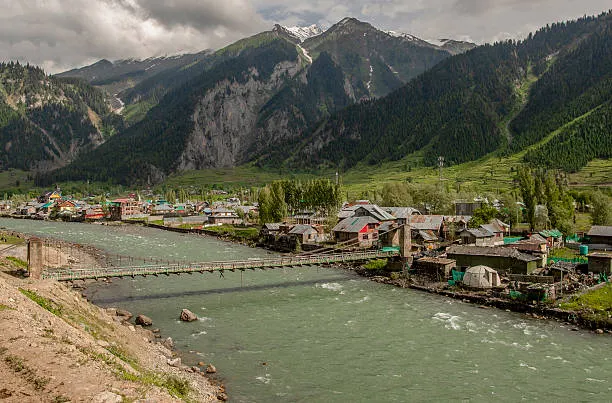
Authentic Kashmiri music draws from 14th-century Vakhs of Lal Ded and 16th-century romantic Lols of Habba Khatoon, sung in 54 Sufiyana Maqams with the 100-stringed Santoor and Rabab.
All historical, demographic, examination, and geographic records across this portal are compiled from public domain repositories, including the Official Gazette of India (egazette.nic.in), Census of India Demographic Data, India Meteorological Department (IMD), and statutory notifications issued by the J&K Administration & Examination Boards.
Explore Related Jammu & Kashmir Knowledge Clusters
Cross-Topic NavigationFrequently Asked Questions & Critical Insights
What are the primary traditional musical instruments used in Kashmiri Sufiyana Kalam?
Classical Kashmiri Sufiyana Kalam relies on the 100-string hammered Santoor (anchoring melody), the bowed Saaz-e-Kashmir, the long-necked plucked Setar, and the rhythm-keeping Dokra/Tablas.
How does Dogra folk music differ in musical form and performance context?
Dogra folk traditions feature martial and devotional narrative ballads, particularly Karakian and Bhakh (unaccompanied polyphonic vocal singing), accompanied by traditional instruments such as the King (plucked lute), Narsingha horn, and Dholak.
Further Reading & Musical Archival Resources
National performing arts academies, classical Maqam treatises, and folk music repositories: