🎭 CIVILIZATIONAL HERITAGE • JAMMU, KASHMIR & LADAKH

Jammu & Kashmir Culture, Traditions & Living Heritage

"Khand Mithe Log Dogre & The Spiritual Syncretism of Kashmiriyat." From the French chateau towers of Amar Mahal Palace and the ancient bastions of Bahu Fort to the floating gardens of Dal Lake, the saffron fields of Pampore, and the high Buddhist monasteries of the Himalayas — experience 3,000 years of living architecture, culinary feasts, and sacred arts.

🏛️ Jammu & Dogra Heritage ↓ 🌸 Kashmir Crafts & Wazwan ↓ 📐 Vernacular Architecture ↓ 📜 Mystics & Literature ↓
✨ DUGGAR HERITAGE • KHAND MITHE LOG DOGRE

Jammu: The City of Temples, Traditions, Warriors & Warm Hearts

"Dogra Dharti Da Geet Alag Ae!" From the royal French chateau of Amar Mahal and the ancient bastions of Bahu Fort to steaming plates of Bhaderwah Rajma Chawal and the martial valor of General Zorawar Singh — explore the soul of Duggar Pradesh.
Duggar Heritage Master Archive
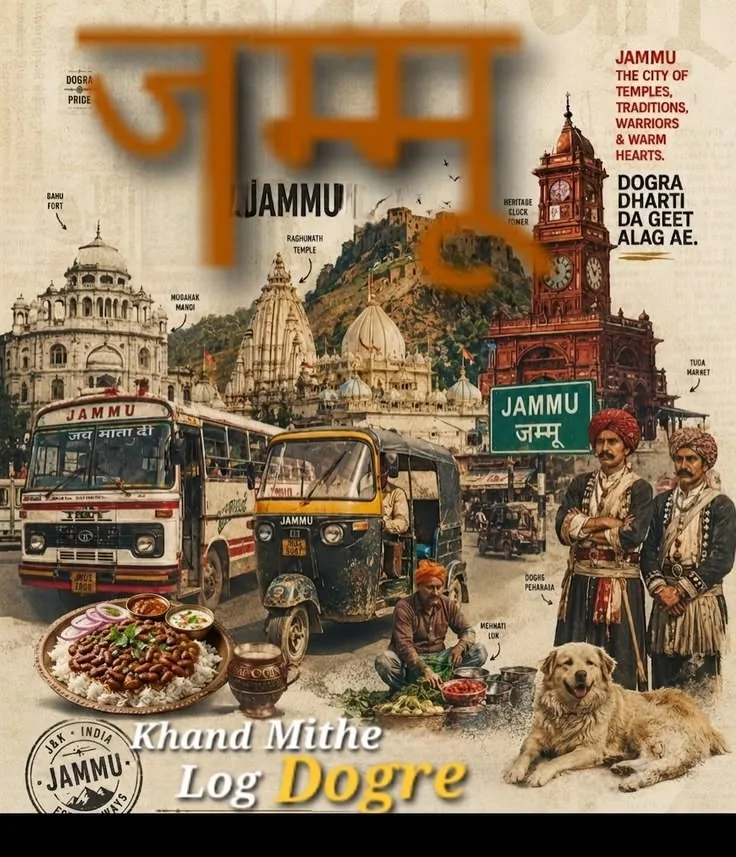
Jammu Dogra Heritage - Khand Mithe Log Dogre Collage
HERITAGE COLLAGE

Khand Mithe Log Dogre

Raghunath Temple, Heritage Clock Tower, Bahu Fort, classic Jammu Matador, Dogra safa warriors & authentic Rajma Chawal.

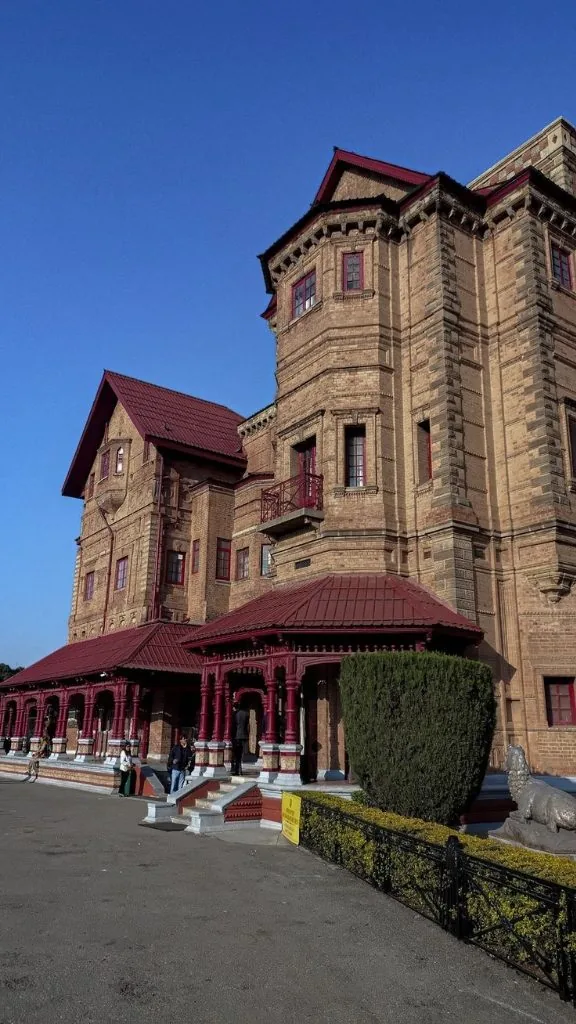
Amar Mahal Palace Museum Jammu overlooking River Tawi
ROYAL ARCHITECTURE

Amar Mahal Palace & Museum

19th-century French chateau designed by a French architect on Tawi river. Home to the 120 kg pure gold throne & Pahari miniatures.

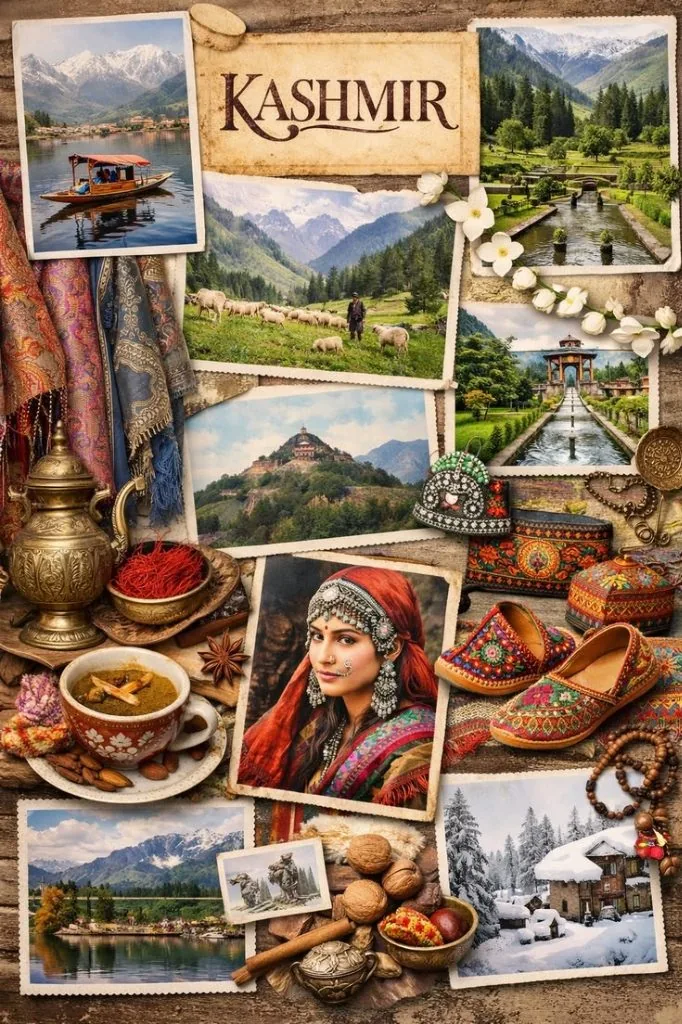
Kashmir Living Heritage Scrapbook Collage
VALLEY ARTISTRY

Kashmir Living Heritage

Dal Lake Shikaras, pure saffron threads, almond Kahwa, bridal Dejhoor, Tilla mojaris, walnut woodcraft & papier-mâché.

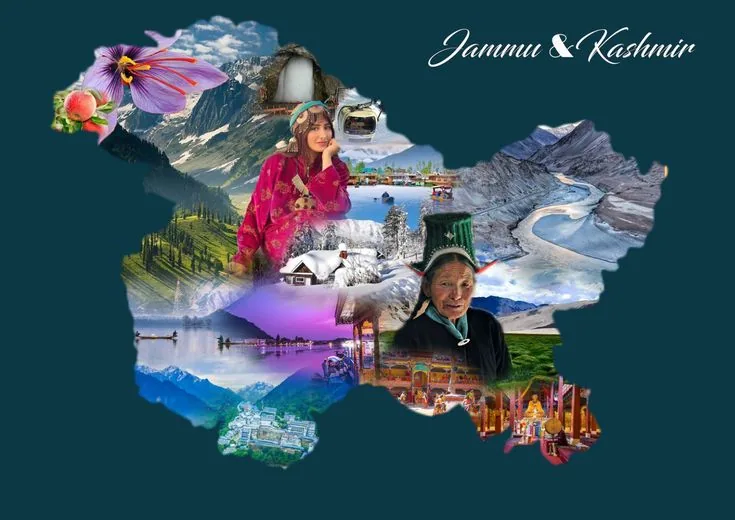
Jammu and Kashmir Civilizational Cultural Mosaic Map
SYNCRETIC MOSAIC

The Living Mosaic of J&K

From Vaishno Devi shrine and Tawi plains to Gulmarg snows, saffron meadows, and the high Buddhist gompas of the Himalayas.

Royal Palaces, Temples & Fortresses

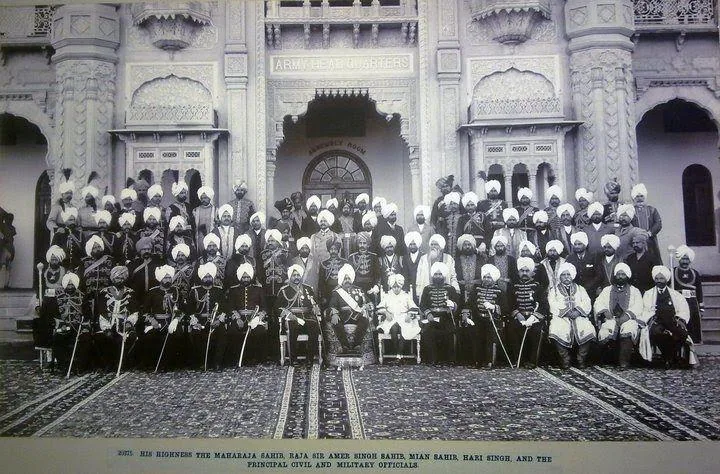
  • Mubarak Mandi Palace Complex: The 200-year-old royal residence of the Dogra dynasty blending Rajasthani, Mughal, and European Baroque architecture. Features the ornate Sheesh Mahal (Palace of Mirrors) and the iconic Gol Ghar overlooking river Tawi.
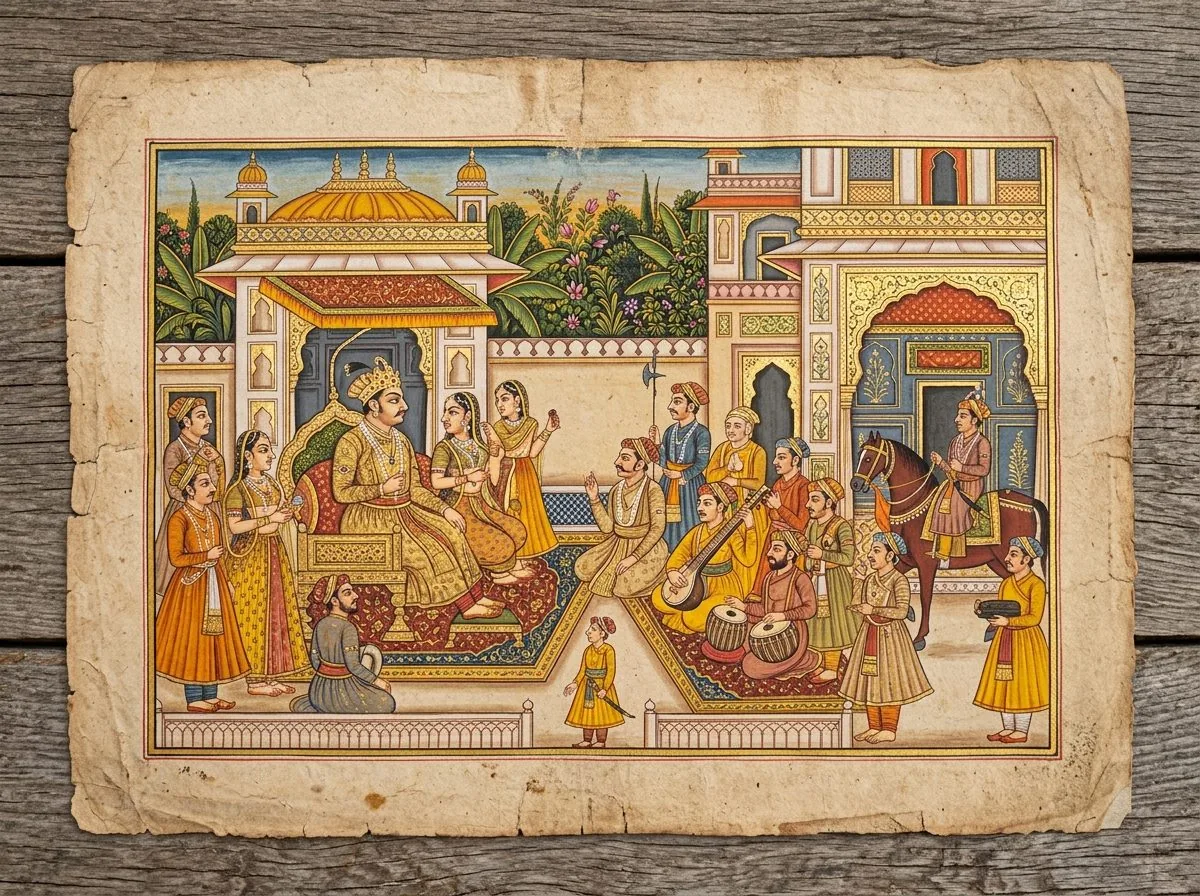
  • Amar Mahal Palace: Commissioned by Raja Amar Singh in the late 19th century. Houses the legendary 120 kg pure solid gold throne, the rare Pahari miniature painting collection (Nala-Damayanti epic), and a library of 25,000 priceless manuscripts.
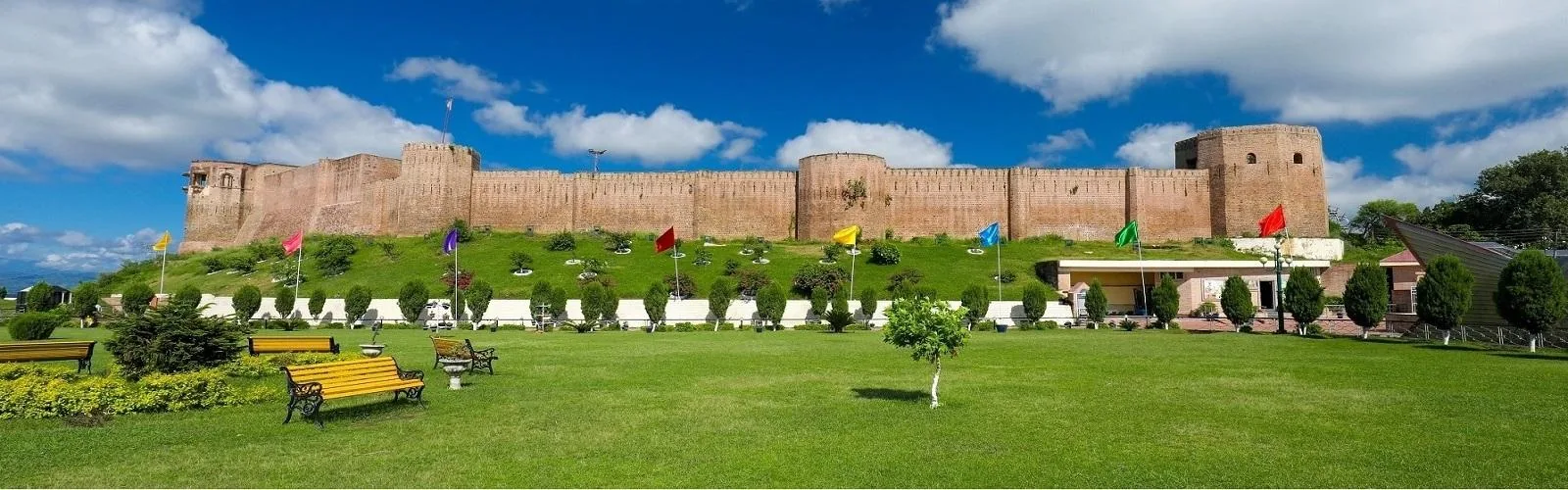
  • Bahu Fort & Bawe Wali Mata: Standing for over 3,000 years, built by Raja Bahu Lochan. Hosts the sacred shrine of Goddess Kali where the historic Bahu Mela gathers thousands of Dogra devotees twice a year.
  • Raghunath Temple Complex: Built under Maharaja Gulab Singh & Maharaja Ranbir Singh. Consists of seven distinct shrines with gold-plated shikharas housing 33 crore sacred Saligrams.

Authentic Dogra Gastronomy (Duggar Dawat)

  • Jammu Rajma Chawal & Anardana Chutney: Slow-simmered Bhaderwahi or Marwah red kidney beans cooked over woodfire with desi ghee, paired with aromatic Basmati rice and tangy wild dried pomegranate chutney.
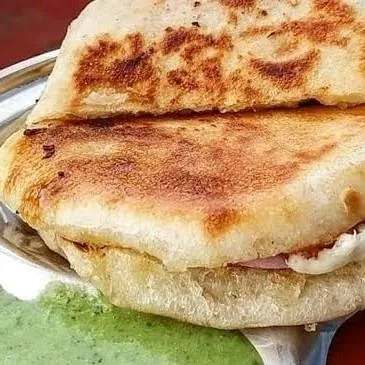
  • Ramnagar Kaladi (Kalari) Kulcha: The prized indigenous ripened mozzarella-style cheese (locally known as Kaladi or Kalari across Duggar) of Udhampur and Ramnagar, pan-fried golden-crisp on a tava and served inside hot spiced kulchas.
  • Dogra Dham (Festive Banquet): A ceremonial vegetarian feast cooked in heavy brass degchis without onion or garlic. Star dishes include Madra (lentils in yogurt gravy), Ambal (sweet & sour pumpkin with tamarind), and Dal Pattakh.
  • Babru, Khamira & Mitha Pulao: Traditional leavened and fermented Dogra breads prepared during wedding rituals and festive mornings.

Dogra Martial Valor & Folk Heroes

  • General Zorawar Singh (1786–1841): Dogra military commander who led historic trans-Himalayan campaigns across Ladakh (1834), Baltistan (1840), and Western Tibet under Maharaja Gulab Singh.
  • Mian Dido (1780–1821): The celebrated Dogra chieftain who defended the peasantry against exploitation, immortalized in folk ballads (Karakian) across the Duggar hills.
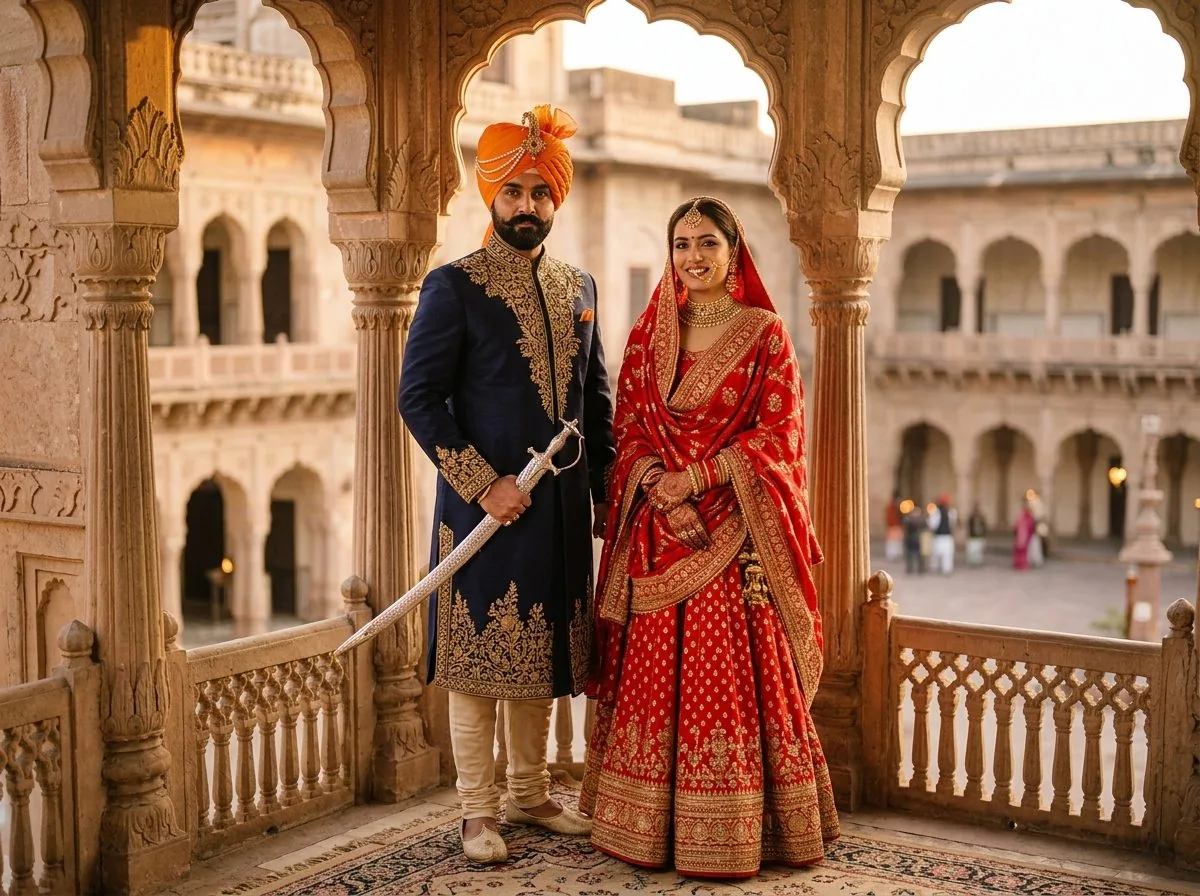
  • Dogra Pehrava (Traditional Attire): The majestic Dogra Safa / Pagri with the distinctive royal crest (Kalka), Angarkha, tight Churidar, and embroidered Dogri Jutti. Women wear gold Naths with pearls and traditional Balu earrings.
  • Dogra Regiment: One of the most decorated combat formations of the Indian Army, bearing the official motto "Kartavyam Anvatma" (Duty Before Self) and war cry "Jwala Mata Ki Jai".

Folk Dances, Melas & Sacred Rhythms

  • Kud Dance: Celebrated during monsoon nights in the middle Himalayas (Bhadarwah, Kishtwar, Udhampur). Performed in circular formations honoring the Gram Devata (village deity) with flutes, narsingha trumpets, and torches.
  • Jagarna Folk Theatre: Nocturnal theatrical performances conducted exclusively by Dogra women on the night when the groom's wedding procession (Barat) departs.
  • Bhakhan & Karakian Ballads: Soulful oral singing accompanied by the King (a traditional single-string folk instrument) narrating ancient love, battle, and devotion.
  • Jhiri Mela & Baba Jitto: Over 5 lakh farmers gather annually at Jhiri to honor the supreme sacrifice of the 15th-century peasant hero Baba Jitto who stood against landlord tyranny.
CHAPTER II • VISUAL LIVING ARCHIVE • विरासत दी छबि

Treasures of Jammu, Kashmir & Ladakh

Browse through historical photography, GI artisan masterpieces, royal palaces, and sacred culinary delicacies. Click categories below to explore:
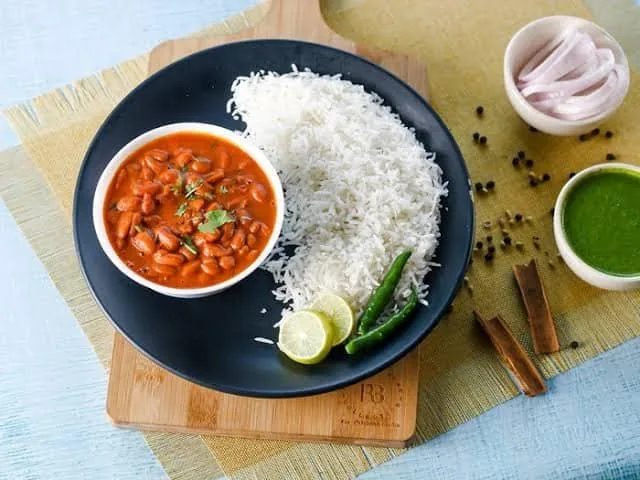
Jammu Bhaderwahi Rajma Chawal with Anardana Chutney DUGGAR GASTRONOMY

Bhaderwahi Rajma Chawal

Small red beans cooked with pure cow ghee & wild pomegranate chutney.

📍 Bhaderwah & Jammu
Ramnagar Kaladi Kulcha crispy toasted cheese INDIGENOUS CHEESE

Ramnagar Kaladi (Kalari) Kulcha

Ripened Himalayan mountain cheese (Kaladi/Kalari) shallow-fried golden in spicy kulchas.

📍 Udhampur & Ramnagar
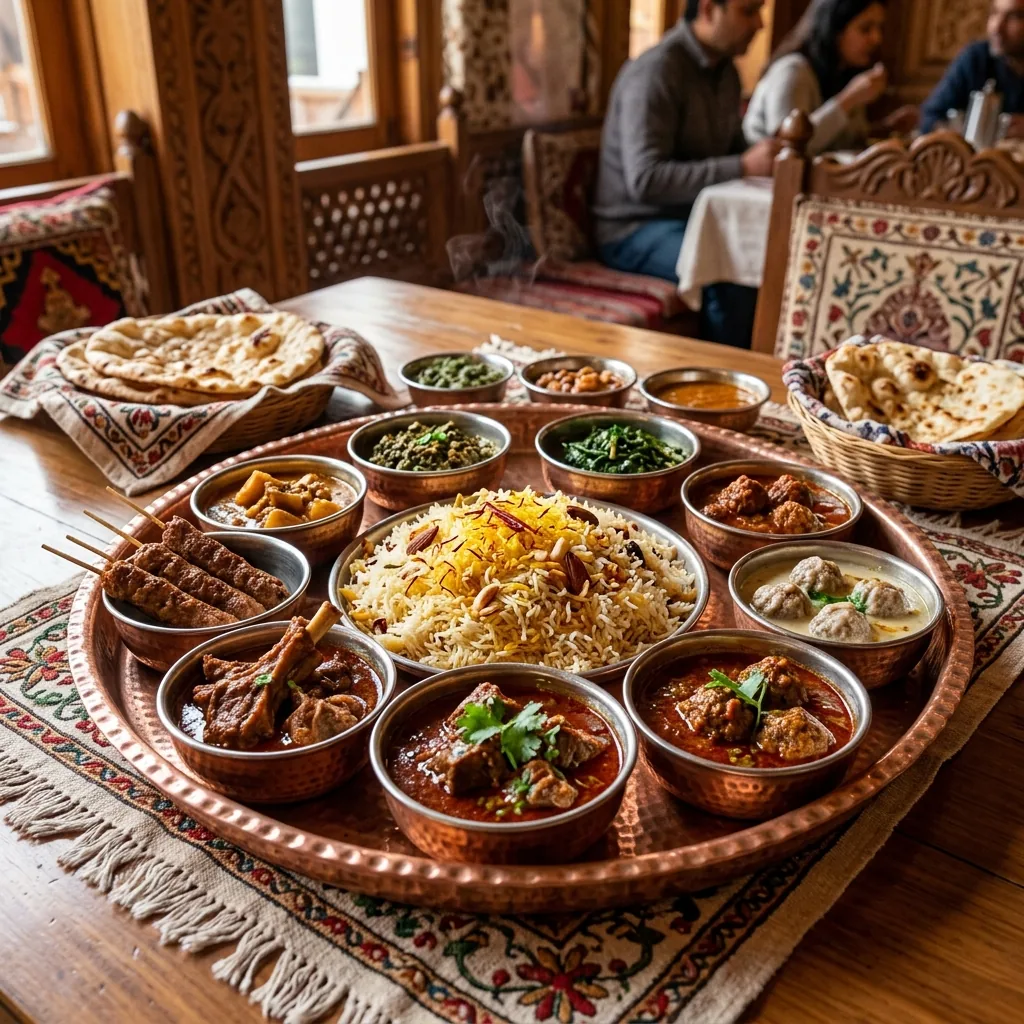
Royal 36-Course Kashmiri Wazwan Banquet ROYAL FEAST

36-Course Kashmiri Wazwan

Masterfully hand-pounded mutton meatballs (Rista & Gushtaba) in yogurt sauce.

📍 Srinagar & Kashmir Valley
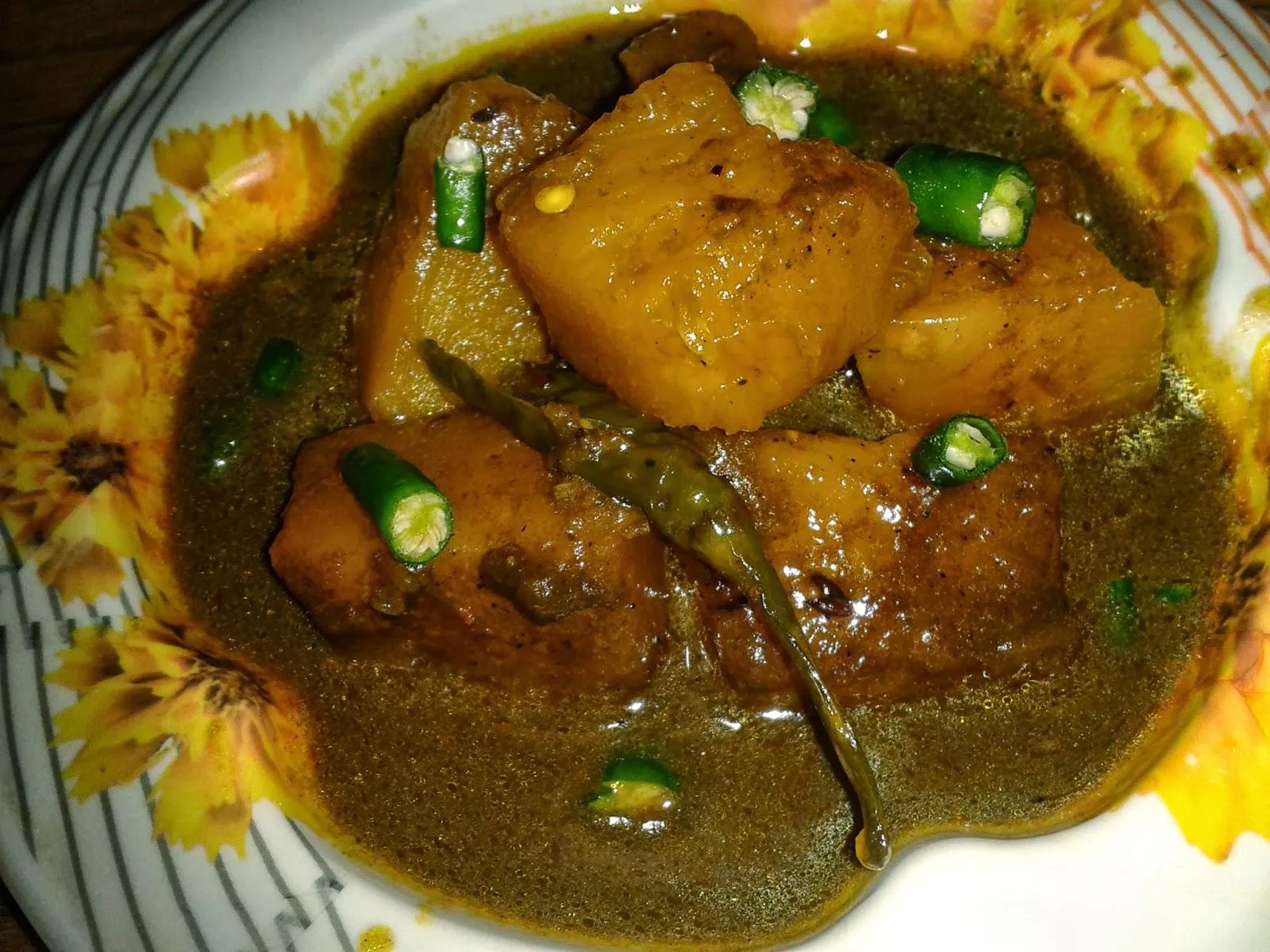
Dogra Dham Ambal sweet and sour pumpkin SACRED SATVIK DHAM

Dogra Ambal & Madra

Tamarind-jaggery pumpkin paired with yogurt curd lentils in brass degchis.

📍 Duggar Wedding Feasts
Mubarak Mandi Dogra Palace Complex Jammu ROYAL RESIDENCE

Mubarak Mandi Palace Complex

200-year seat of Dogra kings overlooking the Tawi river with Sheesh Mahal.

📍 Old City, Jammu
Bahu Fort on left bank of river Tawi Jammu 3,000-YEAR BASTION

Bahu Fort & Bawe Wali Mata

Built by Raja Bahu Lochan. Sacred Kali temple hosting the festive Bahu Mela.

📍 Left Bank Tawi, Jammu
Krimchi Group of Ancient Pandava Temples Udhampur CLASSICAL ANTIQUITY

Krimchi Pandava Temples

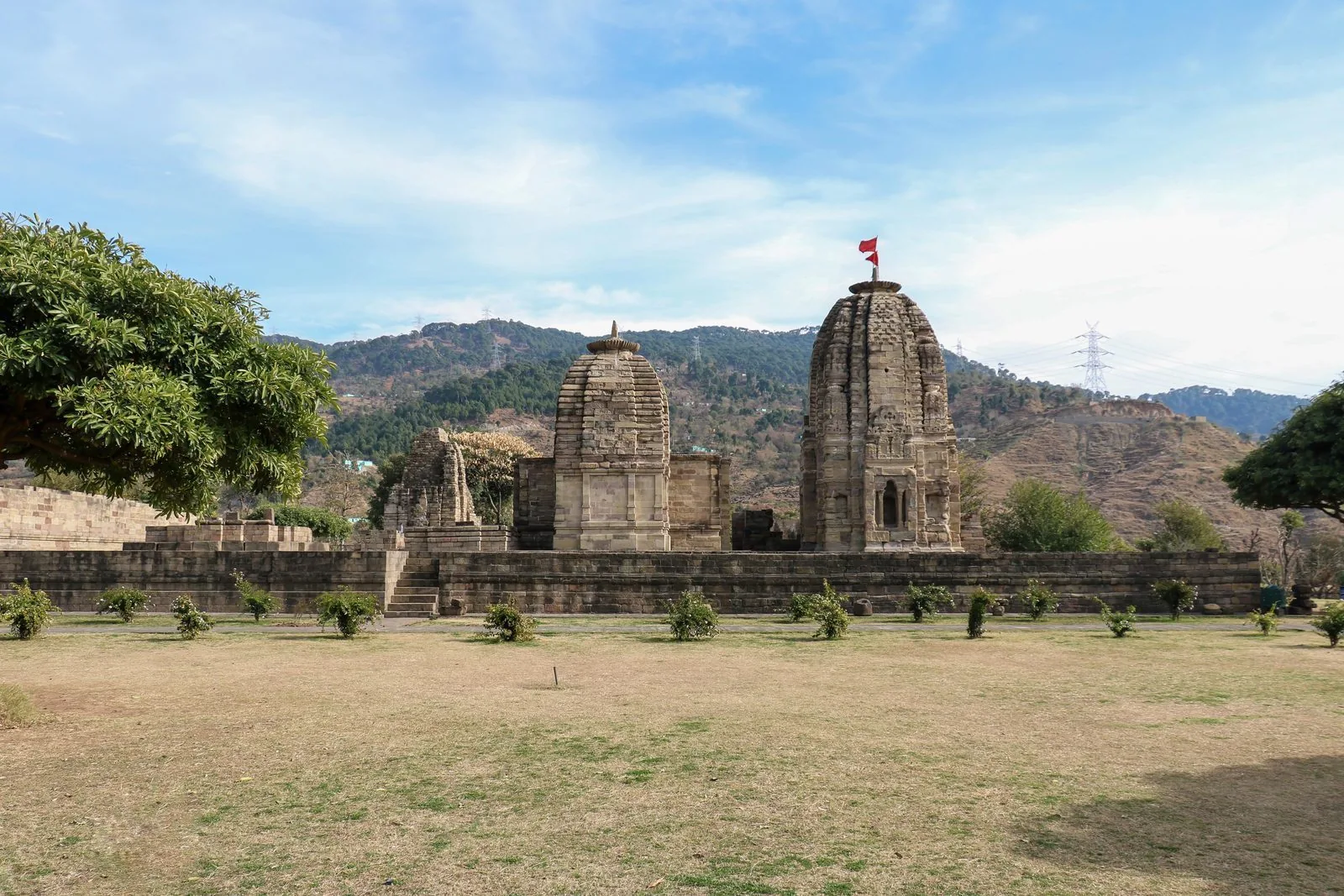
8th-century stone temple complex built in Nagara classical temple architecture.

📍 Udhampur District
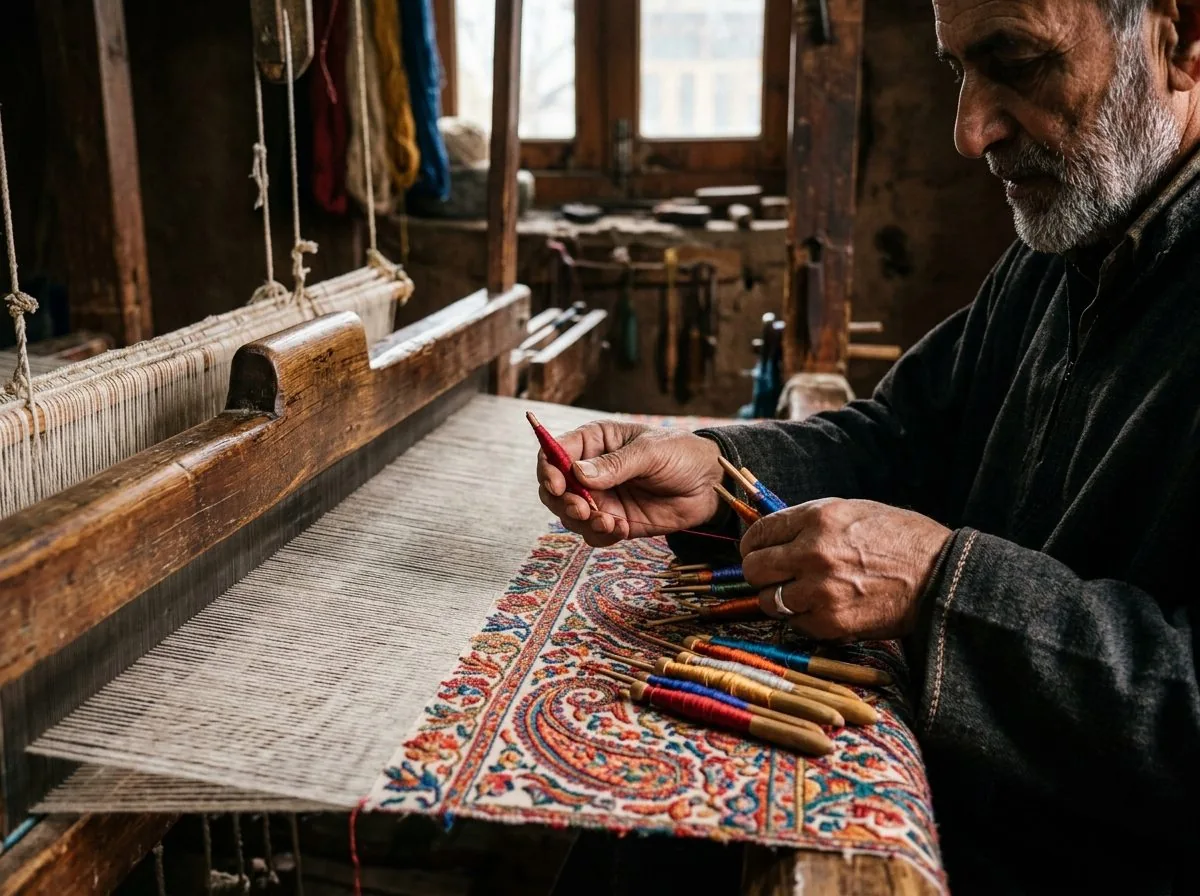
GI Certified Kashmir Pashmina Shawl with Sozni Needlework GI CERTIFIED WEAVING

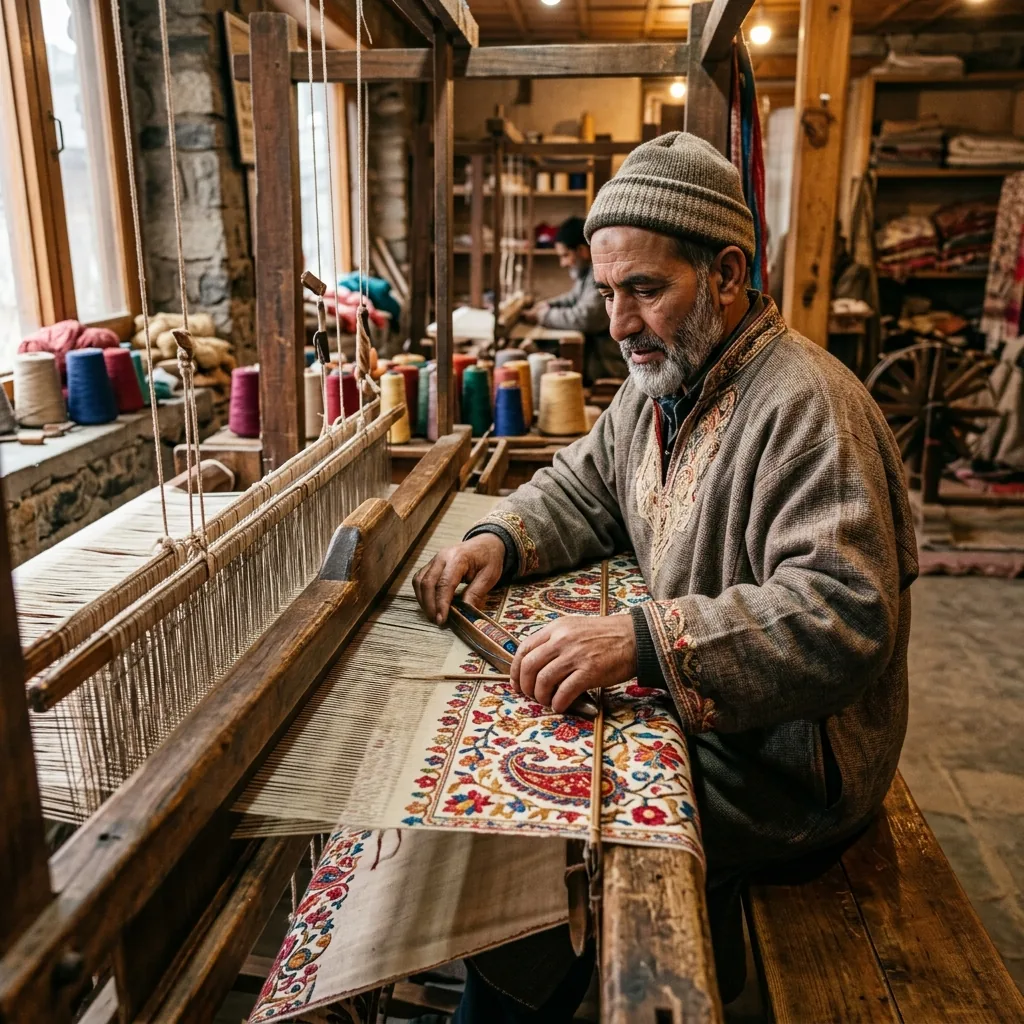
Kani Pashmina Shawls

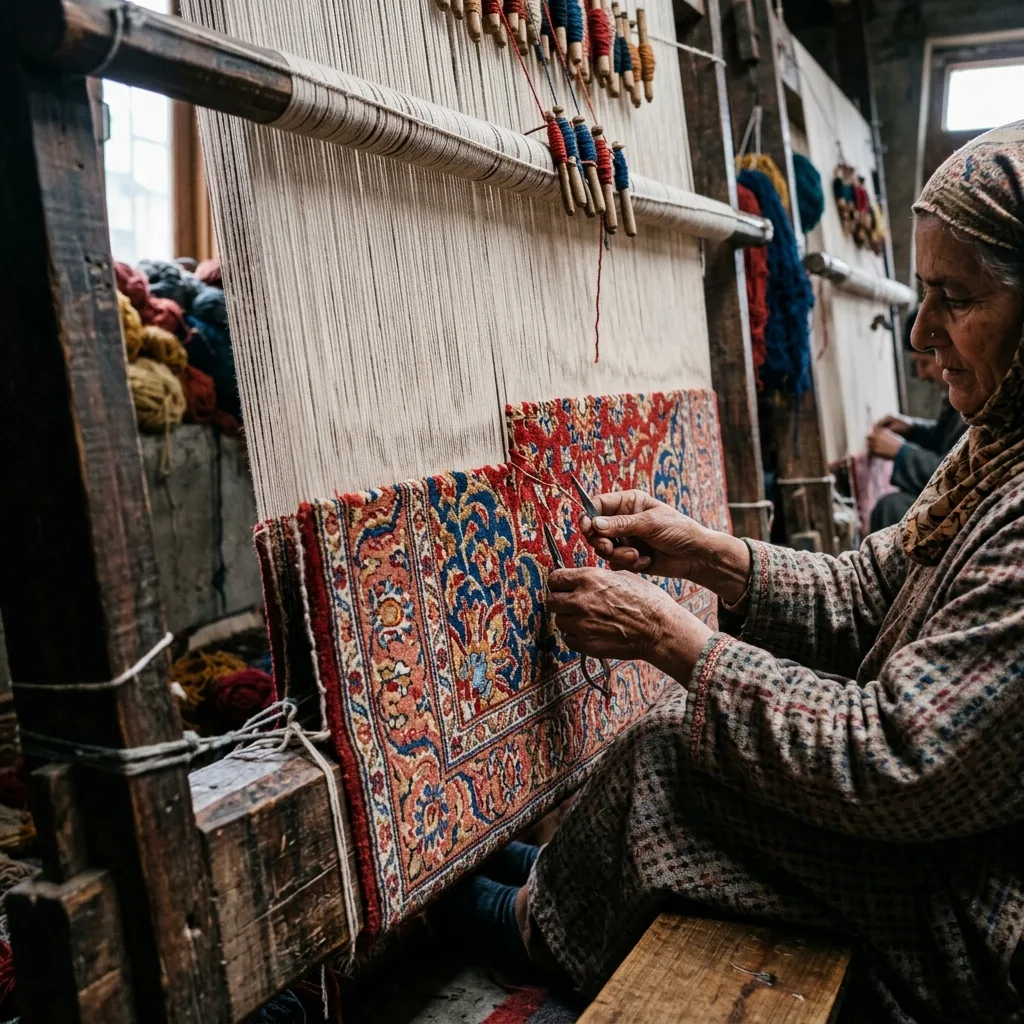
Hand-woven with wooden eyeless needles (Tujis) decoding poetic Talim patterns.

📍 Kanihama & Srinagar
GI Basohli Miniature Painting Rasamanjari Series PAHARI MINIATURE

GI Basohli Miniature Art

Vibrant hot colors, deep lotus eyes, and iridescent beetle-wing jewel inlays.

📍 Basohli, Kathua
Traditional Dogra Rajput attire with royal safa and angarkha WARRIOR REGALIA

Dogra Safa & Angarkha

The tall Dogra turban with the Kalka crest, paired with tight Churidar.

📍 Duggar Warrior Tradition
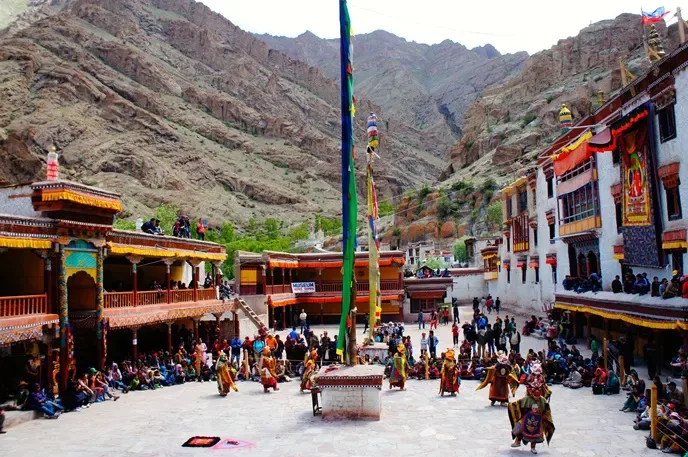
Hemis Monastery Sacred Cham Mask Dance Ladakh SACRED MASK DANCE

Sacred Cham & Perak

Lama monastic dance with intricate silk robes and turquoise-studded Peraks.

📍 Hemis Monastery, Ladakh
🔊 CHAPTER III • TRADITIONAL ACOUSTIC HERITAGE

Sounds of the Soil: Sacred Rhythms, Instruments & Melodies

The acoustic traditions of Jammu, Kashmir, and Ladakh span classical courtly maqams, pastoral hill dances, and deep meditative monastic acoustics (curated organology documentation with digital harmonic modeling adhering to traditional pitch scales):

🪕

100-String Kashmiri Santoor

Trapezoidal walnut-wood chordophone strung with 100 steel strings across 25 bridges. Played with curved walnut mallets (Mezrab), serving as the melodic heart of classical Sufiana Kalam.

Kashmir Valley • Classical Tradition
🥁

Dogri Dhol & Narsingha

Vibrant double-headed barrel drums paired with the long, S-shaped beaten copper horn (Narsingha). Performed around nocturnal village bonfires during the sacred Kud ritual dance honoring local deities.

Duggar Middle Himalayas • Ritual Folk
🔔

Sacred Temple Ghanta & Shankh

Resonant bell metal (Ashtadhatu) temple bells and sacred conches sounding at dawn and dusk across the historic shrines of Jammu City and Kashmir Shaivite springs.

Jammu & Kashmir • Sacred Acoustic
📯

Ladakhi Dungchen & Damnyan

Telescopic long brass horns producing deep resonant low drone frequencies echoed across Himalayan mountain gorges during sacred monastic prayer and mask dances.

Ladakh • Monastic Tradition
🎨 VISUAL LIVING HERITAGE

GI Certified Crafts & Living Arts

Artisan weaving Kani Pashmina shawl on handloom GI Kani Pashmina Kanihama & Srinagar
Basohli Miniature Painting Rasamanjari Series GI Basohli Painting Kathua (Pahari School)
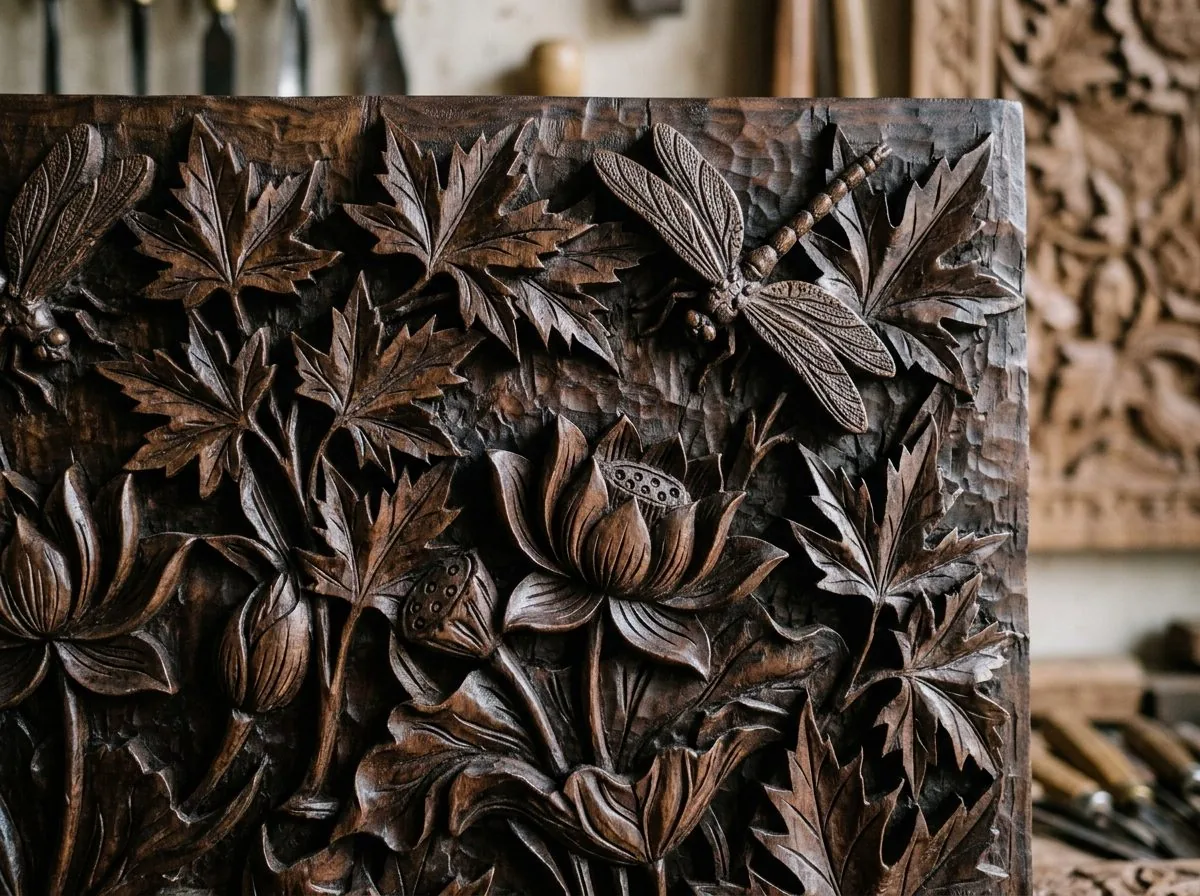
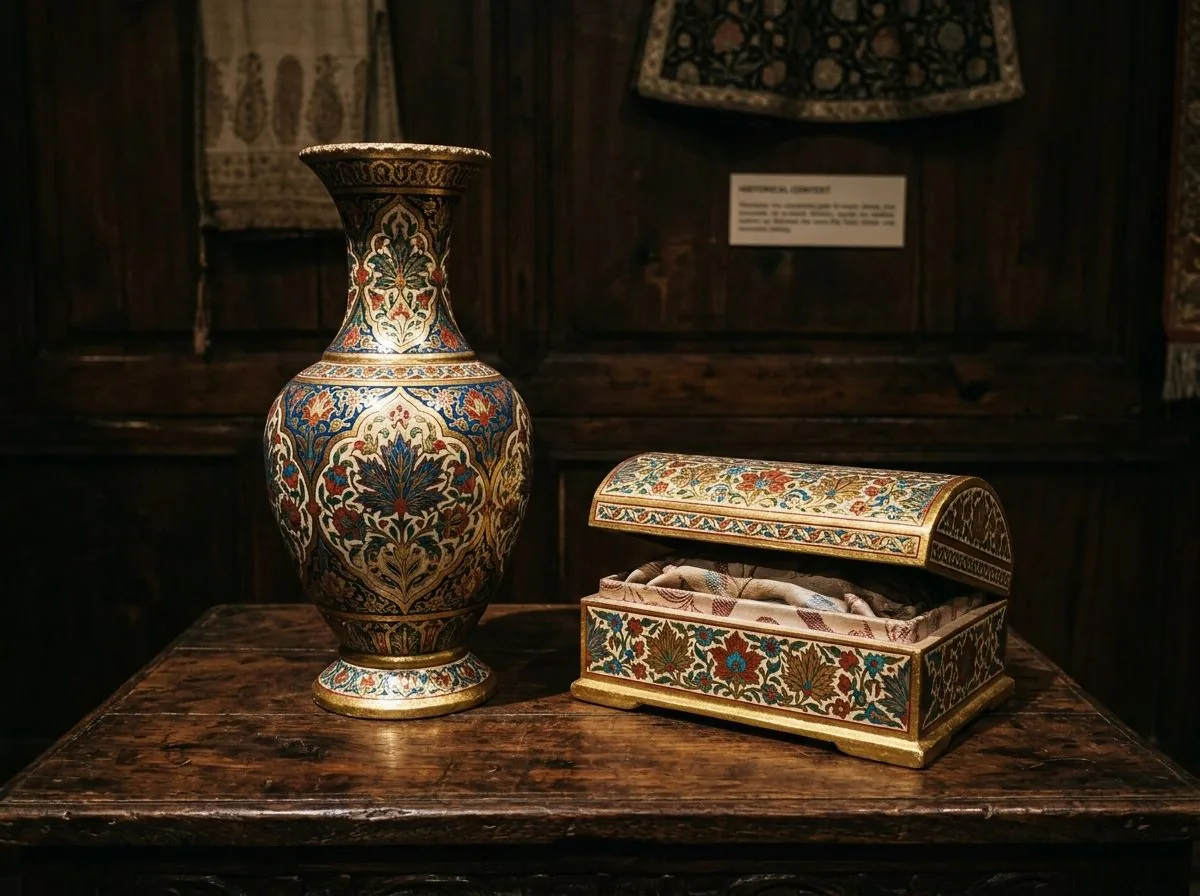
Kashmir Handcrafted Walnut Wood Box with Intricate Floral Motifs GI Walnut Wood Khatamband & Carving
Kashmiri Papier Mache lacquered decorative vase GI Papier-Mâché Sakhtsazi & Naqqashi

Heritage Protection & Regulatory Classifications

CULTURE DIRECTORY 2026
🏛️ CENTRALLY PROTECTED (ASI) 📜 STATE PROTECTED (ARCHAEOLOGY & MUSEUMS) 🌿 LIVING INTANGIBLE HERITAGE 📖 DOCUMENTED / ARCHIVAL REFERENCE
📌 Verification & Statutory Guidance: Archaeological monuments in Jammu & Kashmir are governed under the Ancient Monuments and Archaeological Sites and Remains (AMASR) Act, 1958 and state preservation acts. Living craft practices and Geographical Indications are maintained under the GI Registry of India. Museum timings, entry permits, and festival schedules may change via administrative notification. Always consult official departmental websites (culture.jk.gov.in, jkaacl.jk.gov.in, asi.nic.in) before planning visits.
🏛️ CULTURAL GOVERNANCE

J&K Cultural, Archaeological & Academy Administration Hierarchy

Multi-tier governance: UT Administration ➔ Department of Culture ➔ Directorate of Archives, Archaeology & Museums ➔ JKAACL Academy ➔ District Cultural Ecosystem ➔ Artists & Guilds.

1. Department of Culture (UT Level)

  • Administrative Dept: Department of Culture, Civil Secretariat J&K.
  • Apex Policy: Heritage protection legislation, monument restoration funds, and artist welfare schemes.
  • National Interface: Ministry of Culture (GoI), Sangeet Natak Akademi, Sahitya Akademi, and IGNCA.

2. JKAACL & Museums Directorate

  • JKAACL: J&K Academy of Art, Culture & Languages (Srinagar & Jammu Divisions).
  • Archives & Museums: Directorate of Archives, Archaeology & Museums (SPS Museum, Dogra Art Museum).
  • Archaeology: ASI Srinagar Circle & ASI Jammu Circle for centrally protected monuments.

3. District Cultural Centers & Guilds

  • District Cultural Officers: Facilitating regional folk festivals, literary seminars, and exhibitions.
  • Community Guilds: Traditional *Bhand Pather* guilds (Wathal), *Rouf* clubs, and *Kud* mandalis.
  • University Departments: Dept of Kashmiri/Dogri (Univ of Kashmir, Univ of Jammu), Central Univ of J&K.
📜 Linguistic & Paleographic Research
🗣️ LINGUISTIC & SCRIPT HERITAGE

Master Language Ecosystem & Sharada Script Paleography

Comprehensive survey of J&K's official and regional languages, ancient Sharada paleography, Perso-Arabic Nastaliq, and Dogra Akkhar script traditions.

Kashmiri (Koshur)

Linguistic Family
Dardic / Indo-Aryan
Geographic Concentration
Kashmir Valley (all 10 districts), Chenab Valley, Pir Panjal pockets
Primary / Historical Scripts
Perso-Arabic (Nastaliq) (official), Sharada (historical/liturgical), Devanagari
Literary & Oral Heritage
Lallavakh (14th c.), Shruks of Nund Rishi, Vatsun (Habba Khatoon), Ghazals (Mahjoor, Rasul Mir)
Preservation & Academic Hub
University of Kashmir (Dept of Kashmiri), JKAACL Srinagar, Sahitya Akademi

Dogri

Linguistic Family
Indo-Aryan (8th Schedule)
Geographic Concentration
Jammu Province (Jammu, Samba, Kathua, Udhampur, Reasi)
Primary / Historical Scripts
Devanagari (modern standard), Dogra Akkhar / Namme Dogra Akkhar (historical royal)
Literary & Oral Heritage
Dogri folk songs (*Bhakkan*, *Gorchian*), Modern poetry (Padma Sachdev, Dinu Bhai Pant)
Preservation & Academic Hub
University of Jammu (Dept of Dogri), Dogri Sanstha Jammu, Sahitya Akademi

Gojri

Linguistic Family
Indo-Aryan (Rajasthani/Gujarati group)
Geographic Concentration
Poonch, Rajouri, Reasi, Anantnag, Ganderbal, Kupwara (Gujjar/Bakarwal communities)
Primary / Historical Scripts
Perso-Arabic (Nastaliq), Devanagari
Literary & Oral Heritage
Rich oral folk epics, *Bait* narrative singing, *Dhol* pastoral ballads, *Si-Harfi* verses
Preservation & Academic Hub
Gurjar Desh Charitable Trust Jammu, JKAACL Gojri Section, BGSBU Rajouri

Pahari

Linguistic Family
Indo-Aryan (North-Western group)
Geographic Concentration
Poonch, Rajouri, Kupwara (Karnah), Baramulla (Uri)
Primary / Historical Scripts
Perso-Arabic (Nastaliq)
Literary & Oral Heritage
Pahari *Mahiya*, *Sehra* wedding verses, *Dholak* ballads, seasonal folklore
Preservation & Academic Hub
Pahari Advisory Board, JKAACL Pahari Section, Baba Ghulam Shah Badshah Univ

Shina

Linguistic Family
Dardic (Indo-Aryan)
Geographic Concentration
Gurez Valley (Bandipora), Dras border, Tilel Valley
Primary / Historical Scripts
Perso-Arabic (extended Nastaliq), Roman transliteration
Literary & Oral Heritage
Archaic Dardic oral epics, high-altitude pastoral ballads, nature chants
Preservation & Academic Hub
Shina Cultural Society Gurez, JKAACL, Central University of Kashmir

Urdu & Hindi

Linguistic Family
Indo-Aryan (Official Languages)
Geographic Concentration
Statewide administrative, educational, media, and commercial usage
Primary / Historical Scripts
Nastaliq (Urdu), Devanagari (Hindi)
Literary & Oral Heritage
Rich prose, administrative gazettes, journalism, and inter-regional literature
Preservation & Academic Hub
Directorate of School Education, J&K Official Language Cell

The Sharada Script & Manuscript Preservation Traditions

Developed from Western Brahmi around the 8th century CE, Sharada was the intellectual script of Kashmir for over a millennium, utilized for Sanskrit philosophical treatises, astronomical tables, mathematics (Bakshali manuscript roots), and classical Shaivite texts.
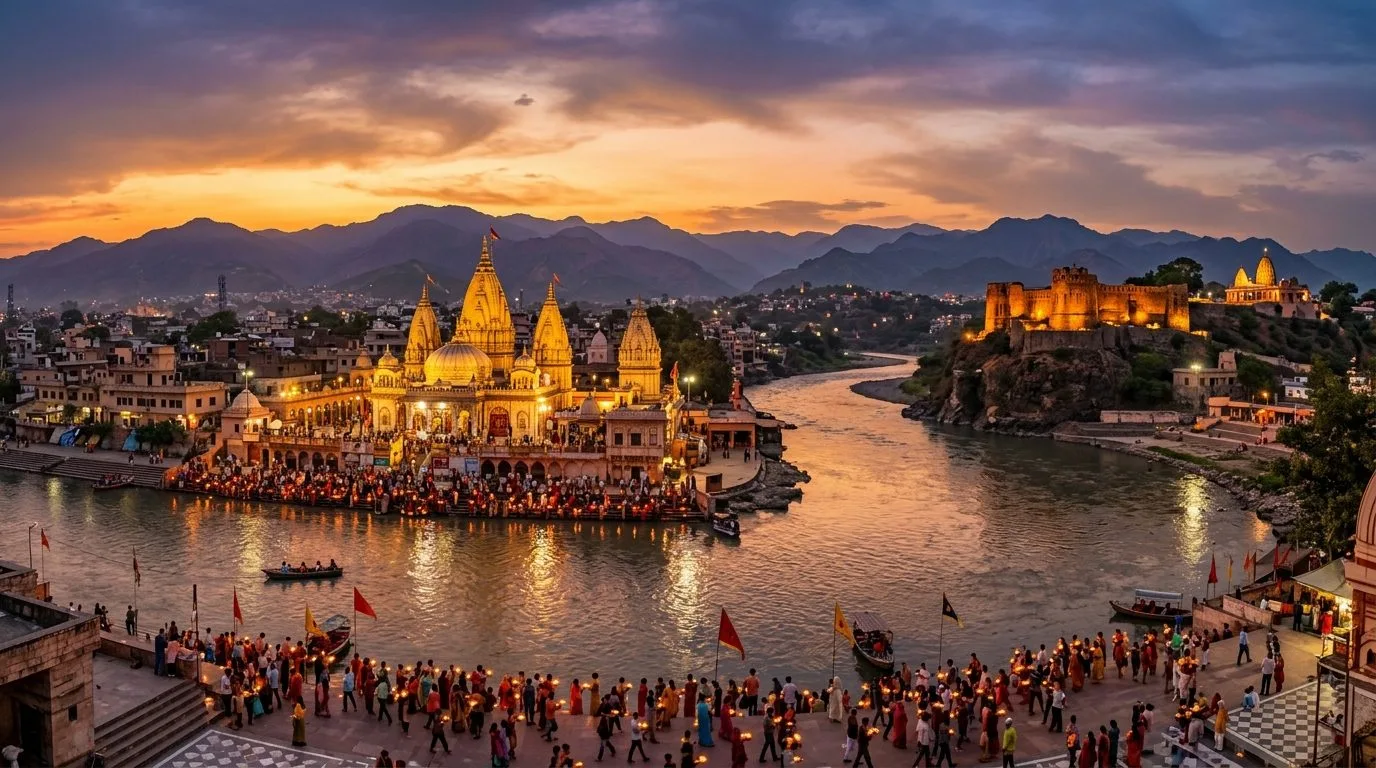
Standard Institutional Preservation Stages (DAAM & IGNCA): Discovery ➔ High-Resolution Digitization ➔ Metadata Cataloguing ➔ Acid-Free Conservation ➔ Scholarly Transcription.
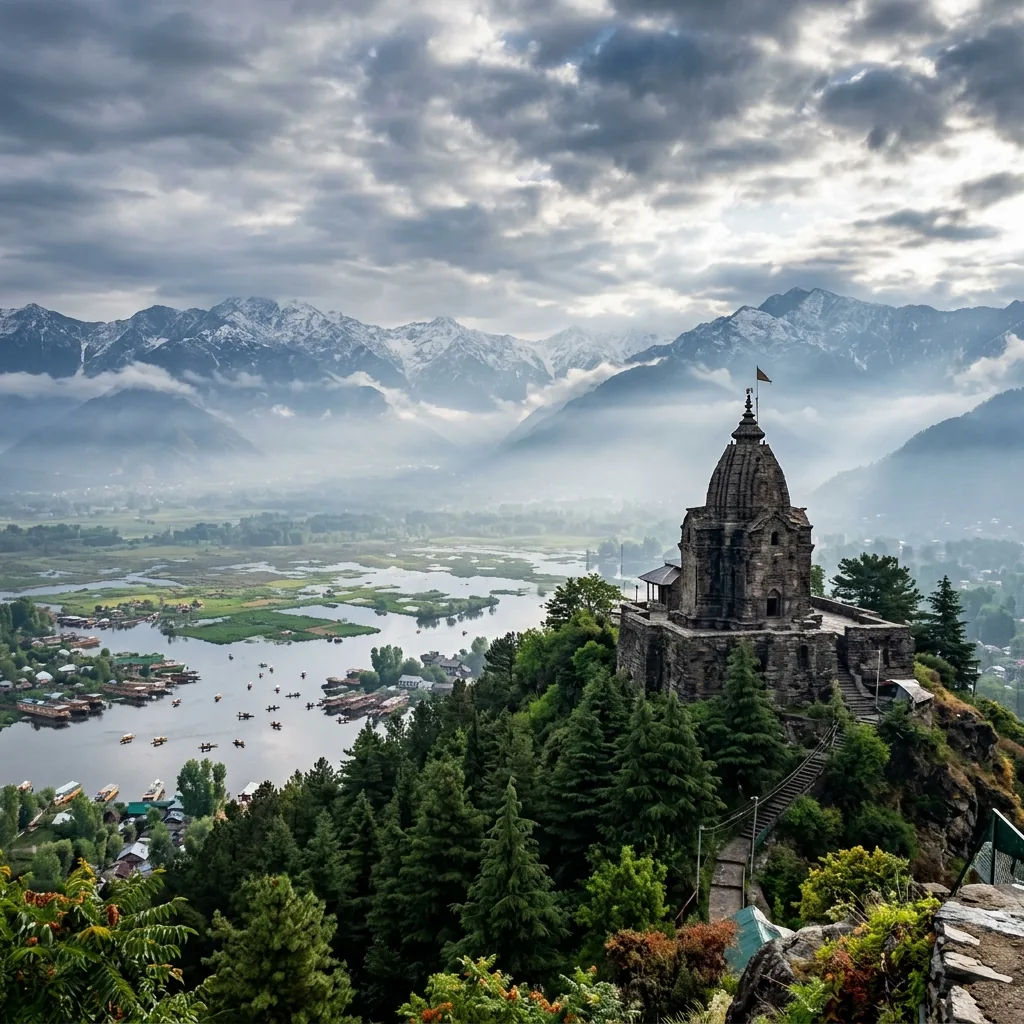
Historic Shankaracharya Temple on Gopadri Hill overlooking Srinagar

Gopadri Hill (Shankaracharya Temple) — Historic Center of Shaivite Discourse

Ancient Pandava Temple Architecture at Krimchi Udhampur

Krimchi Temples (8th–9th c. CE) — Nagara Stone Architecture of Jammu

🕉️ PHILOSOPHICAL APEX & AESTHETICS

Kashmir Shaivism: The Trika Non-Dual Philosophy & Aesthetic Theory

Universal Non-Dual Consciousness

Kashmir Shaivism (known philosophically as Trika or Pratyabhijna) is a 9th–12th century non-dualistic philosophical system that originated in the Kashmir Valley. Unlike ascetic world-negating philosophies, Kashmir Shaivism views the entire universe as the vibrant, joyful self-expression (Spanda) and divine play (Lila) of universal consciousness (Parama Shiva), indivisible from its creative kinetic energy (Shakti).

9th Century CE • Foundation

Vasugupta & The Shiva Sutras

According to historical tradition, sage Vasugupta discovered the 77 foundational Shiva Sutras inscribed on the sacred rock of Mount Mahadeva in Harwan (Srinagar), establishing the non-dual consciousness doctrine.

c. 950–1020 CE • The Great Master

Acharya Abhinavagupta

The towering genius of Indian thought. Master of 35+ monumental treatises including the Tantraloka (encyclopedia of non-dual Tantra) and the Abhinavabharati (establishing Shanta Rasa, the aesthetic tranquility).

Self-Recognition & 20th C.

Pratyabhijna & Swami Lakshman Joo

The core realization that the individual soul is already identical with the Supreme, needing only 'recognition' (Pratyabhijna). Preserved in modern times by Kashmir's master scholar Swami Lakshman Joo (1907–1991).

📜 LITERARY GIANTS & RISHI TRADITIONS

Master Literature, Mystic Poets & Oral Storytelling Traditions

Synthesizing the foundational Shaivite and Sufi-Rishi verse of Kashmir with the lyrical and heroic ballad traditions of Duggar.

Lal Ded (Lalleshwari, 14th c.)

Kashmir Shaivism & Mystic *Lallavakh*
"Ami pana soedras nav ches lamān / Kati bozi day myon me ti tiyār talān"
— Lal Vakh (With loose-spun thread I tow my boat upon the sea...)

The mother of Kashmiri poetic literature. Composed 4-line spiritual quatrains (Vakhs) blending Trika Kashmir Shaivism with universal humanism, rejecting ritualistic dogma in favor of internal spiritual illumination.

Nund Rishi (Sheikh Noor-ud-din, 1377–1440)

Founder of the Kashmiri *Rishi Order*
"Ann poshi teli yeli poshi van"
— Sheikh-ul-Alam (Food will last only so long as forests last)

Revered as *Alamdar-e-Kashmir*. Composed short aphoristic verses (Shruks) championing ecological harmony, non-violence (*Ahimsa*), vegetarianism, and social equality.

Padma Sachdev (1940–2021)

Doyen of Modern Dogri Poetry • Padma Shri
"Meri kavita mere geet — Duggar di mitti di mehak te pahaaran di thandi chhaun"
— Padma Sachdev, Sahitya Akademi Award 1971

First modern woman poet of Dogri. Author of *Meri Kavita Mere Geet*, celebrated for immortalizing Dogra folklore, rural feminine resilience, and the melodic sweetness of the Duggar hills.

Habba Khatoon (16th c.)

The Nightingale of Kashmir (*Zoon*)
"Walov mai zooni gindane / Tche kyo ho gom ti gindane travith"
— Habba Khatoon Lol-Lyric (Come, O moon, let us play...)

Queen of Sultan Yusuf Shah Chak. Pioneered the *Lol Lyric* and *Vatsun* (short emotional folk songs) expressing poignant romantic longing, sorrow, and pastoral beauty along the banks of River Jhelum.

Mahjoor (Ghulam Ahmad, 1887–1952)

*Shayir-e-Kashmir* (Born in Mitrigam, Pulwama)
"Walo ha baagwano nav-baharuk shaan paida kar / Phulan gul gath karan bulbul tithoy saman paida kar"
— Mahjoor, Revolutionary Spring Ghazal

Revolutionized Kashmiri poetry with patriotic zeal, peasant rights, communal harmony, and springtime romantic ghazals (*"Walo Ha Baagwano"*), praised by Rabindranath Tagore.

Dinu Bhai Pant (1917–1992)

Pioneer of Modern Dogri Drama & Satire
"Dogri bhasha da maan te samajik chetna di aawaz"
— Dinu Bhai Pant, Founding Pillar of Dogri Sanstha

Founding pillar of *Dogri Sanstha*. Author of classic poetic satire *Guttlun* and stage plays (*Sarpanch*, *Nama Gran*), establishing Dogri as a powerful medium for modern progressive social commentary.

🎭 PERFORMING ARTS & ACOUSTIC HERITAGE

Folk Theatres, Ritual Dances & Traditional Musical Instruments

Comprehensive breakdown of *Bhand Pather*, *Kud*, *Rouf*, *Hafiza*, *Sufiyana Kalam*, and authentic Himalayan musical organology.

1. Bhand Pather (Satirical Theatre)

Centuries-old folk theatre combining satire, mime, music, and social parody. Performed in village squares by traditional actors (Bhands) accompanied by Surnai (reed oboe) and Dhol, using the central clown character (Magun) to lampoon injustice.

2. Kud Dance (Jammu Hills)

Ritual celebratory circle dance performed at night around bonfires in honor of local mountain deities (Gram Devatas / Kuldevtas). Dancers dressed in traditional tight churidars and turbans move rhythmically to the resonant blast of the Narsingha horn and Dholak.

3. Rouf & Hafiza Nagma

Rouf: Lyric dance performed by two facing rows of women interlocking arms during Eid and spring harvest. Hafiza Nagma: Classical semi-court dance set to Sufiana Kalam maqams, accompanying Santoor and Saaz-e-Kashmir.

Traditional Musical Instruments

Santoor

Classification
Hammered Chordophone
Materials & Acoustic Engineering
Trapezoidal walnut wood soundboard strung with 100 steel strings across 25 bridges; struck with curved walnut wood mallets (Mezrab).
Cultural Usage & Repertoire
Core instrument of Kashmiri Sufiana Kalam classical music; popularized globally on concert stages by Pt. Shivkumar Sharma and Pt. Bhajan Sopori.

Saaz-e-Kashmir

Classification
Bowed Chordophone
Materials & Acoustic Engineering
Carved wooden body with 3 main melody gut/steel strings and 14 sympathetic resonance strings; played vertically with an arched horsehair bow.
Cultural Usage & Repertoire
Integral bowed accompaniment in classical Sufiana Maqams; produces haunting, resonant microtonal glides (Meend).

Rabab (Kashmiri)

Classification
Plucked Lute
Materials & Acoustic Engineering
Mulberry wood hollow body covered with parchment (goat skin), featuring 4 main playing strings and 11–14 sympathetic strings.
Cultural Usage & Repertoire
Essential rhythm and melody chordophone in Kashmiri folk ballads, Sufi poetry recitations, and wedding Chakri performances.

Tumbaknari

Classification
Membranophone
Materials & Acoustic Engineering
Goblet-shaped hollow earthen clay drum, kiln-fired and covered with treated sheepskin or fish skin across the wide opening.
Cultural Usage & Repertoire
Played exclusively by women during Kashmiri marriages (Mehendiraat, Devgon), held horizontally under the left arm.

Noet (Kashmiri Clay Pot)

Classification
Idiophone / Percussion
Materials & Acoustic Engineering
Specially fired copper/clay water pitcher struck on the belly and mouth to produce deep resonant bass and high ringing tones.
Cultural Usage & Repertoire
Essential folk percussion in Chhakri ensembles and rural Kashmiri festive gatherings.

Narsingha

Classification
Aerophone (Brass Horn)
Materials & Acoustic Engineering
Long, S-shaped double-curved natural horn forged from beaten brass or copper sheets.
Cultural Usage & Repertoire
Resonant ceremonial horn of Dogra hill temples and the Kud dance in Jammu, announcing deity processions across valleys.
📐 Architectural Heritage & Seismic Survey
📐 INDIGENOUS STRUCTURAL ENGINEERING

Vernacular Architecture & Seismic Resilience (*Taq* & *Dhajji Dewari*)

Himalayan masons and carpenters engineered indigenous earthquake-resilient architectural systems centuries before modern building codes.

1. Taq Timber-Laced Masonry System

Structural Principle: Horizontal double-runner wooden tie-beams (Deodar or Kail) placed at every window-lintel and floor level embedded in thick load-bearing brick/rubble masonry.

Seismic Action: The horizontal timber bands prevent masonry walls from separating during lateral earthquake shear waves, converting rigid brittle masonry into a ductile, energy-dissipating structure.

2. Dhajji Dewari ("Patchwork Quilt Wall")

Structural Principle: Lightweight, closely spaced vertical, horizontal, and diagonal timber framing divided into small square/rectangular panels filled tightly with light flat stones or burnt bricks set in clay mortar.

Seismic Action: The small compartmentalized infill prevents cumulative wall failure; under extreme ground motion, infill panels shift slightly within the flexible timber frame, safely dissipating seismic energy.

3. Pinjrakari Lattice Woodwork

Intricate geometric wooden screens constructed by interlocking precision-cut wooden battens without glue or nails. Used in overhanging balconies (Dub) and windows to ensure privacy, solar shading, and natural cross-ventilation.

4. Royal Dogra Palace Architecture (Mubarak Mandi)

Monumental palace complex spanning 200+ years of Dogra rule, fusing Rajasthani jharokhas, Mughal arcades, and European Baroque/Gothic elements overlooking the Tawi river gorges in Jammu.

🏛️ MONUMENTS & MUSEUMS

Protected Monuments, Archaeological Excavations & Master Museums

Centrally and state-protected archaeological monuments (ASI & J&K Archives) alongside master museum repositories.

Burzahom Archaeological Site

District & Location
Srinagar (near Naseem Bagh)
Historical Period & Patron
Neolithic to Megalithic (c. 3000 BCE to 1000 BCE)
Architectural Style & Key Features
Subterranean pit-dwellings, polished bone tools, anthropomorphic pottery, dog burials, and carved hunting stone slabs.
Protection & Conservation Status
🔵 ASI Protected (UNESCO Tentative List)

Martand Sun Temple

District & Location
Anantnag (near Mattan)
Historical Period & Patron
8th Century CE (King Lalitaditya Muktapida, Karkota Dynasty)
Architectural Style & Key Features
Grand Greek-influenced Gandharan columned peristyle courtyard (84 columns), central sanctum dedicated to Surya, massive limestone masonry.
Protection & Conservation Status
🔵 ASI Protected (Apex Classical Monument)

Avantipur Archaeological Temples

District & Location
Pulwama (Awantipora)
Historical Period & Patron
9th Century CE (King Avantivarman, Utpala Dynasty)
Architectural Style & Key Features
Two major temple complexes: Avantiswami (Vishnu) with carved celestial sculptures and Avantishvara (Shiva).
Protection & Conservation Status
🔵 ASI Protected (Major Excavation)

Mubarak Mandi Palace Complex

District & Location
Jammu (Old City cliff)
Historical Period & Patron
1824–1925 CE (Dogra Maharajas)
Architectural Style & Key Features
Multi-palace complex featuring Sheesh Mahal, Gol Ghar, Rani Charak Palace, and French-Baroque courtyards overlooking Tawi river.
Protection & Conservation Status
🟡 Active Conservation (State Heritage)

Bahu Fort & Mahakali Temple

District & Location
Jammu (Left bank of Tawi)
Historical Period & Patron
Ancient roots (Rebuilt 19th c. Dogra period)
Architectural Style & Key Features
Massive fortified stone bastions, octagonal towers, surrounding Bagh-e-Bahu terraced gardens, and sacred Bawe Wali Mata shrine.
Protection & Conservation Status
🏛️ State Protected (Living Heritage • Open to Visitors)

Hari Parbat Fort (Koh-e-Maran)

District & Location
Srinagar (Downtown hill)
Historical Period & Patron
Ramparts by Akbar (1597), Present Fort by Atta Mohammad Khan (1808)
Architectural Style & Key Features
Stone rampart walls (Sangin Darwaza, Kathi Darwaza), upper citadel fortress; sacred hill with Sharika Devi, Makhdoom Sahib & Chatti Padshahi.
Protection & Conservation Status
🏛️ State Protected (Living Monument • Open to Visitors)

Master Museums & Archival Repositories

1. SPS Museum (Lal Mandi, Srinagar)

Established in 1898. Houses world-renowned collections of 5th-century Harwan Buddhist terracotta tiles, Gandhara/Kashmiri bronzes, Sharada birch-bark manuscripts, royal Numismatics, and historic Pashmina shawls.

2. Dogra Art Museum (Mubarak Mandi, Jammu)

Premier repository of Pahari miniature art, exhibiting over 800 rare Basohli and Kangra Miniature Paintings, gold-inlaid Dogra armory, terracotta sculptures from Akhnoor, and historical Shahnama manuscripts.

3. Amar Mahal Museum & Library (Jammu)

French chateau palace designed in 1890. Exhibits the magnificent 120 kg Pure Solid Gold Throne of Jammu, Nal-Damyanti miniature suites, and rare library of 25,000+ historic colonial and Sanskrit volumes.

??? HIMALAYAN BUDDHIST & BALTI HERITAGE ? MARYUL

Ladakh: High Monasteries, Sacred Cham, Thangka Art & Living Silk Route Traditions

"Land of the Broken Moon & Living Gompas." Perched across the trans-Himalayan rain shadow, Ladakh represents a millennia-old synthesis of Vajrayana Buddhist monastic arts in Leh and Zanskar with the ancient Balti-Purig Islamic poetry, polo traditions, and rock-carved Maitreya Buddhas of Kargil.
Ladakh Heritage Dossier
Hemis Monastery Sacred Cham Mask Dance Ladakh
MONASTIC FESTIVAL

Hemis Tsechu & Sacred Cham

Celebrates Guru Padmasambhava?s birth with colorful silk robes, painted wooden wrathful masks, and cymbal-drum choreography.

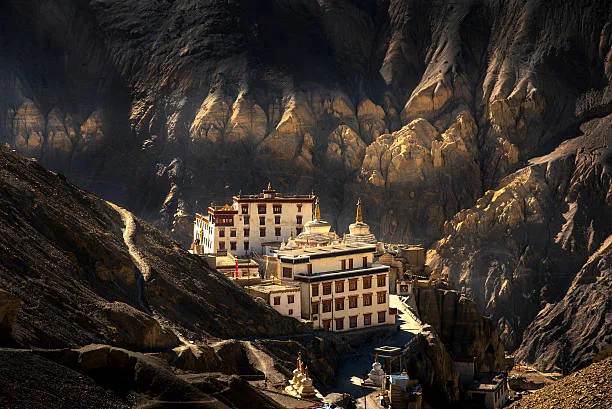
Lamayuru Monastery Moonland Leh Ladakh
ANCIENT GOMPA

Yuru Kabgyat & Lamayuru

10th-century Drikung Kagyu gompa perched above lunar rock formations, founded by Mahasiddha Naropa with rare fresco paintings.

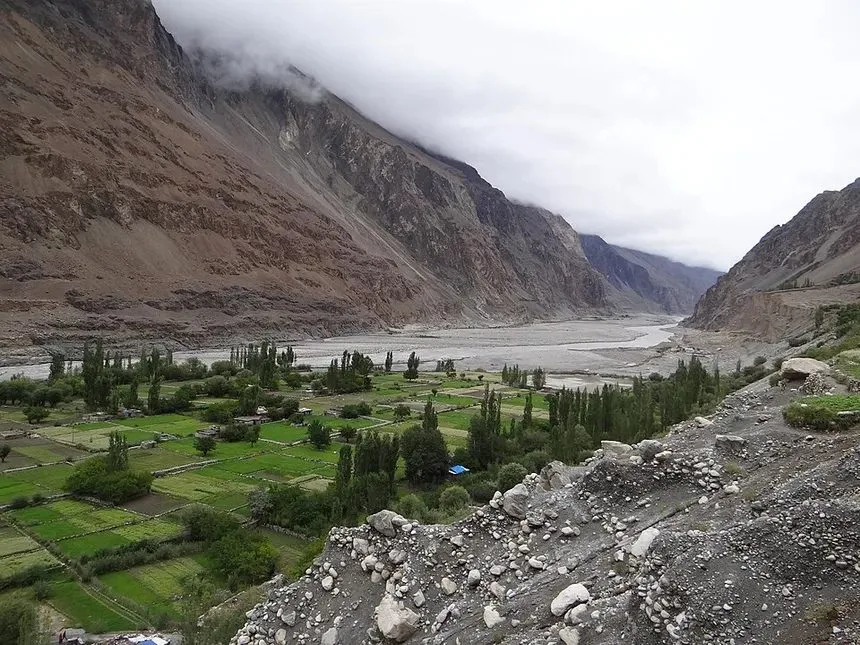
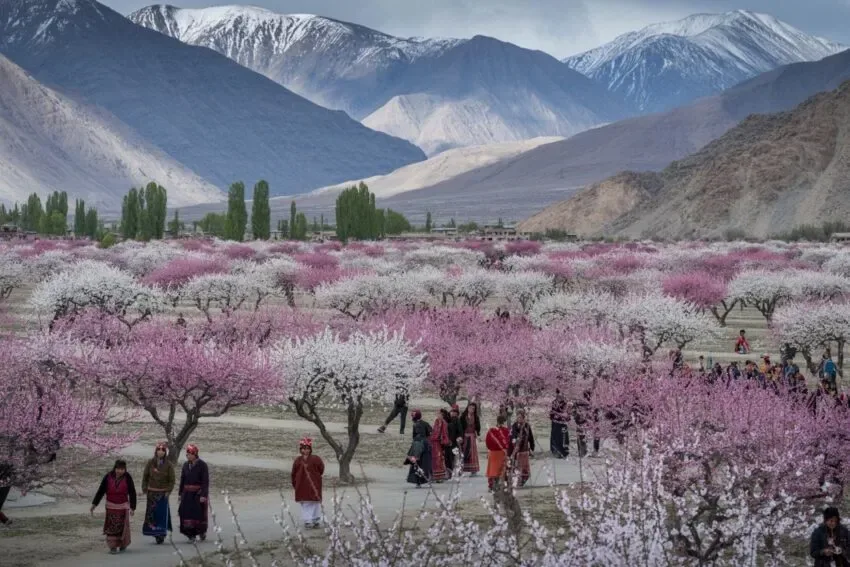
Turtuk Balti village along Shyok River Ladakh
BALTI CULTURE

Balti & Purig Living Traditions

Centuries of stone architecture, natural cold-storage bunkers (Nangchung), apricot blossom orchards, and classical Balti poetry in Turtuk & Kargil.

?? Monastic Orders & Gompas

  • Major Traditions: Drukpa Kagyu (Hemis, Chemrey), Gelugpa (Thiksey, Spituk, Likir), and Drikung Kagyu (Lamayuru).
  • Alchi Choskor: 11th-century monument built by Lotsawa Rinchen Zangpo featuring Kashmiri-influenced Buddhist wall murals and wooden carvings.
  • Zanskar Cliff Shrines: Phugtal Gompa built into a natural limestone cave cliff face above the Lungnak river gorge.

?? Intangible Crafts & Attire

  • Thangka Scroll Painting: Sacred geometric representations of deities painted with crushed lapis lazuli, cinnabar, and gold leaf on treated cotton.
  • Goncha & Perak: Men and women wear the woolen Goncha robe secured by a silk sash (Skerag). Women adorn the elaborate turquoise-studded Perak headdress, passed through generations.
  • Nambu & Pattu Weaving: Thick sheep and yak wool woven on indigenous back-strap looms to withstand sub-zero winters.

?? Festivals & Culinary Rhythms

  • Losar (New Year): Celebrated in the 11th Buddhist month with illuminated dough lamps (Metho), butter carvings, and family feasts.
  • Dosmoche: Annual scapegoat prayer festival celebrated in Leh and Diskit to ward off evil energies before spring sowing.
  • Gastronomic Soul: Steaming Skyu and Thukpa pasta broths, roasted barley flour (Tsampa), churned salty butter tea (Gur-Gur Chai), and fermented barley beverage (Chhang).
🗺️ REGIONAL HERITAGE MATRIX

Regional Cultural, Linguistic, Folk & Archaeological Matrix

Geospatial cultural directory mapping primary identities, languages, monuments, folk arts, and festivals across all 20 districts of J&K and Ladakh UT, with cross-references to regional geographic profiles.

Srinagar (Kashmir Valley)

Primary Cultural Identity
Intellectual, artisanal & Sufi-Shaivite cultural epicentre of the Valley
Languages & Literature
Kashmiri (Koshur), Urdu; Sharada manuscript repositories; Lal Ded & Habba Khatoon legacy
Major Heritage Monuments & Sites
Hari Parbat Fort, Jamia Masjid, Khanqah-e-Moula, Pari Mahal, Burzahom, SPS Museum
Folk Arts, Music & Dance
Sufiyana Kalam (Santoor & Saaz), Rouf Dance, Bhand Pather (Wathal), Chhakri
Major Festivals & Fairs
Navreh, Herath, Urs Shah-e-Hamdan, Urs Makhdoom Sahib, Tulip Festival
Geography Deep Link

Ganderbal (Kashmir Valley)

Primary Cultural Identity
Sacred spring pilgrimage hub & Sindh alpine valley pastoral heritage
Languages & Literature
Kashmiri, Gojri, Shina (Tilel boundary); Folk pastoral ballads
Major Heritage Monuments & Sites
Kheer Bhawani Temple (Tulmulla sacred spring), Manasbal Fort, Historic Sindh canal ruins
Folk Arts, Music & Dance
Wanvun wedding chants, Gojri Bait folk singing, Flute (*Bansuri*) melodies
Major Festivals & Fairs
Kheer Bhawani Mela (Jyeshtha Ashtami), Urs Baba Daryadin
Geography Deep Link

Budgam (Kashmir Valley)

Primary Cultural Identity
Rishi Order spiritual shrine hub & Kanihama master weaving village
Languages & Literature
Kashmiri, Urdu; Sheikh Noor-ud-din Noorani (Nund Rishi) *Shruks*
Major Heritage Monuments & Sites
Charar-i-Sharief Shrine Complex, Tomb of Sham Ded, Kanihama Craft Village
Folk Arts, Music & Dance
Rishi Sufi recitations, Kani Shawl weaving Talim chant, Laddi Shah ballads
Major Festivals & Fairs
Urs Sheikh Noor-ud-din Noorani (Charar-i-Sharief), Urs Syed Saleh
Geography Deep Link

Anantnag (Kashmir Valley)

Primary Cultural Identity
Classical temple heritage & Amarnath pilgrimage starting corridor
Languages & Literature
Kashmiri, Gojri; Rasul Mir (Romantic Ghazals), Mahmud Gami
Major Heritage Monuments & Sites
Martand Sun Temple, Bumzuva Cave Temples, Achabal Mughal Garden, Mattan Temple
Folk Arts, Music & Dance
Kashmiri Ghazal singing, Chhakri with Noet percussion, Rouf dance
Major Festivals & Fairs
Amarnath Yatra, Herath, Urs Baba Hyder Reshi (Reshi Molu), Baisakhi at Mattan
Geography Deep Link

Pulwama (Kashmir Valley)

Primary Cultural Identity
Saffron agricultural heritage, Utpala temple architecture & Mahjoor's birthplace
Languages & Literature
Kashmiri, Urdu; Mahjoor (born Mitrigam, author of *"Walo Ha Baagwano"*), Habba Khatoon *Vatsun* lyrics (Chandrehar)
Major Heritage Monuments & Sites
Avantiswami & Avantishvara Archaeological Temples (Awantipora), Payar Stone Temple
Folk Arts, Music & Dance
Habba Khatoon folk song renditions, Saffron harvest celebration songs, Wanvun
Major Festivals & Fairs
Saffron Bloom Festival (Pampore), Urs Syed Hassan Mantaqi
Geography Deep Link

Kulgam (Kashmir Valley)

Primary Cultural Identity
Sufi missionary cradle of Mir Syed Ali Simnani & Aharbal waterfall heritage
Languages & Literature
Kashmiri, Gojri; Sufi devotional poetry & folk tales
Major Heritage Monuments & Sites
Shrine of Mir Syed Ali Simnani (Kulgam town), Chersoo historic wooden mosque
Folk Arts, Music & Dance
Traditional *Dhamali* spiritual dance troupes, Sufiana Kalam
Major Festivals & Fairs
Urs Mir Syed Ali Simnani, Urs Sheikh Noor-ud-din commemorative gatherings
Geography Deep Link

Shopian (Kashmir Valley)

Primary Cultural Identity
Historic Mughal Road heritage gateway & Pir Panjal pass traditions
Languages & Literature
Kashmiri, Gojri; Historic caravan chronicles & Gujjar pastoral ballads
Major Heritage Monuments & Sites
Jamia Masjid Shopian (historic wooden architecture), Aliabad Sarai, Dubjan sulfur spring
Folk Arts, Music & Dance
Gojri pastoral flute playing, Mughal Road folk ballads
Major Festivals & Fairs
Shopian Apple Harvest Mela, Urs Pinjura
Geography Deep Link

Baramulla (Kashmir Valley)

Primary Cultural Identity
Ancient Buddhist-Hindu gateway along Jhelum gorge & Sopore literary hub
Languages & Literature
Kashmiri, Pahari; Classical translation traditions, Atiqa Bano heritage archive
Major Heritage Monuments & Sites
Sugandhesa & Sankaragaurisvara Temples (Pattan), Ushkur Stupa ruins, Baba Reshi Shrine
Folk Arts, Music & Dance
Bhand Pather troupes (Akingam/Pattan roots), Chhakri ensembles
Major Festivals & Fairs
Urs Baba Payam-ud-Din Reshi (Gulmarg slopes), Pattan Spring Mela
Geography Deep Link

Bandipora (Kashmir Valley)

Primary Cultural Identity
"Alim, Adab te Aab" (Knowledge, Literature & Water) & Gurez Dardic folklore
Languages & Literature
Kashmiri, Shina (Gurez), Gojri; Historic carpet weaving scripts
Major Heritage Monuments & Sites
Dard-Shin Log House Heritage (Gurez), Shrine of Baba Shukur-ud-Din (Watlab overlooking Wular)
Folk Arts, Music & Dance
Shina folk dances in Gurez, Wular fisherfolk rowing songs
Major Festivals & Fairs
Gurez Shin Summer Festival, Urs Baba Shukur-ud-Din
Geography Deep Link

Kupwara (Kashmir Valley)

Primary Cultural Identity
Lolab valley landscapes, Sharada pilgrimage gateway & Karnah frontier heritage
Languages & Literature
Kashmiri, Pahari, Gojri; Pastoral ballads and oral folk poetry
Major Heritage Monuments & Sites
Teetwal Cross-Border Sharada Temple, Kalaroos Caves, Historic Lolab wooden mosques
Folk Arts, Music & Dance
Pahari Sehra singing, Lolab pastoral flute melodies
Major Festivals & Fairs
Sharada Peeth Pilgrimage Day (Teetwal), Urs Syed Janbaz Wali
Geography Deep Link

Jammu (Jammu Division)

Primary Cultural Identity
"City of Temples", Dogra royal dynasty seat & Duggar martial heritage
Languages & Literature
Dogri, Hindi, Punjabi, Urdu; Padma Sachdev, Dinu Bhai Pant, Ved Rahi
Major Heritage Monuments & Sites
Mubarak Mandi Palace Complex, Bahu Fort, Amar Mahal, Raghunath Temple, Dogra Art Museum
Folk Arts, Music & Dance
Kud Dance, Haran dance, Dogri folk singing (*Bhakkan*), Jagarna female theatre
Major Festivals & Fairs
Jhiri Mela (Baba Jitto), Bahu Mela, Baisakhi at Canal road, Lohri Chhajja dance
Geography Deep Link

Samba (Jammu Division)

Primary Cultural Identity
Land of Rajput warriors & traditional Calico block printing (*Chhapa*)
Languages & Literature
Dogri; Heroic Dogra ballads and battle legends
Major Heritage Monuments & Sites
Samba Fort, Historic Purmandal Temple complex ("Chhota Kashi" on Devika river), Utterbehni
Folk Arts, Music & Dance
Dogri *Karkian* martial ballads, Dholak beats, Geetru narrative dancing
Major Festivals & Fairs
Purmandal Mela (Maha Shivaratri), Chaitre Chaudash Mela (Utterbehni)
Geography Deep Link

Kathua (Jammu Division)

Primary Cultural Identity
Basohli Miniature Painting school & Jasrota royal principality heritage
Languages & Literature
Dogri, Pahari; Basohli art treatises, traditional Pahari folk poetry
Major Heritage Monuments & Sites
Basohli Fort ruins, Jasrota Fort ruins, Billawar Mahabilvakeshwar Temple, Atal Setu (modern cable-stayed bridge over Ravi)
Folk Arts, Music & Dance
Basohli courtly dance traditions, Dogri *Gorchian* wedding songs
Major Festivals & Fairs
Sukrala Mata Navratri Mela, Billawar Baisakhi Mela
Geography Deep Link

Udhampur (Jammu Division)

Primary Cultural Identity
Ancient rock-cut temples, Krimchi monumental complex & Kud dance heartland
Languages & Literature
Dogri, Gojri; Dogra rural folklore and deity praises (*Bhents*)
Major Heritage Monuments & Sites
Krimchi Group of Ancient Temples (Pandava temples), Ramnagar Fort, Babore Temple ruins
Folk Arts, Music & Dance
Kud Dance in rural Panchari/Chenani, Narsingha horn blasts, Letri harvest dance
Major Festivals & Fairs
Moungri Cave Shrine Mela, Baisakhi at Devika Udhampur, Sudh Mahadev Mela
Geography Deep Link

Reasi (Jammu Division)

Primary Cultural Identity
Mata Vaishno Devi pilgrimage citadel & General Zorawar Singh's seat
Languages & Literature
Dogri, Gojri; Vaishno Devi *Bhents* and Zorawar Singh martial epics
Major Heritage Monuments & Sites
Mata Vaishno Devi Shrine (Trikuta hills), Bhimgarh Fort (Zorawar Singh), Shivkhori Cave Temple
Folk Arts, Music & Dance
Devotional Mata Bhents by regional bards, Kud dance in high hills
Major Festivals & Fairs
Navratri Festival at Katra, Shivkhori Mela (Maha Shivaratri)
Geography Deep Link

Rajouri (Jammu Division)

Primary Cultural Identity
Mughal transit heritage, Shahdara Sharief Sufi shrine & Chikri woodcraft
Languages & Literature
Gojri, Pahari, Dogri; Gojri *Bait* storytelling and Sufi poetry
Major Heritage Monuments & Sites
Shahdara Sharief Shrine (Baba Ghulam Shah Badshah), Chingus Sarai (Jahangir tomb site), Rajouri Fort
Folk Arts, Music & Dance
Gojri Dhol & Bansuri pastoral folk rhythms, Pahari Mahiya recitations
Major Festivals & Fairs
Urs Baba Ghulam Shah Badshah (Shahdara Sharief), Baisakhi celebrations
Geography Deep Link

Poonch (Jammu Division)

Primary Cultural Identity
Frontier principality heritage, Buddha Amarnath & Pir Panjal folklore
Languages & Literature
Pahari, Gojri; Pahari poetry and cross-border chronicles
Major Heritage Monuments & Sites
Poonch Royal Fort (Qila Poonch), Buddha Amarnath Temple (Mandi), Nangali Sahib Gurudwara
Folk Arts, Music & Dance
Pahari folk singing, Gojri Bait, Border ballad recitations
Major Festivals & Fairs
Buddha Amarnath Yatra (Shravana Purnima), Baisakhi at Nangali Sahib
Geography Deep Link

Doda (Jammu Division)

Primary Cultural Identity
Serene Bhadarwahi cultural valley, Naga serpent deity shrines & Lavender hills
Languages & Literature
Bhadarwahi, Siraji, Kashmiri, Dogri; Serpent lore and alpine ballads
Major Heritage Monuments & Sites
Vasuki Nag Temple (Bhaderwah), Gupt Ganga Temple, Historic Doda Fort ruins
Folk Arts, Music & Dance
Kud Dance of Bhaderwah, Dhadkula dance, Naga deity devotional chants
Major Festivals & Fairs
Mela Patt (Bhaderwah royal garment fair), Machail Yatra transit, Baisakhi
Geography Deep Link

Ramban (Jammu Division)

Primary Cultural Identity
Chenab gorge transit junction, Gaddi nomadic trails & Sulai honey lore
Languages & Literature
Pogali, Siraji, Kashmiri, Dogri; Nomadic pastoral migration songs
Major Heritage Monuments & Sites
Historic Chenab suspension bridge ruins, Sanasar alpine meadow heritage, Banihal pass
Folk Arts, Music & Dance
Gaddi pastoral *Chola-Dora* dance, Pogali narrative folk songs
Major Festivals & Fairs
Sanasar Paragliding & Eco-Cultural Festival, Baisakhi at Ramban
Geography Deep Link

Kishtwar (Jammu Division)

Primary Cultural Identity
"Land of Saffron & Sapphires", Paddari cultural zone & Machail Chandi Mata
Languages & Literature
Kishtwari, Paddari, Kashmiri, Dogri; Kishtwari folk songs and high-altitude epics
Major Heritage Monuments & Sites
Mata Machail Chandi Shrine (Paddar), Shrine of Shah Asrar-ud-Din & Shah Farid-ud-Din, Qilla Kishtwar
Folk Arts, Music & Dance
Paddari high-altitude folk dances, Ghurai devotional folk singing
Major Festivals & Fairs
Machail Mata Yatra (August), Urs Shah Asrar-ud-Din, Saffron Festival
Geography Deep Link

Leh (Ladakh UT)

Primary Cultural Identity
Himalayan Buddhist monastic civilization & ancient Silk Route caravan crossroads
Languages & Literature
Ladakhi (Bhoti), Tibetan; Monastic woodblock xylograph printing, King Gesar epic oral tradition
Major Heritage Monuments & Sites
Leh Palace (Lhachen Palkhar), Hemis Monastery, Thiksey Gompa, Alchi Choskor (UNESCO Tentative List), Shanti Stupa
Folk Arts, Music & Dance
Cham sacred masked monastic dance, Jabro and Shondol royal dances, Damnyan lute & Surna-Daman percussion
Major Festivals & Fairs
Hemis Tsechu (Guru Padmasambhava birthday), Losar (Tibetan New Year), Dosmoche
Geography Deep Link

Kargil (Ladakh UT)

Primary Cultural Identity
Trans-Himalayan crossroads of Purig & Balti Islamic and Buddhist heritage
Languages & Literature
Purgi, Balti, Shina (Drass); Balti classical ghazal and Marsiya recitations
Major Heritage Monuments & Sites
Mulbekh Chamba (9m rock-carved Maitreya Buddha, 8th c.), Rangdum Gompa, Trespone historic Imambara, Suru Valley petroglyphs
Folk Arts, Music & Dance
Traditional archery festivals with Daf & Daman accompaniment, Balti folk singing, horse polo traditions
Major Festivals & Fairs
Mamani traditional ethnic food festival, Nowruz, Suru Summer Fest
Geography Deep Link
🗺️ TOURISM CIRCUITS & CITIZEN SERVICES

Heritage Tourism Circuits, Cultural Careers & Citizen Services

Connecting civilizational history with tourism itineraries, higher education careers in museology/archaeology, and Reviewed government citizen services.

1. Kashmir Literary & Mystic Circuit

Itinerary: Srinagar (SPS Museum, Khanqah-e-Moula) ➔ Pampore (Habba Khatoon spring & Saffron fields) ➔ Budgam (Charar-i-Sharief Nund Rishi shrine) ➔ Anantnag (Martand & Rasul Mir's Dooru Shahabad).

2. Royal Dogra Heritage Circuit

Itinerary: Jammu Old City (Mubarak Mandi Palace Complex & Dogra Art Museum) ➔ Bahu Fort ➔ Amar Mahal Museum ➔ Akhnoor Fort on Chenab ➔ Krimchi Pandava Temples & Ramnagar Fort (Udhampur).

3. Cultural Careers & Degrees

Pathways: BA/MA in History, Archaeology, Kashmiri or Dogri ➔ PG Diploma in Museology / Archives ➔ Careers as Museum Curators, ASI Epigraphists, Heritage Tour Guides, and Translation Experts.

Cultural Citizen Services & Heritage Assistance Directory

Artist Registration & Welfare Grants

Responsible Agency
J&K Academy of Art, Culture & Languages
Target Beneficiary / Applicant
Folk dancers, musicians, playwrights, painters, and writers
Application Route & Official Portal
Apply online via JKAACL portal (jkaacl.jk.gov.in) or Divisional Offices
Verification Note
Grants for performances, publication subsidies, and pension for indigent artists.

Archival Research & Manuscript Access

Responsible Agency
Directorate of Archives, Archaeology & Museums
Target Beneficiary / Applicant
Scholars, historians, and PhD researchers
Application Route & Official Portal
Submit research proposal at Old Secretariat Srinagar or Stone Building Jammu
Verification Note
Provides supervised physical and digital access to rare historical Dogra/Sultanate files.

Heritage Damage & Antiquities Reporting

Responsible Agency
Archaeological Survey of India & J&K Police
Target Beneficiary / Applicant
Citizens reporting monument vandalism, encroachment or illegal digging
Application Route & Official Portal
Contact ASI Srinagar Circle / ASI Jammu Circle or emergency helpline 112
Verification Note
Encroachment on protected archaeological zones is a non-bailable offense under AMASR Act.

Citizen Heritage Preservation Checklist: DOs and DON'Ts

DOs for Heritage Preservation

  • Visit ASI and state-protected monuments with reverence and zero-litter discipline.
  • Support authentic local artisans by buying GI-certified Pashmina, Basohli paintings, and crafts.
  • Encourage youth to learn native mother tongues (Kashmiri, Dogri, Gojri, Pahari, Shina).
  • Report illegal construction or damage near protected historical sites to authorities immediately.

DON'Ts for Heritage Preservation

  • Never scratch names, graffiti, or paint on ancient temple stone or palace walls.
  • Never remove stone slabs, bricks, or artifacts from archaeological mounds.
  • Never purchase uncertified antiquities or unReviewed ancient coins from unauthorized sellers.
  • Do not perform unauthorized concrete repairs or alterations on vernacular timber heritage homes.
"Heritage belongs both to centuries of civilizational history and to the living communities who safeguard it."

🏷️ Official Geographical Indications (GI Tagged) Heritage of Jammu & Kashmir

Registered intellectual property under the Geographical Indications of Goods (Registration and Protection) Act, 1999, recognizing unique indigenous craft and agricultural origins.

Master Handicrafts & Textiles (GI Tagged)

  • Kashmir Pashmina (GI No. 46): Hand-spun Changthangi goat wool (*Capra hircus*) woven on traditional Kashmiri handlooms.
  • Kani Shawl (GI No. 47): Wooden needle (*Tuji*) woven tapestry shawls originating from Kanihama, Budgam.
  • Kashmir Sozani Craft (GI No. 48): Intricate needlework embroidery using fine silk or staple threads.
  • Kashmir Paper Mâché (GI No. 181): Sakhtsazi molded paper pulp base decorated with fine Naqashi floral art.
  • Kashmir Walnut Wood Carving (GI No. 182): Carved indigenous *Juglans regia* root wood without artificial lacquers.
  • Khatamband (GI No. 213): Intricate geometric wooden ceiling woodwork fitted without nails.
  • Basohli Painting (GI No. 718): First Dogra handicraft GI; vivid Pahari miniature painting with deep colors and beetle-wing gloss.
  • Basohli Pashmina (GI No. 837): Traditional Dogra Pahari spinning and weaving of raw pashmina fibers in Kathua district.
  • Kashmir Hand Knotted Carpet (GI No. 180): Intricate silk and wool carpets using the coded Talim script.

Agricultural & Gastronomic GI Tags

  • Kashmir Saffron (GI No. 635): World's only saffron grown at 1,600m+ altitude in Pampore and Kishtwar karewas; high crocin content.
  • Bhaderwah Rajmash (GI No. 797): Sweet, mineral-rich small red kidney beans cultivated in the Chenab valley (Doda district).
  • Ramban Sulai Honey (GI No. 798): Wild organic monofloral honey collected from *Plectranthus rugosus* (Sulai) flora in Ramban district.
  • Ramban Anardana (GI No. 805): Sun-dried wild pomegranate seeds (*Daru*) harvested from the mid-Himalayan slopes.
  • Udhampur Kaladi (GI No. 838 / ODOP): Traditional ripened artisanal mozzarella-style cheese made from raw cow/buffalo milk.

* Citation: Controller General of Patents, Designs and Trade Marks (CGPDTM), Geographical Indications Registry of India, Intellectual Property Office, Government of India.

🏛️

Official Data Sources & Fact-Checking Transparency

Public Domain & Statutory Records

All historical, demographic, examination, and geographic records across this portal are compiled from public domain repositories, including the Official Gazette of India (egazette.nic.in), Census of India Demographic Data, India Meteorological Department (IMD), and statutory notifications issued by the J&K Administration & Examination Boards.

🛡️ Editorial Policy: Academic Non-Affiliation Guidelines 📬 Grievance & Corrections: Editorial Review Desk ⚖️ License: Educational Open Access (CC-BY-NC 4.0)

Cultural Manuscripts, Archival Texts & GI Registries

  1. [1] Primary Classical Philosophical Text Abhinavagupta (c. 10th–11th Century CE). Tantraloka. Edited with commentary of Jayaratha by Mukund Ram Shastri. Published in Kashmir Series of Texts and Studies (KSTS), Research and Publication Department, Srinagar (1918–1938). ↩
  2. [2] Primary Statutory Registry Record Geographical Indications Registry of India. Geographical Indications Journal, Intellectual Property Office, Government of India. Official Certificate Grants for Kashmir Pashmina (GI No. 46), Kani Shawl (GI No. 47), Kashmir Sozani Craft (GI No. 48), Kashmir Walnut Wood Carving (GI No. 182), Kashmir Paper Mâché (GI No. 181), Basohli Paintings (GI No. 718), Kashmir Saffron (GI No. 635), and Basohli Pashmina (GI No. 837). ↩
  3. [3] Historical Chronicle Kalhana (c. 1148–1149 CE). Rajatarangini: A Chronicle of the Kings of Kasmir. Translated with an Introduction, Commentary, and Notes by M. A. Stein. 2 vols. London: Archibald Constable & Co., 1900. ↩
?? KNOWLEDGE NETWORK

Connected Cultural Dossiers & Statutory Archives

Explore dedicated thematic research archives alongside official statutory craft repositories and literary academies documenting Jammu, Kashmir, and Ladakh.

?? Dedicated Thematic Cultural Portals

??? Official Statutory Repositories & Literary Academies